
Building a Home Workout Routine That Actually Sticks

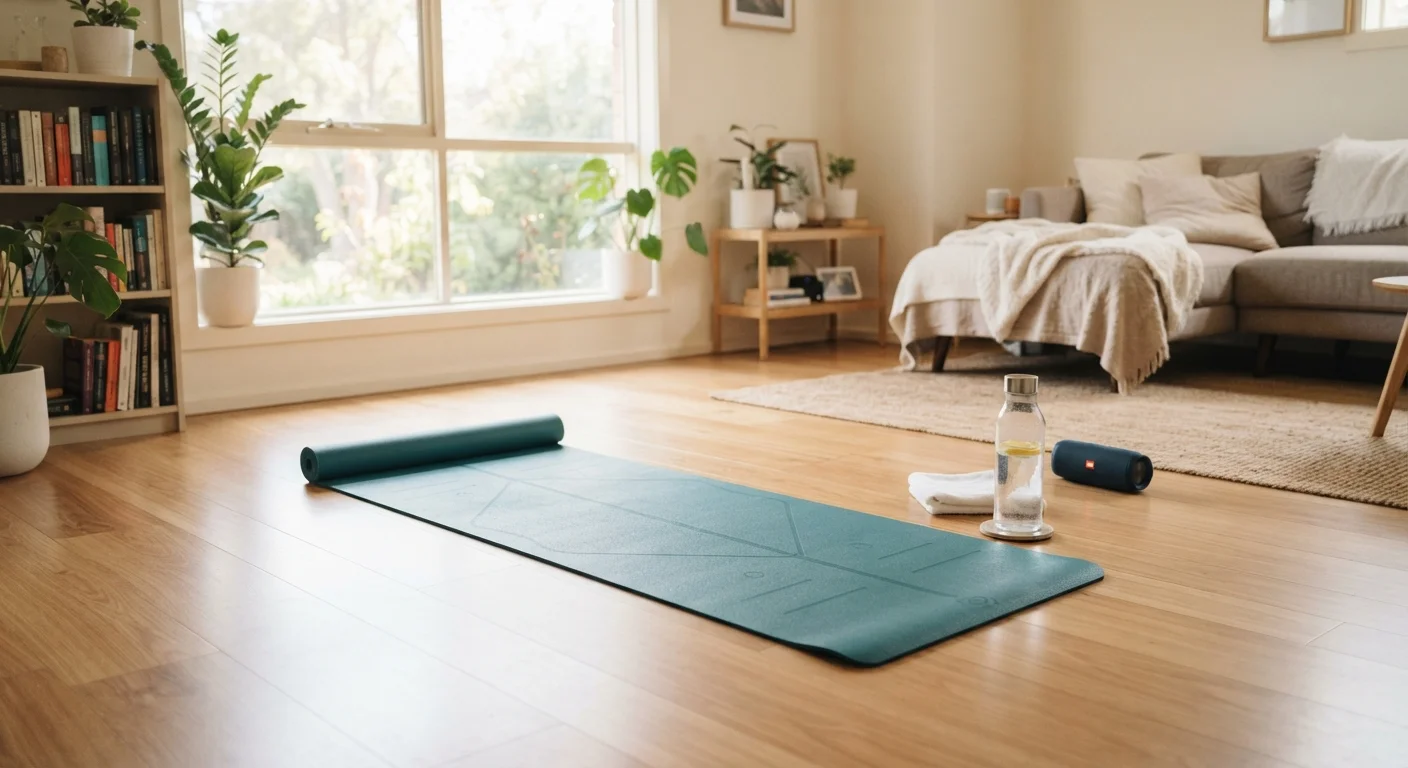
Photo: ShortwebArticles.com | Content For The Curious editorial
Key Takeaways
- Consistency matters more than intensity — short, regular sessions outperform occasional long ones.
- Your routine should fit your actual space and schedule, not an idealized version of either.
- Choosing the right workout type for your goals reduces early frustration and dropout.
- Built-in rest days and progress tracking are what separate routines that last from ones that don't.
- No specialized equipment is required to start an effective home fitness routine.
Why Home Routines Fall Apart
The gap between starting a home workout routine and maintaining one comes down to a few predictable problems: vague goals, unrealistic scheduling, and programs built for someone else's life. Unlike a gym environment — where the space itself signals it's time to work out — home environments are full of competing demands and distractions.
The solution isn't more willpower. It's a structure that removes friction. That means matching your routine to your actual space, available time, and current fitness level rather than an aspirational version of all three. The steps below walk through exactly how to do that.
Check Your Readiness Before Starting
What You'll Need
You don't need a home gym to build an effective routine. The tools listed below represent a realistic starting setup — most people can begin with just a mat and a timer.
What you will need
Yoga or exercise mat
Provides cushioning for floor-based movements and defines your workout space.
Resistance bands
Adds adjustable resistance to bodyweight exercises without requiring heavy equipment.
Timer or interval app
Keeps work and rest periods structured so sessions stay on track.
Notebook or fitness app
Tracks sessions, progression, and how your body responds over time.
How to Build Your Routine
Follow these steps in order. Each one builds on the last, and skipping ahead — particularly past the goal-setting and scheduling steps — is one of the main reasons home programs unravel early.
Define your goal in one sentence
Before choosing a single exercise, write down what you actually want from this routine. A goal like "move more to reduce daily stress" calls for a different structure than "build upper-body strength." Specificity reduces the gap between intention and action. Keep it honest and personal — not what you think you should want.
Audit your space and schedule honestly
Walk through your home and identify where you can actually move freely. A 6-by-4-foot cleared area accommodates the majority of effective bodyweight movements. Then look at your weekly calendar and find two to four realistic time slots — even 20 minutes counts. Block them like appointments.
Choose your workout format
Match your format to your goal. Circuit training (moving through a sequence of exercises with minimal rest) works well for general fitness and time efficiency. Straight sets with rest periods are better suited to building strength. Low-impact mobility or yoga-style flows are ideal if joint comfort or stress relief is the priority. Our comparison of bodyweight vs. weight training can help you decide how to structure resistance work.
Build a simple weekly structure
A sustainable starting template might look like: two days of strength-focused bodyweight work, one day of cardio or active movement, and at least one full rest day. You don't need a different routine every day — repeating a small set of sessions and gradually increasing difficulty is more effective than constant variety. For a detailed week-by-week plan, see a realistic plan for beginners.
Start smaller than feels necessary
Your first two weeks should feel almost too easy. Starting at 60–70% of what you think you can handle reduces soreness, lowers injury risk, and builds the habit loop before intensity becomes a factor. Motivation fluctuates; the habit — showing up consistently — is what produces long-term results.
Track and adjust every two weeks
Log each session briefly: what you did, how it felt, and whether it felt too easy or too hard. Every two weeks, review and make one small adjustment — add a set, shorten rest periods, or swap out a movement that's stopped feeling challenging. Gradual, intentional progression is what separates routines that keep working from ones that plateau. For a deeper look at why progress stalls, see why workouts stop working.
The 10-Minute Rule Works
Keeping the Routine Going Long-Term
The hardest part of a home routine isn't the exercise itself — it's maintaining momentum through schedule disruptions, motivation dips, and plateaus. A few principles help here.
First, treat your workout slot like any other commitment: reschedule rather than cancel when life intervenes. Second, revisit your goal every four to six weeks to confirm it still reflects what you want. Third, recognize that plateaus are normal and manageable — training frequency and structure are usually the first levers to adjust when progress stalls.
Soreness vs. Pain: Know the Difference
This article provides general fitness information for educational purposes only and is not a substitute for personalized advice from a qualified healthcare or fitness professional. Consult a provider before beginning any new exercise program, particularly if you have existing health conditions.
The content on this site is for informational purposes only and is not a substitute for professional advice. Always consult a qualified professional for guidance specific to your situation.