
Bodyweight Training vs. Weight Training: Choosing the Right Fit

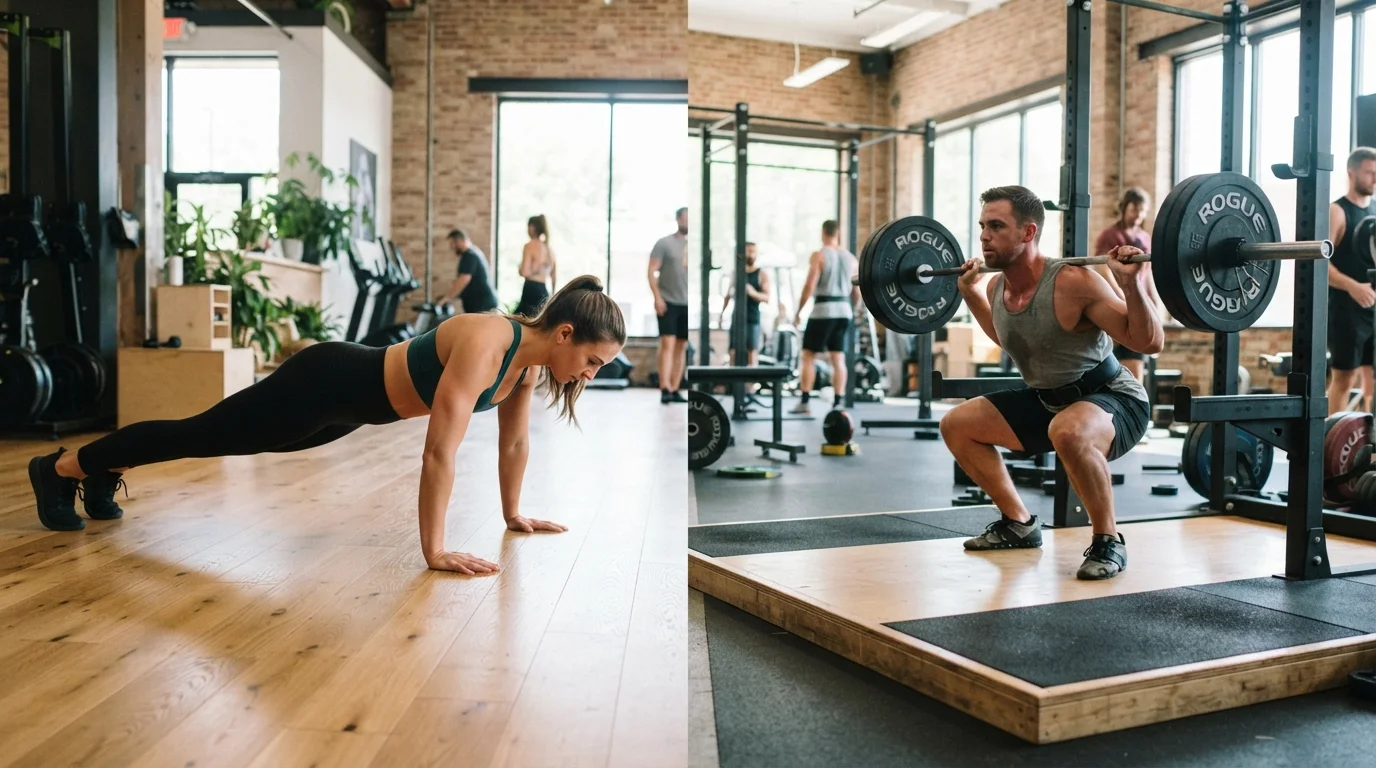
Photo: ShortwebArticles.com | Content For The Curious editorial
Key Takeaways
- Both bodyweight and weight training effectively build strength when applied with progressive overload.
- Bodyweight training requires little to no equipment, making it more accessible and cost-effective.
- Weight training generally offers more precise load progression, which can accelerate muscle growth.
- Your goals, schedule, budget, and physical condition should guide which approach you start with.
- Combining both methods is a valid and often practical strategy for many people.
What Each Approach Actually Involves
Bodyweight training uses your own mass as resistance — push-ups, squats, lunges, planks, pull-ups, and dips are common examples. No gym membership is required, and most movements can be done in a small space. Weight training, by contrast, uses external loads such as barbells, dumbbells, kettlebells, or resistance machines to create resistance. It typically takes place in a gym or a well-equipped home space.
Both methods belong to the broader category of resistance training, which is distinct from cardiovascular exercise. If you're curious how resistance work compares to cardio for overall health, see our piece on how strength training and cardio differ in their effects.
| Bodyweight Training | Weight Training | |
|---|---|---|
| Equipment needed | None or minimal | Gym or home weights required |
| Cost | Low to none | Moderate to high |
| Ease of progression | Requires creative variation | Straightforward load increases |
| Injury risk (technique-dependent) | Generally lower | Higher if form is poor |
| Muscle building potential | Effective, especially for beginners | Easier to target advanced gains |
| Flexibility / portability | High — train anywhere | Low — tied to equipment location |
| Beginner-friendliness | Very accessible | Moderate — technique required |
How Well Each Method Builds Strength and Muscle
The core driver of any strength or muscle gain is progressive overload — gradually increasing the demands placed on your muscles over time. Progressive overload is the principle behind nearly every effective training program, and both bodyweight and weight training can apply it — just differently.
With weights, progression is straightforward: add plates, increase dumbbell weight, or move to a heavier machine setting. With bodyweight training, progression comes through changing leverage (elevating feet for push-ups), reducing support (single-leg squat variations), adding reps, or slowing tempo. Research consistently shows that muscle can be built effectively with either approach, though weight training generally makes fine-grained load adjustments easier — an advantage when targeting specific strength benchmarks.
~Equal
Muscle gains vs. weight training in beginners
A 2017 review in the Journal of Human Kinetics found that bodyweight exercise produced similar early-stage strength adaptations compared to free-weight training in untrained individuals.
2–3x/week
Minimum resistance training frequency for strength gains
The American College of Sports Medicine recommends training each major muscle group at least twice per week for meaningful strength and hypertrophy results, regardless of training modality.
Practical Considerations: Cost, Access, and Flexibility
Bodyweight training's biggest practical advantage is accessibility. You need no equipment and very little space, which makes it a natural starting point for anyone new to exercise. For guidance on structuring a routine around those constraints, our article on building a home workout routine that actually sticks is worth a read.
Weight training involves upfront costs — either a gym membership or home equipment. Free weights and machines also carry a higher injury risk if technique is poor, particularly for movements like deadlifts or overhead presses. That said, when taught properly and performed with appropriate weights, these exercises are safe for most healthy adults.
Start With Movement Quality, Not Load
For anyone managing joint concerns, both methods have low-impact variations. Our overview of low-impact exercise options that are easier on your joints outlines formats that build strength without heavy joint stress.
Choosing Your Starting Point — and Knowing When to Switch
If you're completely new to structured exercise, bodyweight training offers a lower barrier to entry — physically, financially, and psychologically. Starting with foundational movement patterns before adding external load is a reasonable approach for many people. Our first-month exercise plan for beginners walks through how to build those habits from scratch.
As you grow stronger, bodyweight-only training can become harder to progress without very advanced skill work (think one-arm push-ups or pistol squats). At that point, incorporating weights — even light dumbbells — may be the simpler path to continued improvement. Equally, some people train with weights from day one and find the structure and measurable progression motivating.
Neither choice is permanent. Many people blend both: bodyweight movements for travel or home days, weights at the gym when accessible. Asking how often you should work out matters more than rigidly sticking to one modality.
This article is for general informational purposes only and does not constitute medical or fitness advice. If you have any health conditions or physical limitations, consult a qualified healthcare professional before beginning a new exercise program.
The content on this site is for informational purposes only and is not a substitute for professional advice. Always consult a qualified professional for guidance specific to your situation.