
Fitness at 50 and Beyond: What Changes, What Doesn't, and What Matters Most

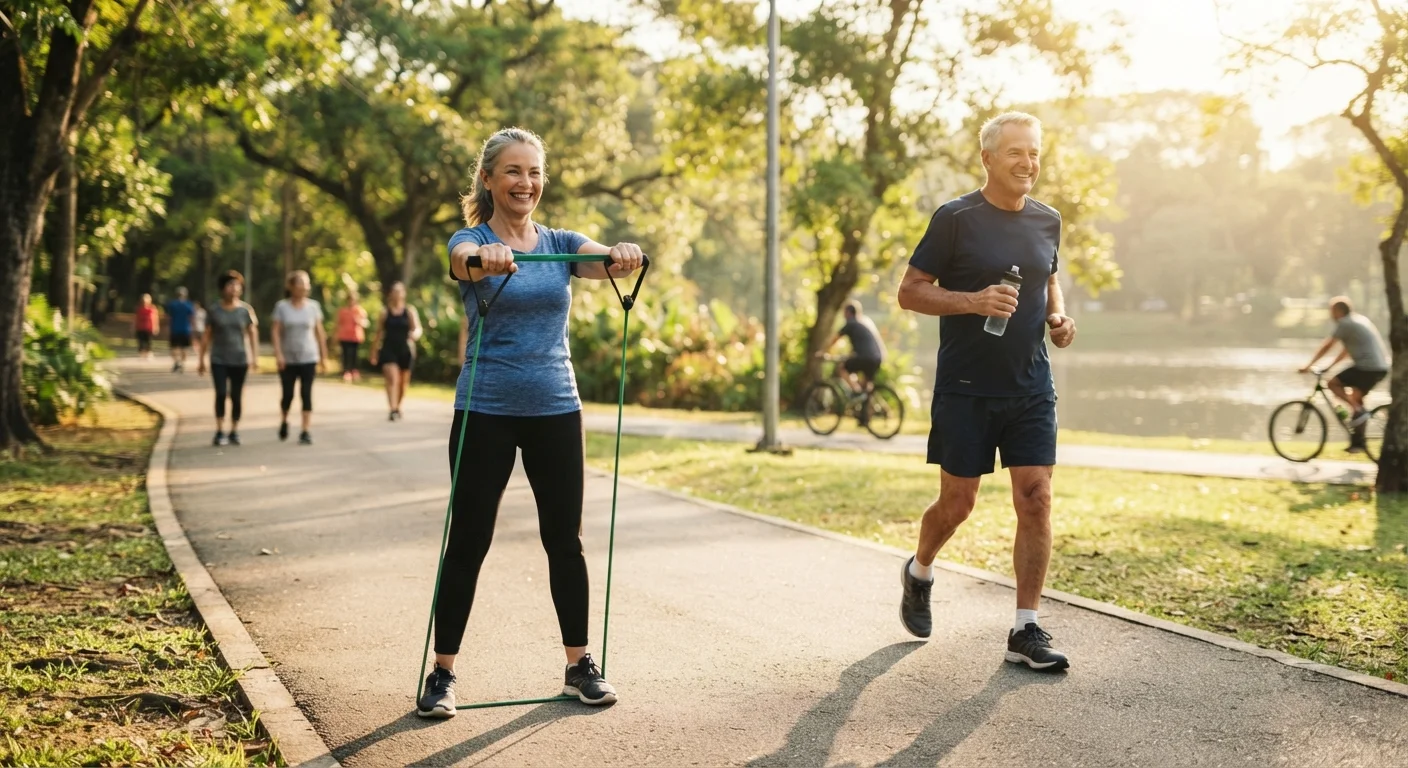
Photo: ShortwebArticles.com | Content For The Curious editorial
Key Takeaways
- Muscle and bone density naturally decline after 50, but regular exercise significantly slows both processes.
- Strength training becomes especially important after midlife — more so than at any earlier stage.
- Recovery takes longer with age, making rest days and sleep as important as the workouts themselves.
- Cardio, balance work, and flexibility each serve distinct roles and should all be part of a balanced routine.
- Consistency over intensity is the most reliable predictor of long-term fitness success after 50.
What Actually Changes in Your Body After 50
Your body undergoes measurable shifts starting in your late 40s and accelerating through your 50s. Understanding them isn't cause for alarm — it's the foundation for exercising smarter.
Muscle mass declines at roughly 1–2% per year after age 50, a process called sarcopenia. Without intervention, this contributes to reduced strength, slower metabolism, and greater injury risk. Bone density also decreases — a particular concern for women post-menopause, when estrogen loss accelerates bone loss.
Connective tissue — tendons and ligaments — becomes less elastic, which is why joint stiffness feels more pronounced in the morning and recovery after hard effort takes longer. Balance and coordination also begin to subtly decline, raising the risk of falls, which is a leading cause of injury in adults over 65.
Cardiovascular capacity (VO2 max, or the maximum rate at which your body can use oxygen during exercise) typically decreases with age, though regular aerobic exercise blunts this decline substantially.
1–2%
Annual muscle mass loss after age 50
Research on sarcopenia consistently documents this rate of decline in untrained older adults without resistance exercise.
30%
Fall risk reduction with balance training
A Cochrane review of fall prevention trials found that exercise programs including balance training reduced fall rates by approximately 23–34% in older adults.
2x
Bone fracture risk increase from low muscle mass
Studies in older adults link sarcopenia to significantly elevated fracture and fall-related injury risk, underscoring the value of resistance training.
What Stays the Same: The Fundamentals Still Apply
The basic principles of exercise science don't expire at 50. Progressive overload — gradually increasing challenge so the body continues adapting — still drives fitness gains at any age. Consistency still matters more than any single workout. And variety across exercise types still produces better outcomes than specializing in only one.
Your muscles can still grow stronger. Your cardiovascular system can still improve. Your balance can still get better with practice. The timeline may be slower and the recovery demands greater, but the adaptive capacity of the human body remains real well into later decades.
What this means practically: you don't need a fundamentally different program, you need a thoughtfully adjusted one. If fitness terms like progressive overload or RPE are unfamiliar, the Fitness Terminology Glossary is a useful plain-language reference before diving deeper.
Track your effort by feel, not just by pace or weight. A Rating of Perceived Exertion (RPE) scale helps you stay in the right intensity zone without over-relying on numbers that change with age-related fitness shifts.
Do your balance work when you're fresh, not at the end of a workout. Fatigue compromises proprioception — your body's sense of position — making tired balance drills less effective and slightly riskier.
Strength Training: The Non-Negotiable After 50
If there is one exercise category that earns special emphasis after 50, it is resistance training. Strength work directly counters sarcopenia, supports bone density, improves insulin sensitivity, and reduces the risk of falls by building the muscle strength needed to stabilize joints and catch a stumble.
This doesn't require a gym or heavy barbells. Resistance bands, bodyweight movements, dumbbells, and machine weights all produce meaningful results when applied consistently. The goal is to challenge your muscles enough that they must adapt — not to lift maximum weight.
Key principles for strength training after 50:
- Prioritize form over load — reducing injury risk is the prerequisite to progress.
- Target all major muscle groups: legs, hips, back, core, chest, shoulders, and arms.
- Allow at least 48 hours between sessions working the same muscle group.
- Warm up thoroughly; cold connective tissue is more vulnerable to strain.
Don't Skip the Warm-Up After 50
Cardio, Flexibility, and Balance: Building a Complete Routine
A well-rounded fitness routine after 50 covers three additional domains beyond strength: cardiovascular health, flexibility, and balance.
Cardiovascular exercise supports heart health, mood, weight management, and cognitive function. Walking is among the most accessible starting points — walking offers genuine benefits but has real limitations if it's your only activity. Cycling, swimming, dancing, and low-impact aerobics classes all provide effective cardio with reduced joint stress.
Flexibility work — including stretching and yoga — helps maintain range of motion, reduces injury risk, and can ease the joint stiffness that becomes more common with age. Consistent daily stretching, even brief sessions, compounds over time.
Balance training is frequently overlooked but critically important. Simple exercises like single-leg stands, heel-to-toe walking, and tai chi address the neuromuscular pathways that prevent falls. Even a few minutes several times a week produces measurable improvement.
Exercise also connects closely to mental health. Physical activity is one of the most consistently supported lifestyle factors for emotional well-being — an important consideration given how mental health needs shift across the lifespan.
“Exercise is the closest thing to a magic bullet we have in medicine. The evidence for its benefits across nearly every health domain — physical and mental — is stronger than for most pharmaceutical interventions.”
— Dr. I-Min Lee, Professor of Medicine, Harvard Medical School, and leading physical activity researcher
Recovery, Rest, and Listening to Your Body
Recovery is where fitness gains are actually realized — and it becomes more important, not less, as you age. Muscle repair takes longer after 50, and the inflammation response to hard exercise persists longer than it did at 30. Ignoring this is one of the most common reasons older adults get injured or burn out.
Practical recovery essentials include:
- Sleep: Aim for 7–9 hours. Growth hormone, which supports tissue repair, is primarily released during deep sleep.
- Rest days: Full rest or very light activity days are part of the program, not a sign of weakness.
- Nutrition: Adequate protein supports muscle repair. The Nutrition & Diet hub offers broader guidance on eating habits that support an active lifestyle.
- Hydration: Thirst perception often diminishes with age, making intentional fluid intake more important.
Pain is a signal, not a challenge to push through. Soreness that persists beyond 72 hours, sharp or localized pain, or any new joint swelling warrants a pause and, if it doesn't resolve, a conversation with a healthcare provider.
Getting Started Safely and Staying Consistent
Starting or restarting an exercise habit after 50 is entirely achievable — but a thoughtful approach reduces the risk of early injury or discouragement. Before beginning, it's worth reviewing a safety and readiness checklist to identify any factors worth discussing with a doctor first, especially if you have existing health conditions.
Beyond safety, the most reliable predictor of long-term success is finding activities you will actually do. Enjoyment and social context — group classes, walking with a friend, team sports — dramatically improve adherence. Schedule workouts as appointments. Start shorter and easier than you think you need to and build gradually.
Small Starts Lead to Big Consistency
The goal isn't to recapture fitness at 30. It's to build and maintain the strength, endurance, and mobility that support a full, independent, and enjoyable life in the decades ahead. That goal is realistic, evidence-backed, and within reach for most people willing to be consistent.
This article is for general informational purposes only and does not constitute medical advice. Always consult a qualified healthcare professional before beginning a new exercise program, especially if you have existing health conditions, have been inactive for an extended period, or are managing chronic pain or injury.
The content on this site is for informational purposes only and is not a substitute for professional advice. Always consult a qualified professional for guidance specific to your situation.