
Building a Wind-Down Routine That Actually Quiets a Busy Mind

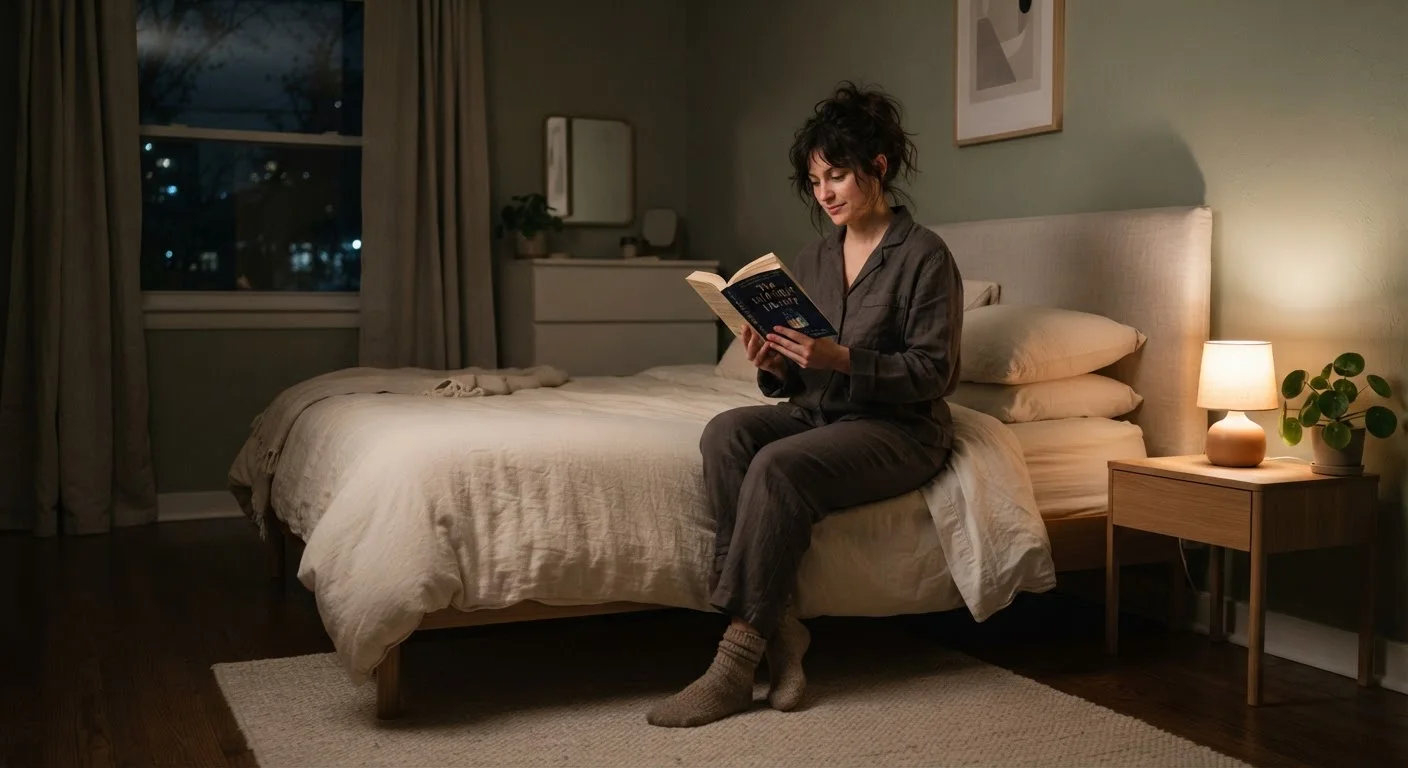
Photo: ShortwebArticles.com | Content For The Curious editorial
Key Takeaways
- The brain needs a deliberate transition signal to shift from a stimulated state to sleep readiness.
- Consistency of timing matters as much as the specific activities you choose.
- Small, repeatable habits — not elaborate rituals — are the most sustainable approach.
- Screen light and stimulating content actively delay the onset of sleepiness.
- Mental wellness practices like journaling or breathing exercises belong in everyday routines, not just therapy sessions.
Why Your Brain Needs a Transition Signal
Most Americans move from full activity — email, news, family logistics — directly into bed and then wonder why sleep won't come. The brain doesn't switch off like a light; it needs a deliberate deceleration period to shift from the alert, problem-solving mode associated with daily demands toward the quieter state that allows sleep onset.
This transition is partly physiological. Cortisol, the hormone associated with alertness and stress response, naturally declines in the evening, while melatonin production increases — but only if environmental and behavioral cues support it. Bright light, stimulating content, and unresolved mental activity all interfere with this shift. A wind-down routine works by deliberately stacking cues that tell the nervous system the day is finished.
Mental wellness doesn't only happen in therapy offices or meditation retreats. Normalizing small, daily habits — like a genuine end-of-day ritual — is increasingly recognized as a core part of everyday health, no different from regular movement or balanced eating. Just as building a sustainable workout habit requires structure and repetition, so does training your brain to rest.
Anchor Your Routine to a Fixed Time
What You'll Need Before You Start
A wind-down routine doesn't require a perfectly organized home or an elaborate setup — but a few simple conditions make it significantly easier to follow through.
What you will need
Dim or warm-toned lamp
Replacing overhead lighting with softer, lower-kelvin light in the evening helps suppress alerting signals and encourage melatonin production.
Journal or notebook
Used for brain-dumping worries, gratitude entries, or tomorrow's task list — clearing the mental queue before sleep.
Physical book or non-screen reading material
Provides a cognitively engaging but non-stimulating alternative to phones and tablets during the wind-down window.
White noise machine or app
Masks unpredictable ambient sounds that can prevent the brain from fully settling.
If your bedroom feels chaotic or cluttered, that visual noise can itself maintain a low-level sense of unfinished business. A simple clear-off of the immediate sleep space can help. The broader concept of reducing environmental friction applies here just as it does in other habit-building contexts — the easier the routine is to start, the more likely you are to continue it. If you find that physical disorder is undermining your ability to decompress at home, a room-by-room decluttering approach can address that foundation.
This Is General Information, Not Medical Advice
The Step-by-Step Wind-Down Routine
The following steps are designed to take 30–45 minutes total and can be adapted to fit a real American schedule — including nights when you're running late, traveling, or sharing a bedroom with a partner on a different sleep timeline.
Set a consistent wind-down start time
Pick a time 30–45 minutes before your intended sleep time and treat it as a hard boundary. Set a phone alarm or reminder labeled something like "Start winding down" — not as a rule to feel guilty about, but as a practical trigger. The repetition is what creates the neurological cue over time.
Swap overhead lighting for warmer, dimmer light
Bright, blue-spectrum light signals the brain to stay alert. About 45 minutes before bed, switch to a bedside lamp or warm-toned bulb. If you share a space, even a small clip-on reading light makes a difference. This single environmental shift is one of the most evidence-supported evening habits in sleep research.
Put your phone in a low-engagement mode
Enable Do Not Disturb, move apps off your home screen, or place your phone across the room. The goal isn't to demonize technology — it's to reduce the pull of reactive scrolling that hijacks attention and keeps your nervous system engaged. If you use your phone as an alarm, consider a basic alarm clock instead so the phone is genuinely out of reach.
Do a brief brain dump or tomorrow list
One of the most common causes of a racing mind at bedtime is unfinished cognitive loops — the to-dos, worries, and half-formed plans still circulating. Spend five minutes writing them down in a journal or on a notepad. This isn't about solving anything; it's about externalizing the mental queue so your brain stops rehearsing it. Research on expressive writing suggests this kind of structured offloading can reduce pre-sleep cognitive arousal.
Choose one calming anchor activity
Pick a single low-stimulation activity that you genuinely find settling — reading physical fiction, gentle stretching, a short breathing exercise, or listening to calm audio. The key is repetition: doing the same activity each night deepens its association with sleep onset. Avoid anything that requires decision-making or generates emotional intensity.
Use a simple breathing technique to close the routine
As a final signal before getting into bed, try a brief breathing exercise. A straightforward approach: inhale for four counts, hold for four, exhale for six to eight. Repeat four to six cycles. Extending the exhale activates the parasympathetic nervous system — the part of your nervous system associated with rest and recovery. This can be done sitting up or lying down.
Avoid Stimulating Activities Too Close to Bed
Consistency is the engine. Much like building long-term investing habits, the value of a wind-down routine compounds with repetition — not with any single perfect execution. Missing a night doesn't erase progress; resuming the routine does.
This article is for general informational and educational purposes only and does not constitute medical advice. If you are experiencing chronic sleep difficulties, anxiety, or other health concerns, please consult a qualified healthcare professional.
The content on this site is for informational purposes only and is not a substitute for professional advice. Always consult a qualified professional for guidance specific to your situation.