
What Soil pH Actually Means for Your Garden — and When to Change It

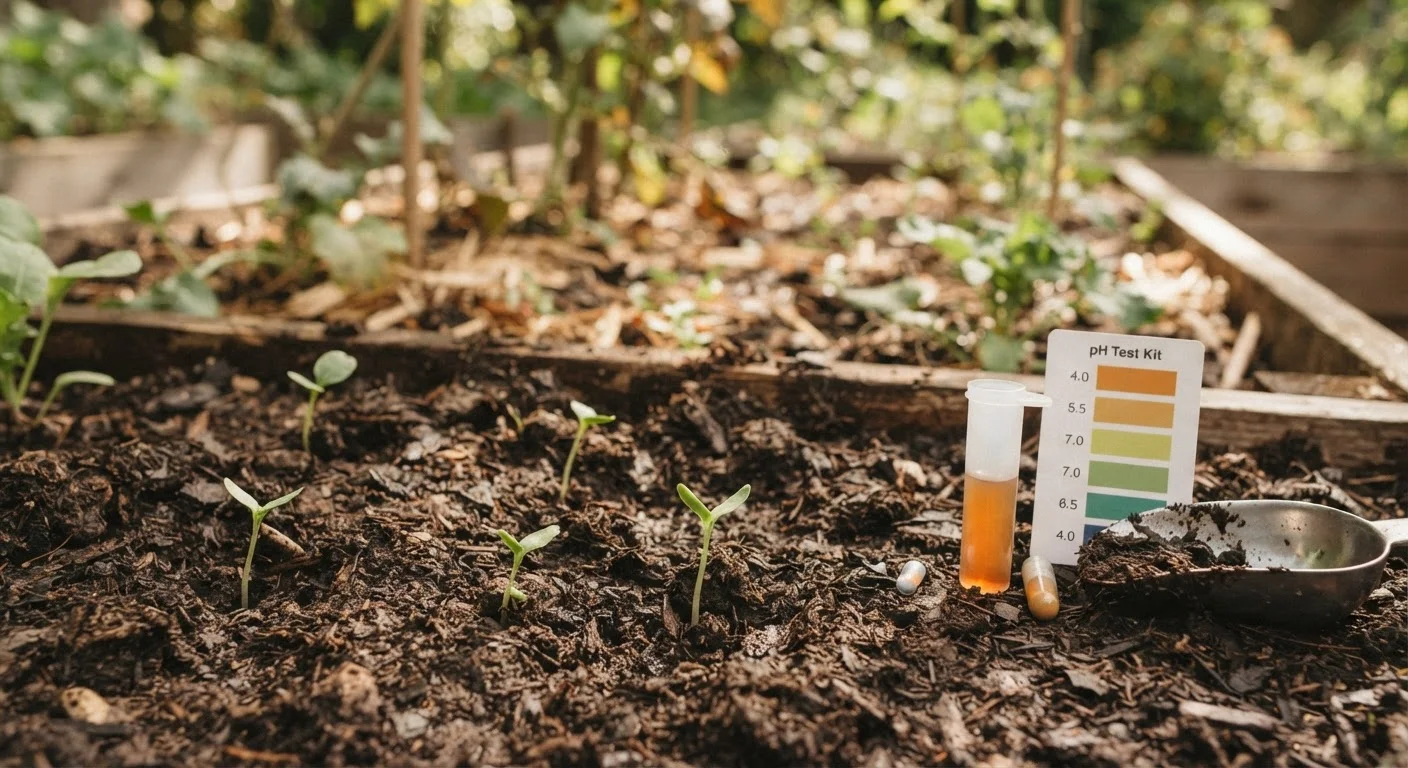
Photo: ShortwebArticles.com | Content For The Curious editorial
Key Takeaways
- Soil pH controls which nutrients plants can absorb, not just how many nutrients are present.
- Most vegetables and flowers do best in a slightly acidic range of 6.0 to 7.0.
- A simple home test kit or mail-in lab test can tell you your soil's pH in minutes or days.
- Lime raises pH in acidic soil; sulfur lowers pH in alkaline soil — but changes take time.
- Amending soil pH without testing first can cause more harm than good.
Why pH Controls More Than You Think
Think of soil pH as a gatekeeper. Even when your soil contains plenty of nitrogen, iron, or phosphorus, the wrong pH level can lock those nutrients away so plant roots simply cannot take them in. This nutrient lockout is one of the most common — and most overlooked — reasons gardens underperform.
At very low pH levels (strongly acidic, below 5.5), elements like aluminum and manganese can become so soluble they reach toxic concentrations. At high pH levels (alkaline, above 7.5), iron, zinc, and manganese become nearly unavailable. The sweet spot for most garden plants sits between 6.0 and 7.0, where the broadest range of nutrients stays accessible.
Native Plants and Local Soil Conditions
How to Test Your Soil
Before doing anything to your soil, test it. Guessing is a common and costly mistake. Fortunately, testing is straightforward and inexpensive.
- Home test kits: Available at most garden centers, these use a color-comparison system to give a quick reading. They are useful for a rough baseline.
- Digital meters: Probe-style pH meters provide fast results. Accuracy varies by model, so calibrate according to the manufacturer's instructions.
- Cooperative extension labs: Your state's land-grant university cooperative extension service typically offers low-cost soil testing. These lab results are highly accurate and often include specific amendment recommendations for your region.
Collect soil from several spots in the bed, mix them together, and test that combined sample for the most representative reading. Test in the fall or early spring before planting season.
Test Multiple Spots in Your Garden
When and How to Adjust Soil pH
Not every garden needs adjustment. If your plants are healthy and your pH falls in the acceptable range for what you're growing, leave it alone. But if testing reveals a problem, here is how to address it.
Raising pH (Making Soil Less Acidic)
Garden lime — either ground limestone (calcitic) or dolomitic lime — is the standard amendment for acidic soil. Work it into the top several inches of soil rather than leaving it on the surface. The amount needed depends on how far off your pH is and your soil type; clay soils require more lime than sandy soils to shift the same number of pH points. Your extension service test results will often specify pounds per 100 square feet.
Lowering pH (Making Soil More Acidic)
Elemental sulfur is the most reliable way to acidify soil. Soil bacteria convert it into sulfuric acid over time, gradually lowering pH. This process is slow — plan several months ahead. Acidifying fertilizers and composted pine bark can also help maintain lower pH over time for acid-loving plants like blueberries, azaleas, and rhododendrons.
6.0–7.0
Ideal pH range for most vegetables
The USDA and cooperative extension services consistently cite this range as the target for productive vegetable gardens.
4.5–5.5
Preferred pH for blueberries and azaleas
Acid-loving plants require significantly lower pH to access iron and other micronutrients they depend on.
10x
Chemical change per pH unit
Each whole number on the pH scale represents a tenfold difference in hydrogen ion concentration, meaning small shifts have large effects.
Plants With Specific pH Needs
Most common garden plants are flexible, but some have genuine preferences you should respect.
Understanding what you want to grow before you amend soil can save you significant effort. A mixed vegetable bed and a blueberry patch, for example, may need to be managed separately because their ideal pH ranges differ meaningfully.
Frequently Asked Questions
The content on this site is for informational purposes only and is not a substitute for professional advice. Always consult a qualified professional for guidance specific to your situation.