
Interior Paint vs. Exterior Paint: Why the Difference Matters

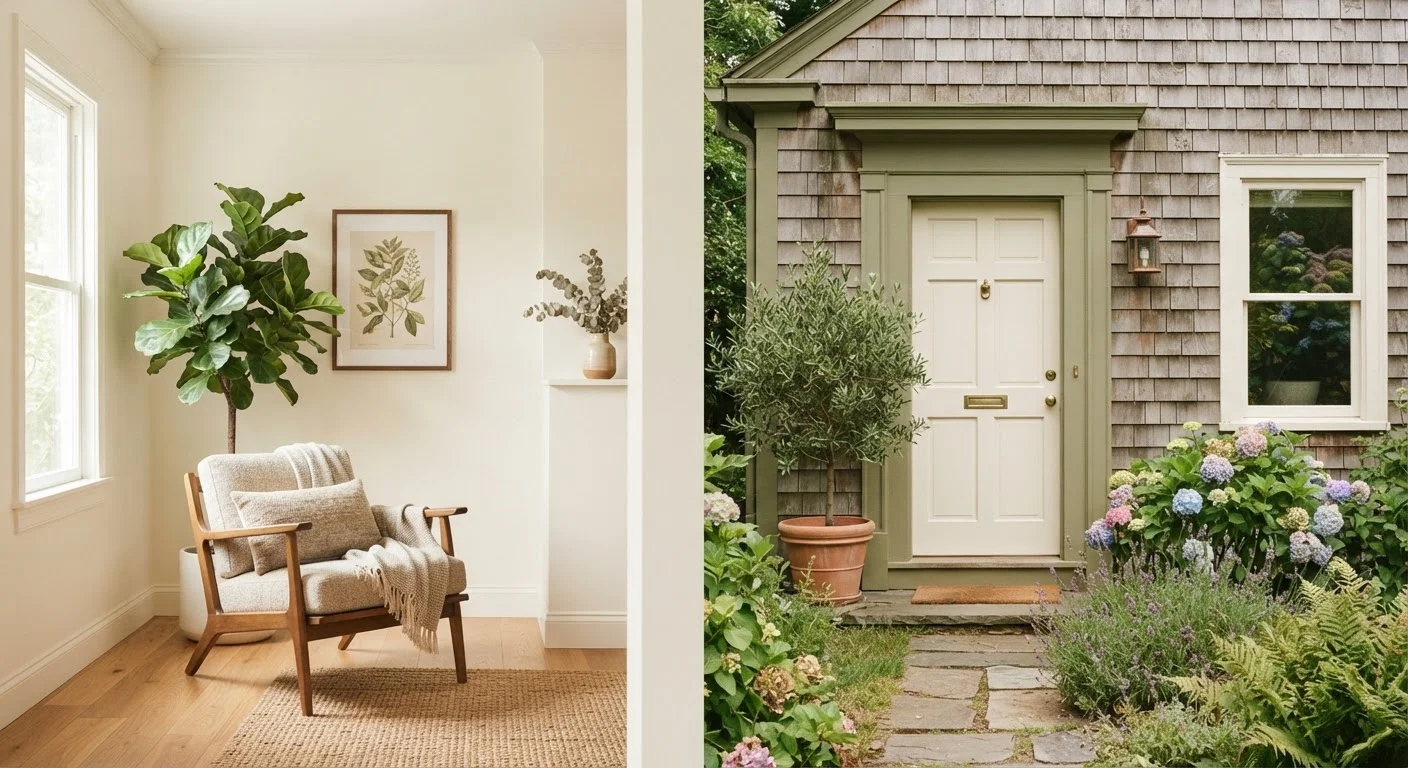
Photo: ShortwebArticles.com | Content For The Curious editorial
Key Takeaways
- Interior and exterior paints use different resin systems engineered for their specific environments.
- Exterior paint contains additives — mildewcides and UV stabilizers — that are unsafe for indoor use.
- Using interior paint outside leads to rapid peeling, fading, and moisture damage.
- Using exterior paint inside introduces harmful off-gassing that lingers long after drying.
- Finish type (flat, eggshell, satin, gloss) matters for both durability and aesthetics in each setting.
- Always match the paint type to the surface location — no exceptions.
What Makes These Two Paints Different
At a glance, a can of interior paint and a can of exterior paint look nearly identical. Both are liquid coatings that dry to a colored film — but the chemistry inside those cans is meaningfully different, and those differences exist for good reason.
Every paint formulation contains four basic components: pigments (for color), a binder or resin (which holds the film together), a carrier (water or solvent), and additives (which tune performance). The binder and additive packages are where interior and exterior paints diverge sharply.
Interior paint binders are designed to be rigid once cured. Rigid resins resist scuffing, hold up to repeated washing, and don't absorb odors. They're also formulated to emit low levels of volatile organic compounds (VOCs) — gases that off-gas as paint dries. In a sealed room, low VOC emissions are a safety priority.
Exterior paint binders are softer and more flexible. Outdoor surfaces expand and contract with heat and cold, and a rigid film would crack and peel within a season. Exterior binders also anchor UV stabilizers and mildewcides directly into the film — chemicals that slow UV degradation and inhibit mold and algae growth. Those same chemicals are not intended for long-term inhalation in a living space.
| Criterion | Interior Paint | Exterior Paint |
|---|---|---|
| Binder type | Rigid resin (scrub-resistant) | Flexible resin (crack-resistant) |
| VOC levels | Low — safe for enclosed spaces | Higher — not designed for indoor air |
| Mildewcides | Absent or minimal | Present — inhibits mold and algae |
| UV stabilizers | Not included | Included — resists fading and chalking |
| Temperature flexibility | Low — not designed for expansion | High — handles seasonal movement |
| Washability | High — handles repeated scrubbing | Moderate — not optimized for indoor use |
| Typical lifespan (correct surface) | 10–15 years indoors | 5–10 years outdoors |
What Happens When You Use the Wrong Paint
Swapping paint types isn't just a minor inconvenience — it leads to predictable, premature failure.
Interior paint used outside
Interior paint's rigid resin can't flex with surface movement. Within one or two seasons, expect cracking, flaking, and peeling — especially on wood siding or trim that swells with moisture. Interior paint also lacks UV stabilizers, so color fades unevenly and the film chalks (breaks down into a powdery residue). Without mildewcides, mold and mildew colonize the surface quickly in humid climates.
Exterior paint used inside
This is the more serious mistake from a health standpoint. The mildewcides and UV stabilizers in exterior paint off-gas at levels that aren't designed for enclosed spaces. Adequate ventilation during outdoor application is easy — indoors, those compounds accumulate. Many exterior paint formulations carry explicit label warnings advising against indoor use. Beyond safety, exterior paint's flexible resin tends to mark and scuff easily indoors, and it resists the hard scrubbing that kitchen and bathroom walls regularly need.
What About 'Interior/Exterior' Paints?
Choosing the Right Finish for the Right Surface
Within each paint category, finish (or sheen level) plays a major role in durability and appearance.
5–10 yrs
Typical exterior paint lifespan on wood siding
Actual longevity varies with surface preparation, climate, and sun exposure — proper priming and application extend performance significantly.
50 g/L
Common VOC limit for interior flat paints (EPA guideline)
Many U.S. jurisdictions set VOC limits for architectural coatings; interior paints are formulated to meet or fall below these thresholds for indoor air safety.
For interior surfaces: flat or matte finishes work well on ceilings and low-traffic walls; eggshell and satin are better for living rooms and bedrooms since they're easier to wipe clean; semi-gloss and gloss are standard for trim, doors, and bathrooms where moisture resistance and scrubability matter most.
For exterior surfaces: satin and semi-gloss are the most common choices for siding and trim. Gloss holds up well on doors and metal surfaces. Flat exterior paint is occasionally used on rough masonry or stucco where hiding texture is the priority, though it's less durable than higher-sheen options in wet climates.
When in doubt, read the label. Reputable paint manufacturers specify intended use, surface compatibility, and coverage clearly on the packaging. Those instructions reflect real engineering decisions — following them is the single most reliable way to get a finish that lasts.
The content on this site is for informational purposes only and is not a substitute for professional advice. Always consult a qualified professional for guidance specific to your situation.