
Tile Flooring vs. Hardwood Flooring: A Practical Comparison for Every Room

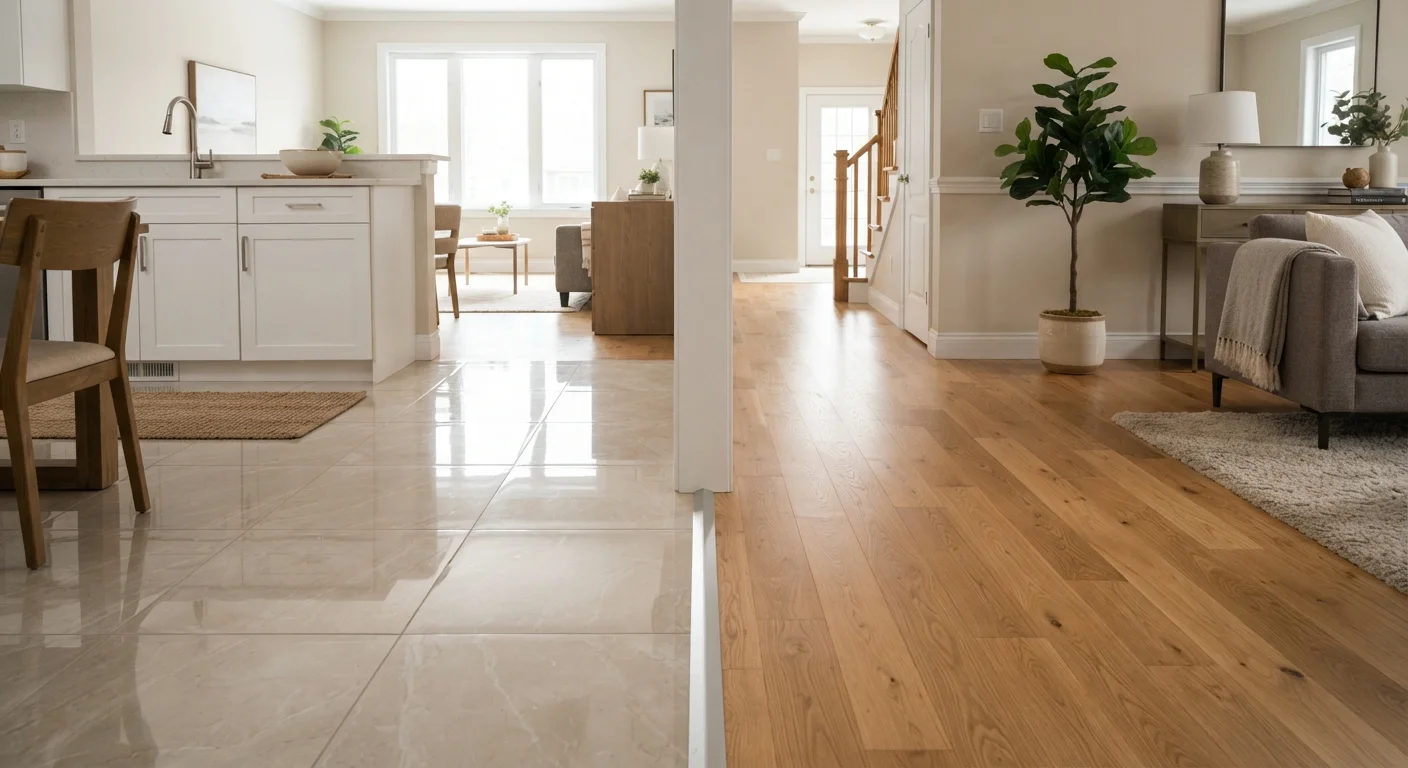
Photo: ShortwebArticles.com | Content For The Curious editorial
Key Takeaways
- Tile excels in wet or high-traffic areas like bathrooms and kitchens due to its moisture resistance.
- Hardwood adds warmth and visual continuity to living rooms and bedrooms but is vulnerable to water damage.
- Installation and material costs differ significantly, with hardwood typically running higher overall.
- Both flooring types can last decades with proper care, but maintenance routines differ considerably.
- Climate, household activity level, and room function should all factor into your final decision.
What Sets These Two Flooring Types Apart
Tile and hardwood represent two of the most common flooring choices in American homes, and for good reason — both are durable, attractive, and available in a wide range of styles. But they perform very differently depending on where and how they're used.
Tile flooring is made from ceramic, porcelain, or natural stone. It's fired at high temperatures, making it hard, dense, and largely impervious to water. Hardwood flooring consists of solid or engineered wood planks that bring natural warmth and grain patterns no manufactured product can fully replicate. Engineered hardwood — a plywood core topped with a real wood veneer — offers somewhat better moisture resistance than solid hardwood but still can't match tile in wet environments.
If you're weighing broader housing decisions alongside your flooring choices, our guide to renting vs. buying a home can help you think through which upgrades make sense for your situation.
Durability, Moisture, and Room-by-Room Fit
Room function is the single most important factor when choosing between tile and hardwood. Here's how each performs across common spaces:
- Bathrooms and laundry rooms: Tile is the clear choice. Even a small water leak can warp or stain hardwood irreversibly. Porcelain tile, in particular, absorbs virtually no moisture.
- Kitchens: Tile handles spills, dropped items, and heavy foot traffic well. Hardwood can work in kitchens but requires prompt cleanup and periodic refinishing to stay in good shape.
- Living rooms and dining rooms: Hardwood shines here — it's comfortable underfoot, reduces echo compared to tile, and holds up well in dry, moderate-traffic areas.
- Bedrooms: Hardwood is a natural fit for comfort and aesthetics. Tile can feel cold underfoot in cooler climates unless paired with radiant in-floor heating.
- Basements: Neither solid hardwood nor tile is ideal for below-grade spaces with humidity fluctuations, though engineered hardwood handles it better than solid. Tile remains the more reliable option where moisture intrusion is possible.
| Tile Flooring | Hardwood Flooring | |
|---|---|---|
| Moisture Resistance | Excellent — ideal for wet areas | Poor to fair — avoid damp rooms |
| Durability | 50+ years with proper grout care | Decades; refinishable multiple times |
| Material Cost Range | Low to high (ceramic to stone) | Moderate to high |
| Installation Complexity | High — grouting and setting required | Moderate to high — precise fitting needed |
| Comfort Underfoot | Hard and cool — can be cold in winter | Warm, slightly softer feel |
| Scratch Resistance | Excellent | Moderate — surface can scratch |
| Refinishability | Not refinishable — replace if damaged | Can be sanded and refinished |
| Best Room Fit | Bathrooms, kitchens, entryways | Living rooms, bedrooms, dining rooms |
Cost, Installation, and Long-Term Upkeep
Cost is rarely one-dimensional with flooring. Material price is just the starting point.
50+ years
Typical lifespan of quality tile flooring
Porcelain and ceramic tile, when properly installed and maintained, routinely outlast many other flooring types in residential settings.
3–5x
Refinishing cycles possible with solid hardwood
Most solid hardwood floors can be sanded and refinished multiple times over their lifespan, extending usable life without full replacement.
Tile materials can range from budget-friendly ceramic to premium natural stone, so the price spectrum is wide. Installation is labor-intensive — cutting, setting, and grouting tile takes skill and time, and grout lines require periodic sealing and cleaning to prevent staining or mildew buildup. That said, a well-installed tile floor can last 50 years or more with minimal structural maintenance.
Hardwood tends to carry a higher material cost, particularly for solid planks in sought-after species like oak or maple. Professional installation adds to that figure. However, hardwood's refinishability is a genuine long-term advantage: a solid hardwood floor can typically be sanded and refinished several times over its life, refreshing its appearance without full replacement.
Match the Floor to the Room First
For renters, it's worth noting that flooring changes typically require landlord approval, and neither tile nor hardwood is a practical DIY project in most rental units without permission and professional help.
Climate, Comfort, and Household Lifestyle
Where you live matters. In humid Southern climates, hardwood — especially solid planks — can expand and contract with seasonal moisture swings, leading to gapping or cupping over time. Tile is dimensionally stable in virtually any climate. In drier regions or well-climate-controlled homes, solid hardwood performs much more predictably.
Households with dogs or young children also face a practical calculus: tile resists scratches far better than hardwood, and pet accidents clean up completely on tile, whereas they can permanently stain or damage wood if not addressed immediately. On the other hand, hardwood is softer underfoot and warmer in winter — meaningful comfort factors for families who spend a lot of time sitting or playing on the floor.
Acoustics are another consideration often overlooked. Hardwood absorbs some sound; tile reflects it. In open-plan homes, tile can make rooms feel louder and less intimate. Area rugs can partially offset this, but it's worth factoring into your decision before committing.
The content on this site is for informational purposes only and is not a substitute for professional advice. Always consult a qualified professional for guidance specific to your situation.