
Understanding R-Value: The Number That Defines Your Home's Insulation

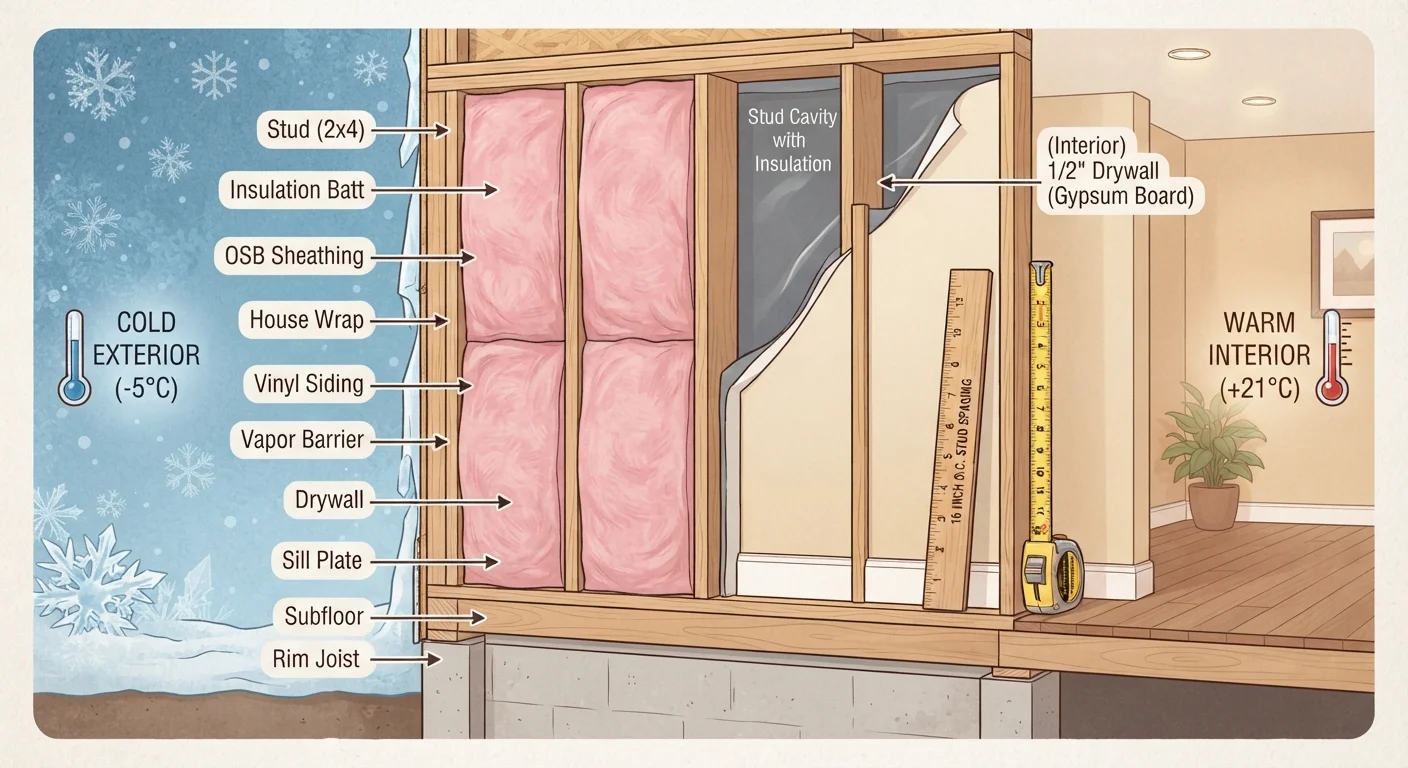
Photo: ShortwebArticles.com | Content For The Curious editorial
Key Takeaways
- Higher R-values indicate stronger resistance to heat transfer and better insulation performance.
- Recommended R-values vary significantly by climate zone and location within the home.
- R-values are additive — layering insulation materials increases the total thermal resistance.
- Insulation type, thickness, and proper installation all affect real-world performance.
- Attics typically require the highest R-values because heat rises and escapes most readily there.
What R-Value Actually Measures
Think of heat like water seeking a path through your home's shell. R-value quantifies how stubbornly a material resists that flow. A wall section rated R-15 slows heat transfer more than one rated R-9 — it takes longer for warmth to escape in winter or sneak in during summer. The number comes from standardized laboratory testing and gives you a consistent way to compare products that look nothing alike.
One important nuance: R-value measures conductive heat transfer through solid material. It does not account for air leakage, which is a separate but equally important factor in energy efficiency. A perfectly rated insulation job can still underperform if air is bypassing it through gaps around outlets, pipes, or framing.
R-Value and Air Sealing Work Together
R-Value Recommendations by Climate Zone
The U.S. Department of Energy divides the country into eight climate zones, ranging from hot-humid Gulf Coast regions to the frigid northern plains. Each zone comes with recommended R-value ranges for different parts of the home:
- Attics: R-30 to R-60, with colder zones requiring the upper range
- Exterior walls: R-13 to R-21 for most wood-framed walls
- Floors over unheated spaces: R-13 to R-30
- Crawl spaces and basements: R-5 to R-19 depending on whether the space is conditioned
These are guidelines, not code requirements — local building codes may set their own minimums, which can be stricter. Always verify with your local building department before beginning a project.
90%
U.S. homes that are under-insulated
According to the North American Insulation Manufacturers Association (NAIMA), an estimated 90% of existing U.S. homes lack adequate insulation.
Up to 15%
Heating and cooling savings from proper insulation
The U.S. Department of Energy estimates that sealing air leaks and adding insulation can save homeowners up to 15% on heating and cooling costs.
How Insulation Type Affects the Number
Different materials deliver different R-values per inch of thickness. This matters when space is limited — inside a 2×4 wall cavity, you have roughly 3.5 inches to work with, so a material's per-inch rating determines how much thermal resistance you can realistically achieve.
| Insulation Type | Approx. R-Value per Inch |
|---|---|
| Closed-cell spray foam | R-6 to R-7 |
| Rigid foam board (polyisocyanurate) | R-5.5 to R-6.5 |
| Mineral wool batts | R-3.7 to R-4.2 |
| Fiberglass batts | R-3 to R-4 |
| Blown-in cellulose | R-3.2 to R-3.8 |
Because R-values are additive, combining a rigid foam board on the exterior with fiberglass batts in the cavity is a common strategy for exceeding code minimums in retrofit projects.
Check the Label Before You Buy
Why Installation Quality Changes Everything
A product's labeled R-value is achieved only under ideal conditions. In practice, gaps, compression, and moisture can each reduce effective performance. Fiberglass batts, for instance, lose thermal resistance when compressed into a cavity that's shallower than the batt's designed thickness. Blown-in insulation that settles over time can drop below its initial rated value if not installed at the right density.
Thermal bridging is another factor: wood studs conduct heat more readily than the insulation around them, effectively lowering the whole-wall R-value below the insulation's rated value. Continuous insulation layers on the exterior address this by wrapping the studs in an unbroken thermal barrier.
If you're unsure whether your current insulation is performing as intended, a professional home energy audit can use tools like a blower door test and infrared camera to identify weak spots without guesswork.
Frequently Asked Questions
The content on this site is for informational purposes only and is not a substitute for professional advice. Always consult a qualified professional for guidance specific to your situation.