
How Interest Rates Shape What Homes Cost You

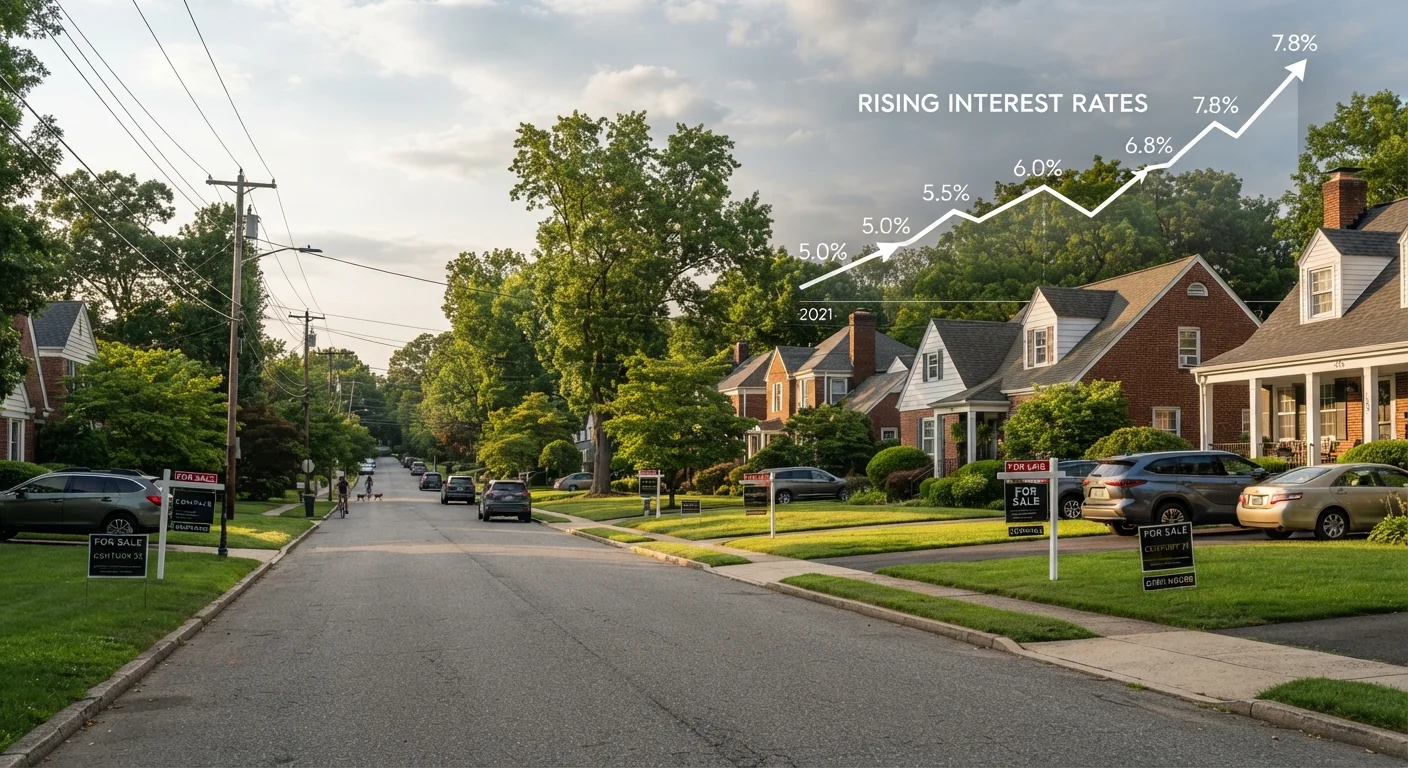
Photo: ShortwebArticles.com | Content For The Curious editorial
Key Takeaways
- Higher interest rates raise monthly payments, shrinking how much home a given income can buy.
- Rate changes affect not just buyers but the entire housing market, including sellers and inventory levels.
- The Federal Reserve influences — but does not directly set — mortgage rates.
- Locking in a rate at the right time can save tens of thousands of dollars over a loan's life.
- Local market conditions interact with national rate trends in ways that vary significantly by region.
The Direct Link Between Rates and What You Pay
When you borrow money to buy a home, the interest rate determines what that loan actually costs you over time. A 30-year fixed mortgage at 6% versus 7% on a $350,000 loan doesn't just change your monthly payment by a noticeable amount — it changes the total interest paid over the life of the loan by roughly $70,000 or more.
This is why mortgage rates function as one of the most powerful levers in housing affordability. As rates rise, the maximum loan amount a buyer can qualify for — given their income and expenses — shrinks. As rates fall, buying power expands. For context on how broader economic signals feed into this dynamic, see Economic Signals That Tend to Move the Housing Market.
~$70,000
Extra interest on a 1% rate difference
On a $350,000 30-year fixed mortgage, a 1 percentage point difference in rate can result in roughly $70,000 or more in additional total interest paid over the loan term.
~$200+
Monthly payment increase per 1% rate rise
On a $350,000 30-year mortgage, each 1 percentage point increase in interest rate adds approximately $200 or more per month to the required payment.
30-year
Standard US mortgage term
The 30-year fixed-rate mortgage is the most common home loan structure in the US, making long-term rate effects particularly significant for most buyers.
How Rates Shape the Whole Market, Not Just Your Payment
Interest rates don't operate in isolation. When rates rise sharply, existing homeowners who locked in low rates years earlier often become reluctant to sell — trading their low-rate mortgage for a new one at a higher rate is financially painful. This phenomenon, sometimes called the rate lock-in effect, can suppress the number of homes available for sale, which keeps prices elevated even as buyer demand weakens.
The result is a market that may feel stuck: affordability is poor because rates are high, yet prices haven't fallen enough to compensate because inventory is thin. This is a key reason why the US housing market doesn't always behave the way simple supply-and-demand logic would predict.
“Mortgage rates are arguably the single biggest short-term variable in housing affordability. A swing of even one percentage point can price out a meaningful share of potential buyers in a given market.”
— Lawrence Yun, Chief Economist, National Association of Realtors
Who Sets Rates — and Who Influences Them
Many people assume the Federal Reserve sets mortgage rates. In reality, the Fed controls the federal funds rate — the overnight lending rate between banks — not mortgage rates directly. Mortgage rates are more closely tied to the 10-year US Treasury yield, which reflects investor expectations about inflation and economic growth.
When inflation is expected to be high, bond investors demand higher yields to compensate, and mortgage rates tend to rise alongside them. When the economic outlook dims, investors often shift into bonds, pushing yields and mortgage rates lower. This relationship means that Fed statements about future rate intentions can move mortgage markets even before any actual policy change takes effect.
Compare APR, Not Just the Interest Rate
Affordability, Qualification, and the Debt-to-Income Factor
Lenders don't just look at the purchase price when you apply for a mortgage — they examine your debt-to-income ratio (DTI), which compares your monthly debt obligations to your gross monthly income. As interest rates rise, the monthly payment on any given loan amount increases, which means your DTI rises too, even if nothing else in your financial picture has changed.
This can push borrowers just outside the qualification threshold for the home they originally targeted, forcing them to shop at lower price points or make larger down payments to reduce the loan amount. Understanding how DTI works is foundational to navigating this process — What Debt-to-Income Ratio Means and Why Lenders Care About It offers a clear breakdown.
It's also worth noting that these affordability pressures don't play out uniformly across the country. Regional job markets, local inventory, and population trends all shape how rate changes land in any given city or neighborhood. Why Home Prices Don't Move the Same Way Everywhere explores those local dynamics in detail.
This article is for general informational and educational purposes only and does not constitute personalized financial, mortgage, or investment advice. Readers should consult a licensed mortgage professional or financial adviser for guidance specific to their situation.
Frequently Asked Questions
The content on this site is for informational purposes only and is not a substitute for professional advice. Always consult a qualified professional for guidance specific to your situation.