
Flight vs. Train vs. Drive: Choosing the Right Way to Get There

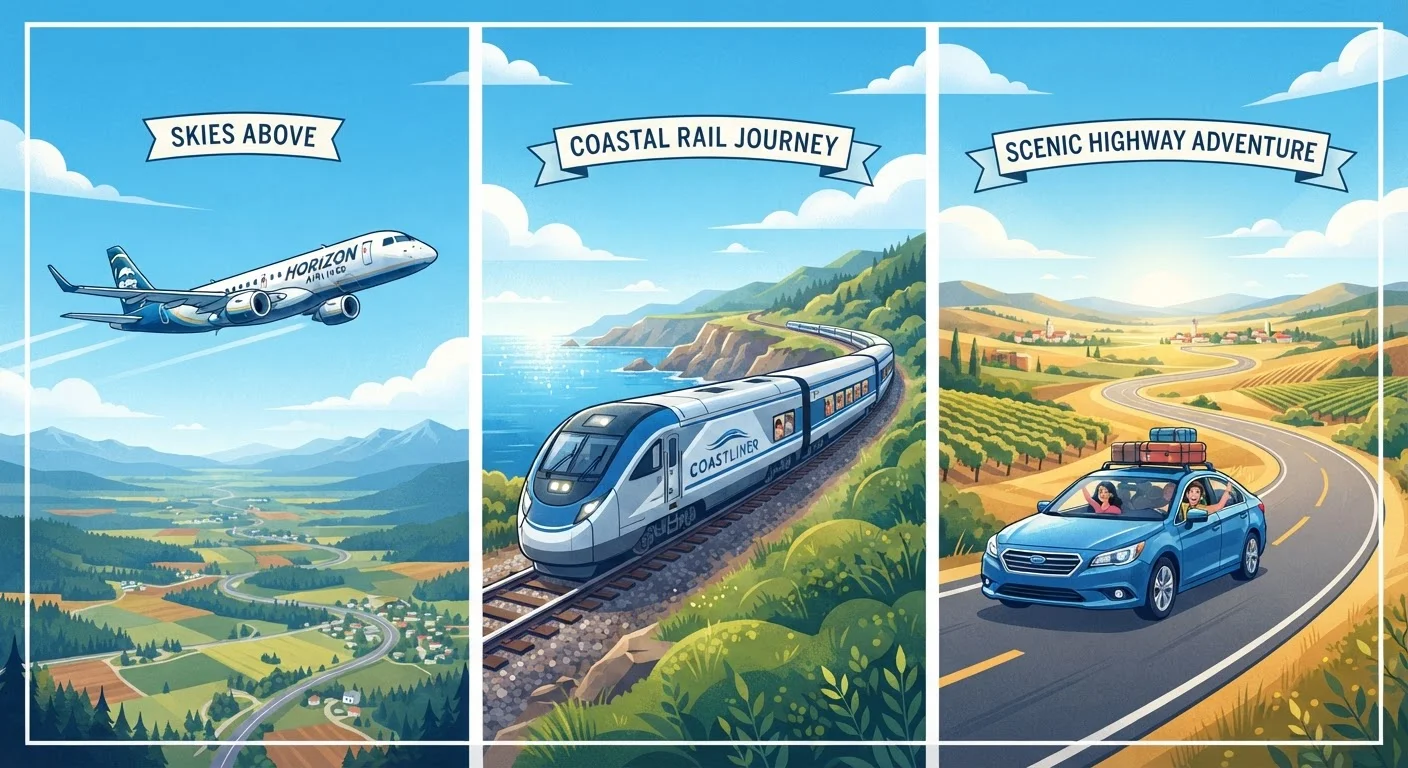
Photo: ShortwebArticles.com | Content For The Curious editorial
Key Takeaways
- Distance is the single biggest factor: flying wins beyond 500 miles, driving shines under 300.
- Total trip cost includes more than the ticket price — add parking, bags, fuel, and ground transport.
- Trains offer a stress-free middle ground for select city-pair routes, especially in the Northeast.
- Flexibility and luggage freedom heavily favor road trips for families and gear-heavy travelers.
- Timing the booking matters — locking in early often yields better outcomes regardless of mode.
Start With Distance and Time
The distance between your origin and destination does more heavy lifting in this decision than almost anything else. A useful rule of thumb: under 300 miles, driving is almost always competitive; between 300 and 600 miles, all three modes are genuinely in play; above 600 miles, flying becomes hard to beat on time alone.
But raw distance is only part of the picture. Flying from Chicago to Washington D.C. sounds fast — until you factor in arriving two hours early, clearing security, waiting at the gate, and then getting from Dulles or Reagan into the city center. That "two-hour flight" can easily become a six-hour ordeal. The train between those same cities runs roughly 18 hours — too long for most trips — but on the Northeast Corridor, Amtrak's New York to Boston service competes seriously with a shuttle flight once airport friction is added in.
Before you default to the option that feels fastest, map the door-to-door time for each mode. It often reshapes the comparison entirely.
| Flight | Train | Drive | |
|---|---|---|---|
| Best distance range | 500+ miles | 100–500 miles (corridor routes) | Under 400 miles |
| Door-to-door time | Fast, but add 3–4 hrs airport friction | Moderate; city-center to city-center | Predictable; depends on traffic |
| Cost transparency | Low — many hidden fees | High — fare is mostly all-in | Moderate — fuel + tolls + wear |
| Group/family value | Expensive per person | Moderate | Costs split across passengers |
| Luggage freedom | Restricted; fees apply | Generous on most routes | Unlimited |
| Flexibility en route | None | Minimal | Complete |
| Environmental footprint | Highest per mile | Generally lowest | Moderate; improves with carpooling |
The Real Cost Calculation
A $79 airline ticket sounds like a deal until you add a checked bag ($35), a seat selection fee ($25), parking at your home airport for four days ($60), and a rideshare to your hotel on arrival ($30). Suddenly that flight costs over $230 per person before a meal or coffee.
Driving math works differently. Fuel cost, wear-and-tear (commonly estimated at around $0.21 per mile beyond fuel), tolls, and any overnight stays en route all add up — but those costs split across multiple passengers in ways that quickly favor a car full of family members or friends. A 400-mile drive for a family of four can cost less than two plane tickets.
Trains fall somewhere in between. Amtrak fares vary widely by route and booking window, but rarely include the hidden fees that airline tickets carry. A seat is a seat, and checked bags on most Amtrak routes are either free or low-cost. For a deep dive on the timing side of booking, early vs. late booking trade-offs are worth understanding before you commit to any mode.
~$0.67
IRS mileage rate (2024) for owned vehicles
The IRS standard mileage rate covers fuel, depreciation, and maintenance — a useful per-mile cost estimate for driving trips.
2–3 hrs
Typical added time for domestic air travel
TSA recommends arriving at least 2 hours before domestic flights; add transit time to and from airports on both ends.
Flexibility, Comfort, and the Journey Itself
If the journey is part of the experience — stopping at a roadside diner, pulling off at a state park, or making a detour through a town you've always wanted to see — driving wins by default. No other mode gives you that kind of autonomy. Road trip format options are worth exploring once you've decided wheels are the right call.
Flying compresses the journey to near zero, which is exactly what you want when the destination is the point and the in-between is just an obstacle. It's also the only practical option for international trips or coast-to-coast domestic routes where time matters.
Trains occupy a genuinely appealing middle ground: you can walk around, eat a proper meal, watch the landscape, and arrive in a city center without renting a car. They're especially valuable for travelers who find driving stressful or airports exhausting. On well-served corridors like the Northeast or the California Zephyr route, the experience can be a highlight in itself.
Don't Forget the Last Mile
Making the Final Call
Run this quick mental checklist before you book: How far is it door-to-door? What does the full cost look like per person? How much luggage are you bringing? Do you need flexibility at the destination? And finally — what kind of traveler experience do you want?
Families hauling car seats and strollers often find driving is the only sane option regardless of distance. Solo business travelers heading to a conference 800 miles away almost always fly. A couple heading from Philadelphia to New York for a weekend might find Amtrak the most pleasant and efficient choice of all.
If you're planning a trip with more moving parts — multiple cities, layovers, or connections — the trade-offs between direct and multi-stop routes add another layer worth thinking through. The point isn't to find a universal answer; it's to match the mode to the specific trip in front of you.
The content on this site is for informational purposes only and is not a substitute for professional advice. Always consult a qualified professional for guidance specific to your situation.