
Packing With Purpose: A Smarter Approach to What Goes in Your Bag

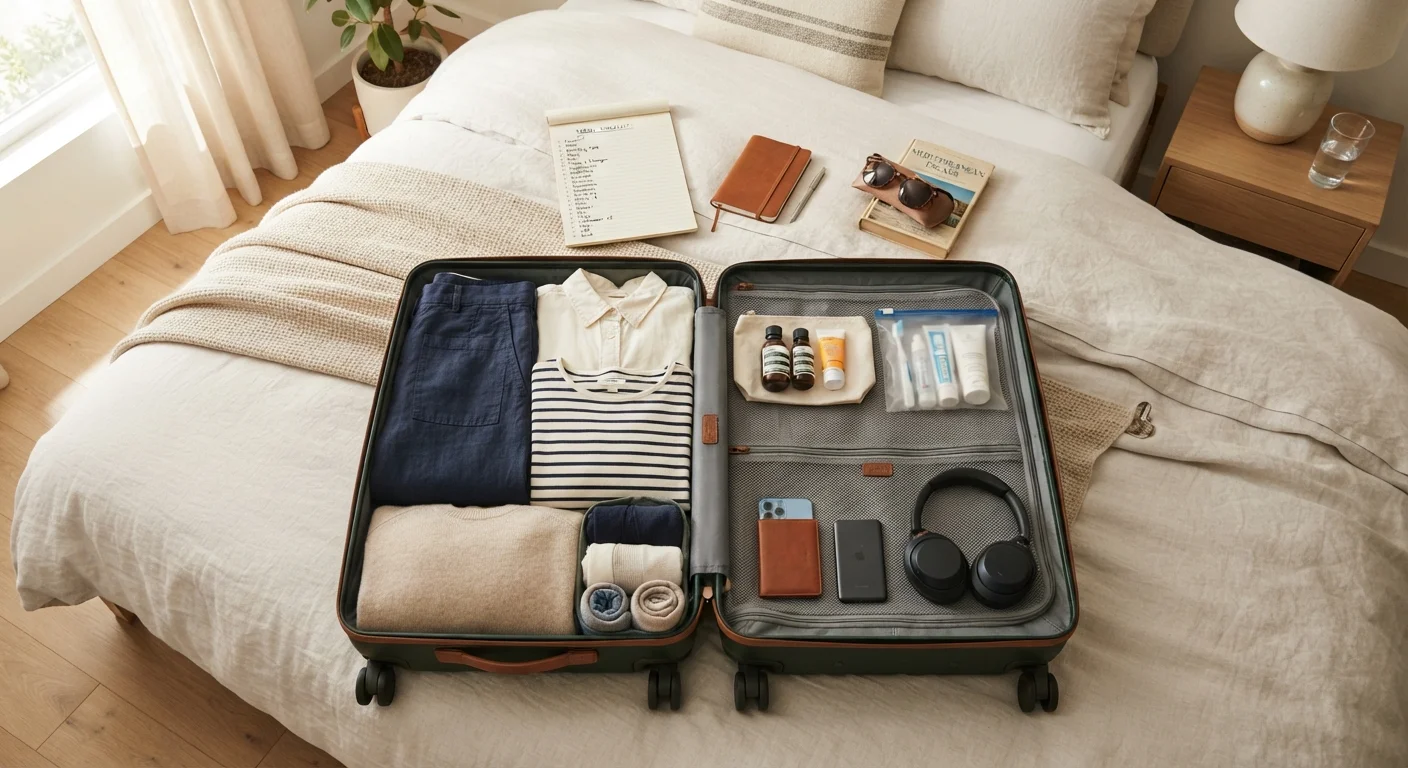
Photo: ShortwebArticles.com | Content For The Curious editorial
Key Takeaways
- Packing decisions should be driven by destination climate, trip duration, and planned activities.
- A capsule wardrobe approach — mixing and matching a small set of versatile pieces — dramatically reduces bag weight.
- Rolling clothes and using packing cubes maximizes space and keeps items organized throughout your trip.
- Toiletries and tech gear are the most common sources of overpacking; a category-by-category audit helps.
- Leaving a small buffer of empty space in your bag lets you bring back souvenirs without checking a second bag.
Why Most People Overpack — and How to Stop
Overpacking almost never comes from careful planning — it comes from anxiety. When travelers aren't sure what they'll need, they bring everything that might be needed, and the bag fills up fast. The result is a suitcase that's exhausting to haul, expensive to check, and ironically harder to navigate because finding things takes twice as long.
The fix isn't willpower. It's a system. When you approach packing as a series of deliberate decisions — tied to a specific destination, duration, and itinerary — you stop defaulting to the mental shortcut of "just in case." If you're still in the early stages of planning your trip, the first-timer's complete walkthrough has a strong foundation to build from before you ever open your bag.
What you will need
Packing cubes
Compress and categorize clothing by type or day, making it easy to find items without unpacking everything.
Luggage scale
Weigh your bag at home to avoid airline overweight fees before you reach the check-in counter.
Reusable zip-lock bags (1-quart)
Store travel-sized liquids in a TSA-compliant, leak-proof manner for carry-on security.
Packing checklist (digital or paper)
Track every item category systematically so nothing essential is left behind.
Compression bags
Reduce bulk of bulky items like jackets or sweaters by removing excess air.
Portable luggage tag with contact info
Identifies your bag if lost during transit, increasing the chance of recovery.
Step-by-Step: How to Pack Smarter
Follow the steps below in order. Each one narrows your decisions and makes the next one easier — by the time you're physically placing items in your bag, you'll have already made all the hard choices.
Define your trip's parameters
Before touching a single item of clothing, write down three things: your destination's climate, the number of days you'll be away, and the types of activities on your agenda. A beach week in Florida, a city-hopping European adventure, and a wilderness camping trip all require entirely different packing strategies. Locking in these parameters prevents the most common packing mistake — defaulting to what you always bring rather than what this specific trip demands.
Choose your bag based on the trip, not the other way around
Your bag size should be determined by your trip length and itinerary — not by how much you want to bring. For trips up to seven days, most travelers can manage comfortably with a carry-on-sized roller or a large backpack. Longer trips or those with formal events may justify checked luggage. Choosing a smaller bag first is one of the most effective forcing functions for disciplined packing.
Build a capsule wardrobe around a color palette
Select clothing in two or three complementary neutral colors — think navy, grey, white, and one accent — so every top pairs with every bottom. Aim for roughly 1.5 outfits per day rather than a full change per day, factoring in re-wears for casual layers. Prioritize lightweight, wrinkle-resistant fabrics that compress well and dry quickly. Leave specialty items (formal attire, hiking boots) for trips where they're genuinely necessary, not just possibly useful.
Audit your toiletries and tech category by category
Toiletries and electronics are the stealth weight-adders in almost every bag. Go through each category independently: skincare, hair care, medications, chargers, cables, and devices. For each item, ask whether it's available at your destination if you run out, and whether a travel-sized version suffices. Consolidate where possible — a multi-use balm, a universal adapter, a single earbud case rather than multiple sets. Keep liquids in a dedicated, easy-access pouch for security screening.
Pack using a structured layering method
Place heavier items (shoes, toiletry bag, tech gear) at the bottom of a roller bag or closest to your back in a backpack. Use packing cubes to separate clothing categories — one cube per type: tops, bottoms, undergarments. Roll rather than fold clothes to save space and reduce creasing. Fill shoes with socks or small items. Tuck a reusable bag into a side pocket for dirty laundry or unexpected purchases.
Do a final weight check and leave a buffer
Use a luggage scale to weigh your packed bag before leaving home. If you're over your airline's limit, remove items starting with the least versatile. Aim to come in at least 10–15% under the maximum — this buffer accommodates the weight of souvenirs or purchases made during your trip, and spares you from the frustrating airport scramble of repacking at the check-in counter.
Pack a Test Run the Night Before
Check Airline Carry-On Rules Before You Pack
Packing for International Travel: Extra Considerations
Crossing international borders adds a layer of complexity to what goes in your bag. Entry requirements for some countries limit certain food items, medications, or even electronic devices. Customs rules vary by destination, and what's legal to carry in the US may not be legal to import elsewhere. Always verify restrictions with official government sources — not travel forums — before you finalize your packing list.
For a broader look at everything you need to handle before departure, the international traveler's pre-boarding checklist covers documents, health prep, and financial logistics in detail. And for ongoing trip-planning strategy, explore the full international travel hub.
Don't Pack Restricted Items in Carry-Ons
The content on this site is for informational purposes only and is not a substitute for professional advice. Always consult a qualified professional for guidance specific to your situation.