
Camping vs. Motels on a Road Trip: A Practical Trade-Off

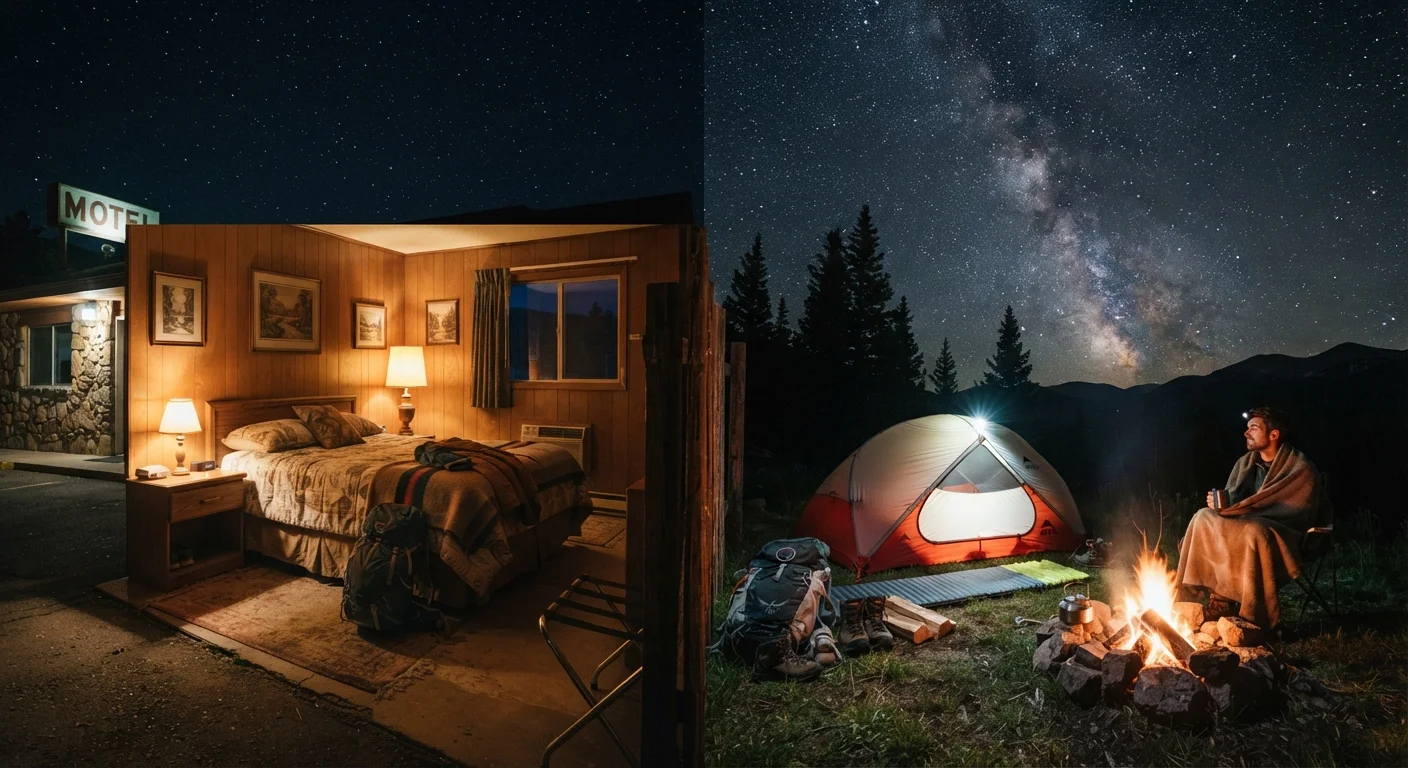
Photo: ShortwebArticles.com | Content For The Curious editorial
Key Takeaways
- Camping typically costs less per night but requires upfront gear investment and more planning.
- Motels offer reliable comfort and convenience but add up quickly over a multi-night trip.
- Your travel style, group size, and route type are the biggest factors in choosing between them.
- Mixing both options on a single trip is a practical strategy many road trippers use successfully.
- Neither option is universally better — context and personal priorities decide the winner.
Lower nightly cost with a campsite fee
Developed campground sites at state and national parks often range from $20–$45 per night — significantly less than budget motels in comparable areas. Over a week-long trip, the savings can be substantial.
Deeper immersion in natural scenery
Waking up next to a lake, canyon, or forest is an experience no roadside motel can replicate. For travelers whose trip revolves around landscapes, camping puts you inside the destination rather than adjacent to it.
More location flexibility in remote areas
In rural or wilderness-heavy stretches of a route, dispersed camping on public lands (where permitted) can give you access to spots that have no motel alternatives within reasonable distance.
Cooking your own meals reduces food costs
A camp stove and basic provisions allow you to prepare meals, which helps offset the cost of the gear and keeps overall trip spending lower than a motel-plus-restaurant pattern.
Appeals to outdoor-oriented travel companions
For families with kids who love nature, or groups of friends on an adventure-focused trip, camping adds an experience layer that aligns with the trip's spirit rather than just being a sleep stop.
Upfront gear investment can be significant
A tent, sleeping bags, pads, cookware, and camp lighting can easily run $300–$600 or more for a first-time setup. This narrows the cost advantage, especially for occasional travelers.
Weather dependency creates real uncertainty
Rain, extreme heat, cold nights, or unexpected storms can make camping miserable or unsafe, and unlike a motel, there's no amenity to buffer against conditions.
Popular sites require advance reservations
Campgrounds at well-known parks book out weeks or months ahead during peak season, which limits spontaneous travel and adds planning overhead to an otherwise flexible mode of road tripping.
Setup fatigue accumulates over a long trip
Breaking camp every morning and setting up every evening adds 30–60 minutes of labor per day. After a week, that routine can wear on travelers who simply want to rest and move on.
Limited amenities compared to even budget motels
Many campsites lack hot showers, reliable phone charging, Wi-Fi, or climate control — facilities that travelers managing work obligations or health needs may genuinely require.
The Core Trade-Off at a Glance
Every road trip comes down to a series of small decisions, and where you sleep each night is one of the biggest. Camping and motels sit at opposite ends of the comfort-versus-cost spectrum, and both have genuine strengths depending on how you travel. The goal here isn't to crown a winner — it's to help you figure out which fits your trip.
For a deeper look at how lodging figures into your overall spending, see road trip budgeting breakdown — it maps out where costs actually accumulate on a US drive. And if you're still shaping your route, coast-to-coast vs. regional loop covers how your format affects everything from nightly lodging options to total mileage.
Lower nightly cost with a campsite fee
Developed campground sites at state and national parks often range from $20–$45 per night — significantly less than budget motels in comparable areas. Over a week-long trip, the savings can be substantial.
Deeper immersion in natural scenery
Waking up next to a lake, canyon, or forest is an experience no roadside motel can replicate. For travelers whose trip revolves around landscapes, camping puts you inside the destination rather than adjacent to it.
More location flexibility in remote areas
In rural or wilderness-heavy stretches of a route, dispersed camping on public lands (where permitted) can give you access to spots that have no motel alternatives within reasonable distance.
Cooking your own meals reduces food costs
A camp stove and basic provisions allow you to prepare meals, which helps offset the cost of the gear and keeps overall trip spending lower than a motel-plus-restaurant pattern.
Appeals to outdoor-oriented travel companions
For families with kids who love nature, or groups of friends on an adventure-focused trip, camping adds an experience layer that aligns with the trip's spirit rather than just being a sleep stop.
Where Camping Falls Short
Camping is appealing on paper, but the friction points are real. Gear costs money upfront — tents, sleeping bags, cooking equipment, and a cooler can run several hundred dollars before you've driven a mile. Setup and breakdown at each site takes time, and after a long driving day, pitching a tent in the dark isn't everyone's idea of fun.
Weather is the wildcard camping can never fully eliminate. A rainy night in a leaky tent or a heat wave with no air conditioning reframes the whole "getting back to nature" proposition. Campsite availability is also tighter than many first-timers expect — popular spots at national parks and state parks often book out weeks or months in advance, especially in summer. Booking timing matters enormously when campsites are in the mix.
Upfront gear investment can be significant
A tent, sleeping bags, pads, cookware, and camp lighting can easily run $300–$600 or more for a first-time setup. This narrows the cost advantage, especially for occasional travelers.
Weather dependency creates real uncertainty
Rain, extreme heat, cold nights, or unexpected storms can make camping miserable or unsafe, and unlike a motel, there's no amenity to buffer against conditions.
Popular sites require advance reservations
Campgrounds at well-known parks book out weeks or months ahead during peak season, which limits spontaneous travel and adds planning overhead to an otherwise flexible mode of road tripping.
Setup fatigue accumulates over a long trip
Breaking camp every morning and setting up every evening adds 30–60 minutes of labor per day. After a week, that routine can wear on travelers who simply want to rest and move on.
Limited amenities compared to even budget motels
Many campsites lack hot showers, reliable phone charging, Wi-Fi, or climate control — facilities that travelers managing work obligations or health needs may genuinely require.
What Motels Offer — and Where They Disappoint
A motel's core promise is simple: drive in, get a key, sleep in a real bed, shower in the morning, leave. No setup, no gear, no weather anxiety. For travelers doing long daily mileage or managing kids and elderly passengers, that frictionless experience has genuine value that's hard to quantify but easy to feel after ten hours behind the wheel.
The cost reality is harder to ignore, though. A budget motel in a mid-sized American city might run $80–$120 per night — sometimes more in tourist corridors or during peak season. Multiply that across a 10-night trip and you're looking at $800–$1,200 just for lodging. That's a significant chunk of any road trip budget, and motel quality varies widely, so the price doesn't always reflect the experience.
$35
Average developed campsite fee per night
National Park Service and state park campground fees vary by site and region, but developed sites with basic amenities commonly fall in the $20–$50 range.
$96
Average US budget motel rate per night
According to travel industry data, economy-tier motel rates across the US have generally ranged from $75 to $120+ per night depending on location and season.
~40%
Potential lodging savings by camping nightly
Choosing campgrounds over budget motels for every night of a 10-night trip can reduce lodging costs by roughly a third to half, before factoring in gear amortization.
Flexibility and the Hybrid Approach
One of the most practical things seasoned road trippers know: you don't have to choose one or the other for the entire trip. Many travelers camp where campgrounds are scenic and plentiful — think national forests and rural stretches — then book a motel when they hit a city, need a real shower, or face a forecast for storms. This hybrid approach can meaningfully cut costs while preserving comfort when it counts most.
Your trip planning process should map lodging options alongside your route, not separately from it. If a stretch of highway runs through open desert with no campgrounds, a motel isn't optional — it's the only choice. The reverse is also true: some of the most memorable nights on the road happen in backcountry campsites that no motel can replicate.
For those still weighing how much pre-planning to do, package deals vs. DIY bookings is worth a read — it explores how much flexibility to preserve versus lock in before you leave home.
The Hybrid Approach in Practice
The content on this site is for informational purposes only and is not a substitute for professional advice. Always consult a qualified professional for guidance specific to your situation.