
Trading In vs. Selling Your Car Privately

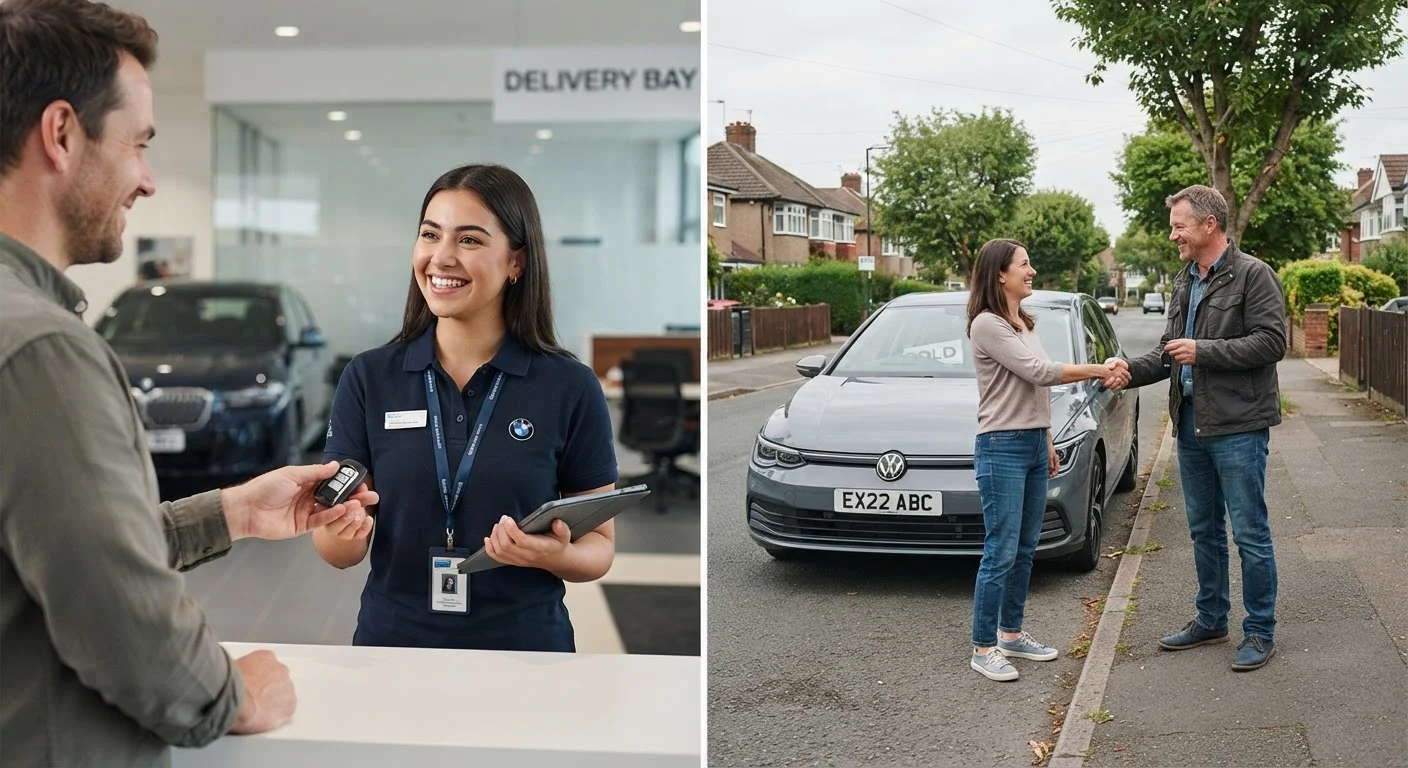
Photo: ShortwebArticles.com | Content For The Curious editorial
Key Takeaways
- Private sales typically yield a higher return than trade-ins, but require significantly more effort and time.
- Trade-ins offer convenience and may reduce the taxable purchase price of your next vehicle in many states.
- A trade-in quote is not a final offer — you can negotiate just like any other part of a vehicle deal.
- Private sales require you to handle title transfer, payment verification, and buyer vetting independently.
- Getting multiple valuations before deciding helps you understand the real gap between your two options.
The Core Trade-Off: Convenience vs. Return
When it's time to move on from your current vehicle, you have two main paths: trade it in at a dealership or sell it yourself to a private buyer. The choice comes down to a straightforward tension — how much time and effort are you willing to put in, and how much money do you want back?
A trade-in means you hand the car over to the dealer, get a credit applied toward your next purchase, and walk away. A private sale means you do the legwork — listing the car, fielding inquiries, arranging test drives, verifying funds, and completing the title transfer on your own. The payoff for that extra work is typically a meaningfully higher return.
Neither option is objectively superior. The right choice depends on your timeline, your vehicle's condition, your comfort with the process, and whether you're buying another car at the same time. For drivers also weighing their next purchase, our comparison of buying vs. leasing a car can help you think through that side of the equation too.
| Criterion | Trade-In | Private Sale |
|---|---|---|
| Typical return | Below retail market value | Closer to retail market value |
| Time to complete | Same day as new purchase | Two to four weeks or more |
| Effort required | Minimal — dealer handles logistics | High — listing, vetting, paperwork |
| Outstanding loan handling | Dealer coordinates payoff | Seller must coordinate with lender |
| Sales tax benefit | Yes, in most U.S. states | No tax offset on next purchase |
| Fraud/scam risk | Very low | Moderate — buyer vetting required |
| Negotiation | Offer is negotiable with prep | Price set by seller and market |
What Trade-Ins Actually Offer
The appeal of a trade-in is real. You don't need to write a listing, deal with tire-kicking strangers, or worry about counterfeit payment. The dealer assesses your vehicle, gives you a number, and folds the value into your purchase transaction. If you still owe money on the car, the dealer manages the payoff to your lender — which simplifies what would otherwise be a complex process in a private sale.
One often-overlooked benefit: in many U.S. states, trading in reduces the taxable value of your new vehicle purchase. If you buy a $35,000 car and receive a $10,000 trade-in credit, you may only pay sales tax on $25,000. Depending on your state's rate, this can offset some of the gap between trade-in and private sale value.
$1,000–$3,000+
Typical gap between trade-in and private sale value
Industry analysts and consumer automotive resources generally estimate private sale prices run meaningfully higher than dealer trade-in offers, with the gap varying by vehicle age, condition, and demand.
45 states
States offering a sales tax trade-in credit
Most U.S. states reduce the taxable purchase price of a new vehicle by the trade-in value, according to general tax policy guidance; rules vary, so verify with your state's DMV or a tax professional.
The downside is the offer itself. Dealers need to account for reconditioning costs, auction risk, and their own resale margin. That means trade-in offers are almost always below what you'd receive from a private buyer. Critically, the trade-in offer is negotiable — get at least two or three independent valuations before accepting anything. Online valuation tools and offers from independent appraisers can give you leverage at the negotiating table.
What Private Sales Actually Demand
Selling privately usually nets you more money, but it earns that return. You'll need to price the car accurately using current market data, create a compelling listing with quality photos, and screen buyers carefully. Scams targeting private sellers are a genuine concern — cashier's checks can be forged, and wire transfer requests can be fraudulent. Accepting cash or using a verified peer-to-peer payment platform with appropriate limits is generally considered safer practice.
You're also responsible for the paperwork. That means completing the title transfer correctly for your state, providing a bill of sale, and potentially handling a smog or safety inspection depending on where you live. If your car still has a loan attached, your lender holds the title — you'll need to coordinate payoff and title release as part of the sale, which adds steps and can slow down the process.
Title and Loan Payoff in Private Sales
The time investment is real. A straightforward private sale might take two to four weeks from listing to completion; a complicated one can stretch longer. If you're simultaneously trying to purchase a new vehicle, managing both timelines in parallel adds stress. That said, for a vehicle with strong private market demand, the financial difference can be substantial enough to justify the effort.
If you're also evaluating your financing options for a new vehicle, see how dealer financing compares to financing through your own bank — the same logic of convenience versus potential savings applies there too.
The content on this site is for informational purposes only and is not a substitute for professional advice. Always consult a qualified professional for guidance specific to your situation.