
Personal Budgeting from the Ground Up

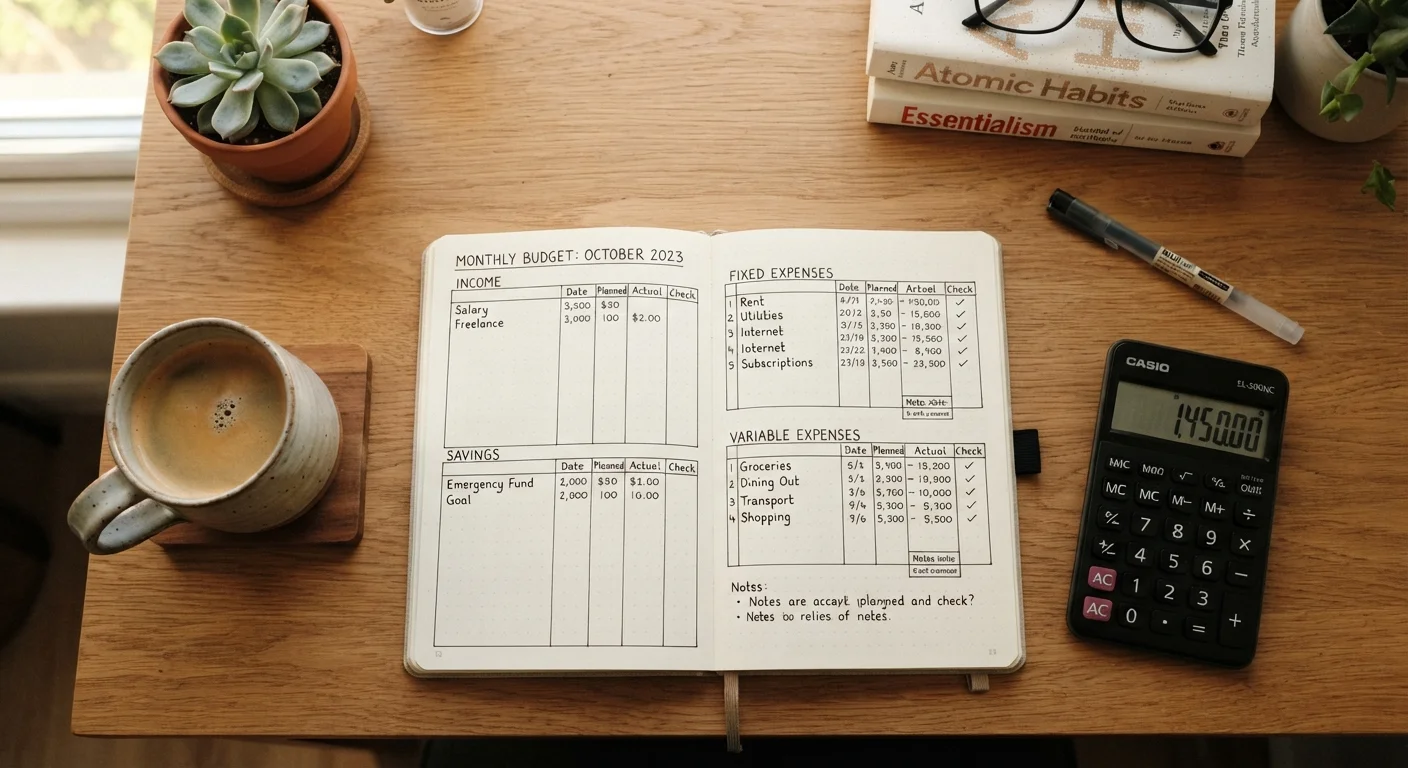
Photo: ShortwebArticles.com | Content For The Curious editorial
Key Takeaways
- A budget is simply a plan for how you'll use your money each month — not a punishment.
- Start with your actual take-home income, not your gross salary, to get realistic numbers.
- Expenses fall into fixed, variable, and discretionary categories — each managed differently.
- Choosing a method that fits your lifestyle makes a budget easier to stick with long-term.
- Review your budget monthly and adjust it as your life and income change.
Why Budgeting Matters
A budget is nothing more than a written plan for your money. It tells your dollars where to go instead of leaving you wondering where they went. Despite what many people assume, budgets aren't only for people struggling financially — they're a practical tool for anyone who wants to make intentional choices with their income. For a deeper look at common misconceptions, see things people get wrong about having a budget.
Without a budget, most people rely on a rough mental accounting of their finances — which consistently underestimates spending in categories like food, subscriptions, and impulse purchases. A written plan closes that gap between what you think you're spending and what you actually are.
Start Simple, Refine Later
This article provides general financial information and education. It is not personalized financial advice. Consider speaking with a qualified financial professional about decisions specific to your situation.
Know Your Income First
Before you can plan your spending, you need an accurate picture of what comes in. Use your net income — the amount that lands in your bank account after taxes and any payroll deductions — not your gross salary. This is the money you actually have to work with.
Net income
The money you actually take home after taxes and payroll deductions. This is the number to use when building a budget, not your gross salary.
Fixed expense
A cost that stays the same every month, like rent or a car loan payment, making it easy to plan around.
Discretionary spending
Money spent on wants rather than needs — things like dining out, entertainment, or hobbies that you choose to buy.
Zero-based budget
A budgeting method where every dollar of income is assigned a specific purpose each month, leaving zero unallocated.
Buffer category
A small amount of money set aside within a budget for unexpected or miscellaneous costs so one surprise doesn't break the whole plan.
Emergency fund
A separate pool of savings reserved strictly for genuine financial emergencies, like a job loss or major unexpected expense.
If your income varies month to month — common for freelancers, gig workers, or those with seasonal jobs — use a conservative estimate based on your lowest recent months. It's safer to plan around less and have a surplus than to overspend based on a high month.
Include all income sources: your primary job, any side income, child support, or rental income. The goal is a realistic, consistent baseline.
Map Out Your Expenses
Pull up two to three months of bank and credit card statements and categorize every expense. Most spending falls into three buckets:
- Fixed expenses — same amount every month (rent, car payment, insurance premium)
- Variable necessities — amounts that shift but are still needs (groceries, utilities, gas)
- Discretionary spending — wants, not needs (dining out, streaming services, clothing beyond basics)
Don't forget irregular expenses that don't show up every month: annual subscriptions, car registration fees, holiday gifts, or medical copays. Divide their annual cost by 12 and treat that monthly fraction as a real expense. Skipping these is one of the most common reasons first budgets fail.
Irregular Expenses Trip Up Most Beginners
Choosing a Budgeting Method
There's no single correct way to budget. The best method is the one you'll actually use. Two popular frameworks are worth understanding as a starting point:
- 50/30/20 rule — Allocates 50% of take-home pay to needs, 30% to wants, and 20% to savings or debt repayment. Simple to implement and forgiving for beginners.
- Zero-based budgeting — Every dollar of income is assigned a job until the balance reaches zero. It requires more tracking but leaves no money unaccounted for.
To compare these approaches side by side, see zero-based vs. percentage-based budgeting. For a broader overview of the full budgeting process, the complete budgeting roadmap covers everything from setup to long-term adjustments.
Whichever method you choose, build in a small buffer — sometimes called a buffer category — for unexpected costs. This keeps one surprise from derailing your entire plan.
Setting Goals and Staying on Track
A budget without goals is just arithmetic. Attach your plan to something concrete: paying off a credit card, building an emergency fund, or saving for a vacation. Goals give you a reason to stick to the plan when discretionary spending is tempting. For a practical look at why an emergency fund should often come first, read emergency fund basics.
Review your budget at the end of each month. Compare what you planned to what actually happened, and adjust the following month's allocations accordingly. This feedback loop is how a rough first draft becomes an accurate, personalized financial tool over time.
Once you have a working budget in place, you may find yourself ready to think beyond day-to-day spending. Our everyday investing hub offers beginner-friendly concepts for putting surplus money to work. You can also learn common budgeting terms that will help you understand financial conversations with confidence.
Common Budgeting Terms Glossary
A plain-language reference covering key budgeting vocabulary — from discretionary income to debt-to-income ratio — so financial conversations make more sense.
Zero-Based vs. Percentage-Based Budgeting
A side-by-side comparison of two popular budgeting frameworks to help you decide which approach fits your habits and income structure.
Emergency Fund Basics
Learn what an emergency fund is, how much to aim for, and why building one is often the first financial goal worth pursuing before tackling other money goals.
Frequently Asked Questions
The content on this site is for informational purposes only and is not a substitute for professional advice. Always consult a qualified professional for guidance specific to your situation.