
Emergency Fund Basics: How a Cash Cushion Changes Your Financial Picture

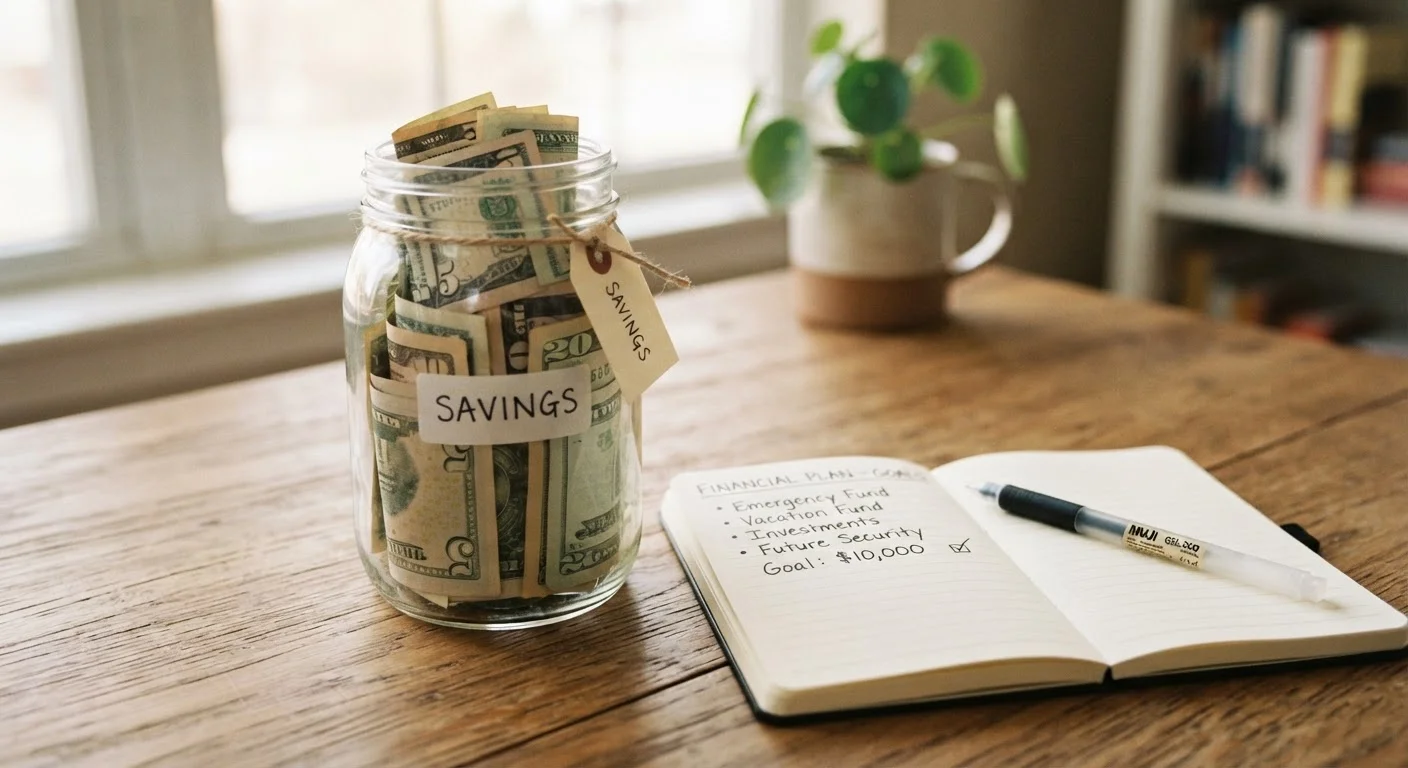
Photo: ShortwebArticles.com | Content For The Curious editorial
Key Takeaways
- An emergency fund is money set aside exclusively for unplanned, necessary expenses like job loss or medical bills.
- Most financial educators suggest aiming for three to six months of essential living expenses.
- Even a small starter fund of $500–$1,000 can prevent you from going deeper into debt when surprises hit.
- Your emergency fund should sit in a liquid, accessible account — not tied up in investments.
- Building a modest emergency fund before aggressively paying down debt can actually protect your progress.
What Is an Emergency Fund?
An emergency fund is a dedicated pool of cash reserved for unplanned, necessary expenses — not wants, not planned purchases, but genuine financial surprises. Think job loss, an unexpected car repair, a medical bill not covered by insurance, or a sudden home repair. Its entire purpose is to give you a financial buffer so a single bad event doesn't cascade into larger money problems.
Without one, most people reach for a credit card or a personal loan when something goes wrong — adding debt on top of an already stressful situation. The emergency fund breaks that cycle. It's not about earning returns or building wealth; it's about staying financially stable when life doesn't go according to plan.
Emergency fund
A dedicated pool of savings set aside specifically for unexpected, necessary expenses. It is not for planned costs or discretionary spending.
Liquid savings
Money that can be accessed quickly — usually within a few business days — without penalties or market risk. A checking or savings account holds liquid funds; investments generally do not.
Essential living expenses
The baseline monthly costs you must pay to maintain housing, transportation, food, and basic financial obligations. Used to calculate how large your emergency fund target should be.
FDIC insurance
A U.S. government-backed program that protects depositors if a bank fails, typically covering up to $250,000 per depositor, per institution, per account category.
High-yield savings account
A savings account that pays a higher interest rate than a standard savings account, typically offered by online banks. It keeps funds accessible while earning modest returns.
For a broader look at building the financial habits that support an emergency fund, see our guide to personal budgeting from the ground up.
How Much Should You Save?
The most widely cited target is three to six months of essential living expenses — meaning the costs you absolutely must cover each month: rent or mortgage, utilities, groceries, transportation, minimum debt payments, and basic insurance. It does not include dining out, subscriptions, or discretionary spending.
That range exists because circumstances differ. Someone with a stable government job and no dependents carries less income risk than a freelancer supporting a family. If your income is irregular or your household has only one earner, leaning toward six months makes sense. If you have a dual income and strong job security, three months may be sufficient.
Set a Reachable Starter Goal First
Don't let the full target feel overwhelming. Many financial educators suggest a starter goal of $500 to $1,000 for people who are new to saving or still managing high-interest debt. That smaller cushion still protects you from many common emergencies without requiring months of sacrifice upfront.
Where to Keep Your Emergency Fund
Your emergency fund needs to be liquid (accessible quickly), stable (not exposed to market fluctuations), and separate from your everyday checking account. That last point matters more than most people expect — when the money is visible and blended with spending funds, it tends to disappear gradually on non-emergencies.
A high-yield savings account at an FDIC-insured institution is a commonly recommended option. It earns more than a standard savings account while keeping funds accessible within one to three business days. Money market accounts at banks or credit unions are another option worth exploring.
Market-Linked Accounts Are Not Safe Parking
Avoid placing your emergency fund in a brokerage account or invested in stocks or bonds. Market values fluctuate, and a financial emergency that coincides with a market downturn could force you to sell at a loss — precisely when you can least afford it.
Emergency Fund vs. Paying Off Debt
This is one of the most common dilemmas in personal finance, and there's no single right answer for every situation. The core tension: high-interest debt (like credit card balances) costs you money every month, so paying it down aggressively makes mathematical sense. But going all-in on debt repayment without any savings buffer means one car repair or medical bill sends you right back to borrowing.
A practical middle path that many financial educators describe works like this:
- Build a small starter emergency fund ($500–$1,000).
- Aggressively pay down high-interest debt.
- Once high-interest debt is cleared, build the full three-to-six month fund.
This approach balances risk reduction with cost efficiency. It won't be the mathematically optimal path in every case, but it tends to be sustainable and resilient for most households. For a structured way to evaluate where you stand, the financial checkup guide walks through assessing both your savings and debt health side by side.
How to Start Building One
Starting small and consistent beats waiting until you can save large amounts. A few approaches that tend to hold up in practice:
- Automate a fixed transfer on payday — even $25 or $50 — directly to your emergency savings account. Automation removes the decision each month.
- Direct windfalls — tax refunds, work bonuses, gift money — partially or fully into the fund until it reaches your target.
- Find a specific line item to trim in your budget and redirect that amount. See realistic approaches for saving on a tight budget for ideas that don't require dramatic lifestyle cuts.
Tracking your progress within a broader budget also helps. If you haven't yet built a full spending plan, our complete budgeting roadmap is a logical next step — it covers how to incorporate savings goals alongside everyday expenses.
Don't Invest Your Emergency Fund
This article is for general informational purposes only and does not constitute personalized financial advice. Consult a licensed financial professional for guidance specific to your situation.
Frequently Asked Questions
The content on this site is for informational purposes only and is not a substitute for professional advice. Always consult a qualified professional for guidance specific to your situation.