
The 50/30/20 Rule Explained

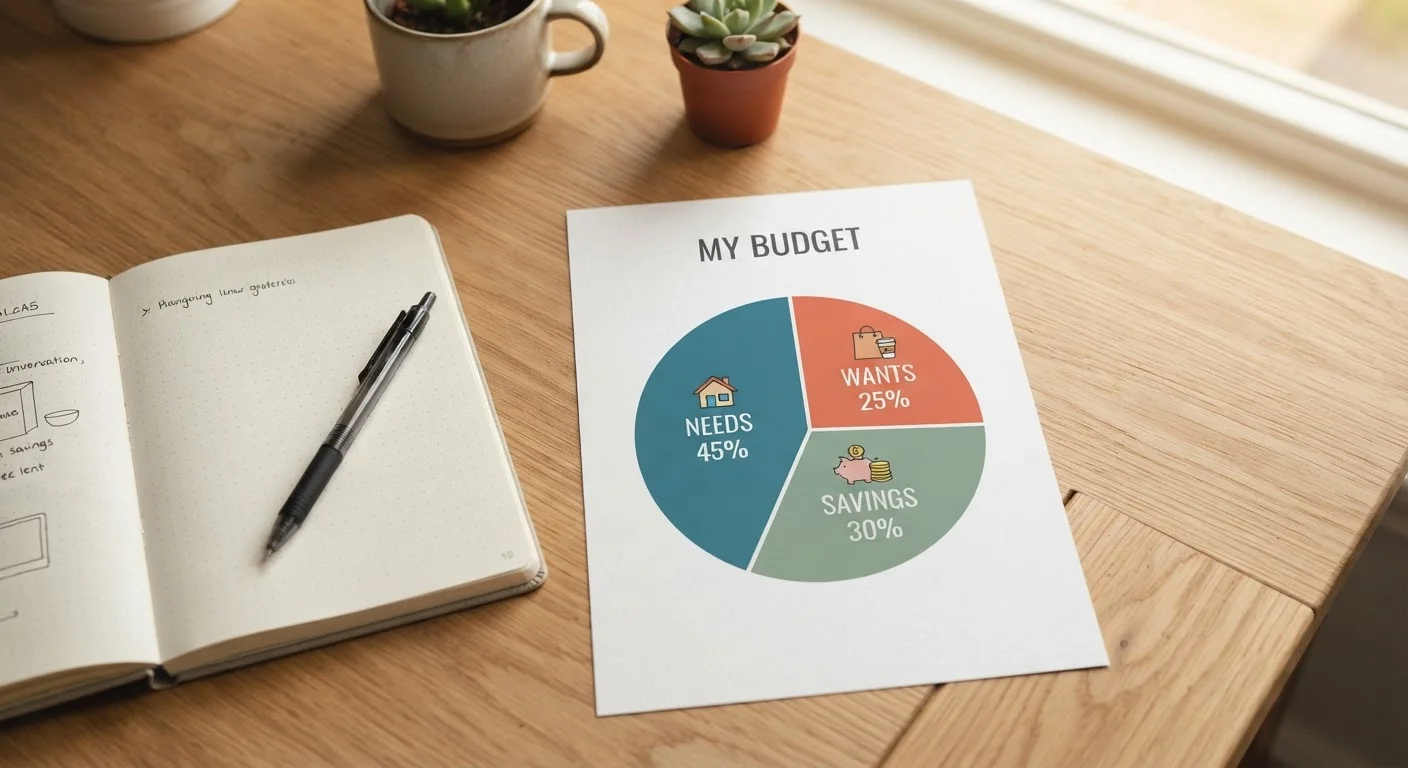
Photo: ShortwebArticles.com | Content For The Curious editorial
Key Takeaways
- The 50/30/20 rule splits after-tax income into needs (50%), wants (30%), and savings or debt (20%).
- It is a general guideline, not a rigid requirement — your situation may call for different percentages.
- High-cost-of-living areas or significant debt loads often make the 50% needs threshold difficult to stay within.
- The 20% savings bucket should ideally include emergency fund contributions and retirement savings.
- Pairing this framework with a monthly budget checklist makes it significantly easier to apply.
Where the Rule Comes From
The 50/30/20 framework was popularized by Senator Elizabeth Warren and her daughter Amelia Warren Tyagi in their 2005 book All Your Worth: The Ultimate Lifetime Money Plan. Their argument was that most financial stress stems not from overspending on luxuries, but from lopsided spending on fixed costs — housing, car payments, insurance — that leaves too little breathing room. By keeping needs at or below 50% of take-home pay, the idea is that you preserve flexibility for both enjoyment and long-term security.
The rule is a guideline, not a law. Warren and Tyagi intended it as a framework to help ordinary households develop a balanced spending structure — not a formula that fits every income level or family size perfectly.
Breaking Down the Three Categories
Needs (50%) — These are non-negotiable, recurring expenses required to live and work. Rent or mortgage payments, utilities, groceries, basic health insurance premiums, minimum loan payments, and reliable transportation all fall here. If your needs consistently exceed half your take-home pay, it's a signal worth addressing — either by reducing fixed costs or working toward higher income over time.
Wants (30%) — This is money spent on things that improve quality of life but aren't essential to survival. Restaurant meals, entertainment, travel, clothing beyond basic needs, and subscription services belong in this bucket. The 30% ceiling helps prevent lifestyle creep from quietly crowding out savings.
Savings and Debt Paydown (20%) — This slice funds your future. It includes contributions to an emergency fund, retirement accounts like a 401(k) or IRA, and any extra debt repayment beyond minimums. If you're carrying high-interest debt, directing a significant portion of this 20% toward paying it down is generally a sound priority before investing heavily elsewhere.
50%
Recommended ceiling for essential needs
The 50/30/20 framework recommends keeping housing, food, transportation, and other necessities at or below half of after-tax income.
~36%
Average American household savings rate gap
According to Federal Reserve data, a significant share of U.S. households report difficulty covering an unexpected $400 expense, highlighting how far many fall short of the 20% savings target.
20%
Target for savings and debt repayment
Financial educators widely cite 15–20% of income as a meaningful savings target to build long-term financial resilience, which aligns with this rule's final bucket.
For a practical walkthrough of setting this up month to month, see the Monthly Budget Setup Checklist — it walks through gathering your numbers and categorizing spending before the month begins.
When the 50/30/20 Rule Doesn't Fit
The framework works best for middle-income earners with relatively stable, predictable expenses. It runs into friction in several common situations:
- High-cost-of-living areas: In many American cities, rent alone can consume 40–50% of a moderate income before food or transportation are counted. Staying within the 50% needs limit may be genuinely impossible without significant trade-offs.
- Variable income: Freelancers, gig workers, or commission-based earners face fluctuating monthly income that makes fixed percentages harder to apply consistently.
- Heavy debt loads: Someone carrying significant student loans or medical debt may need to allocate more than 20% to debt repayment to make meaningful progress, which requires trimming elsewhere.
- Very low income: When income barely covers essentials, discretionary percentage targets can feel disconnected from reality. Building any savings at all becomes the more realistic first goal.
If the standard split doesn't match your life, consider adjusting it to something like 60/20/20 or 50/20/30 — the underlying principle of categorizing and capping spending still applies even when the numbers shift.
Adjust the percentages if they don't fit
For a different approach that some people find more hands-on, the envelope budgeting method assigns cash (or digital equivalents) to specific spending categories rather than working from broad percentages.
Putting the Rule into Practice
Start by calculating your monthly after-tax income — this is your actual take-home number, not your salary. Then multiply by 0.50, 0.30, and 0.20 to find your three spending targets. Compare those targets to what you actually spent last month across each category.
Most people find the wants category to be the easiest one to trim, and the needs category the hardest to move. If your needs are running above 50%, look at your largest fixed expenses first — housing is typically the biggest lever. If your savings rate is well below 20%, even shifting it to 10% and gradually increasing it can build meaningful momentum over time.
Once you have a sense of where your spending currently lands, running a structured savings and debt checkup can help you prioritize where to put your 20% allocation — whether that's an emergency fund, retirement contributions, or accelerated debt payoff.
This article is for general informational and educational purposes only and does not constitute personalized financial, tax, or investment advice. For guidance specific to your financial situation, consult a qualified financial professional.
Frequently Asked Questions
The content on this site is for informational purposes only and is not a substitute for professional advice. Always consult a qualified professional for guidance specific to your situation.