
Envelope Budgeting in the Digital Age

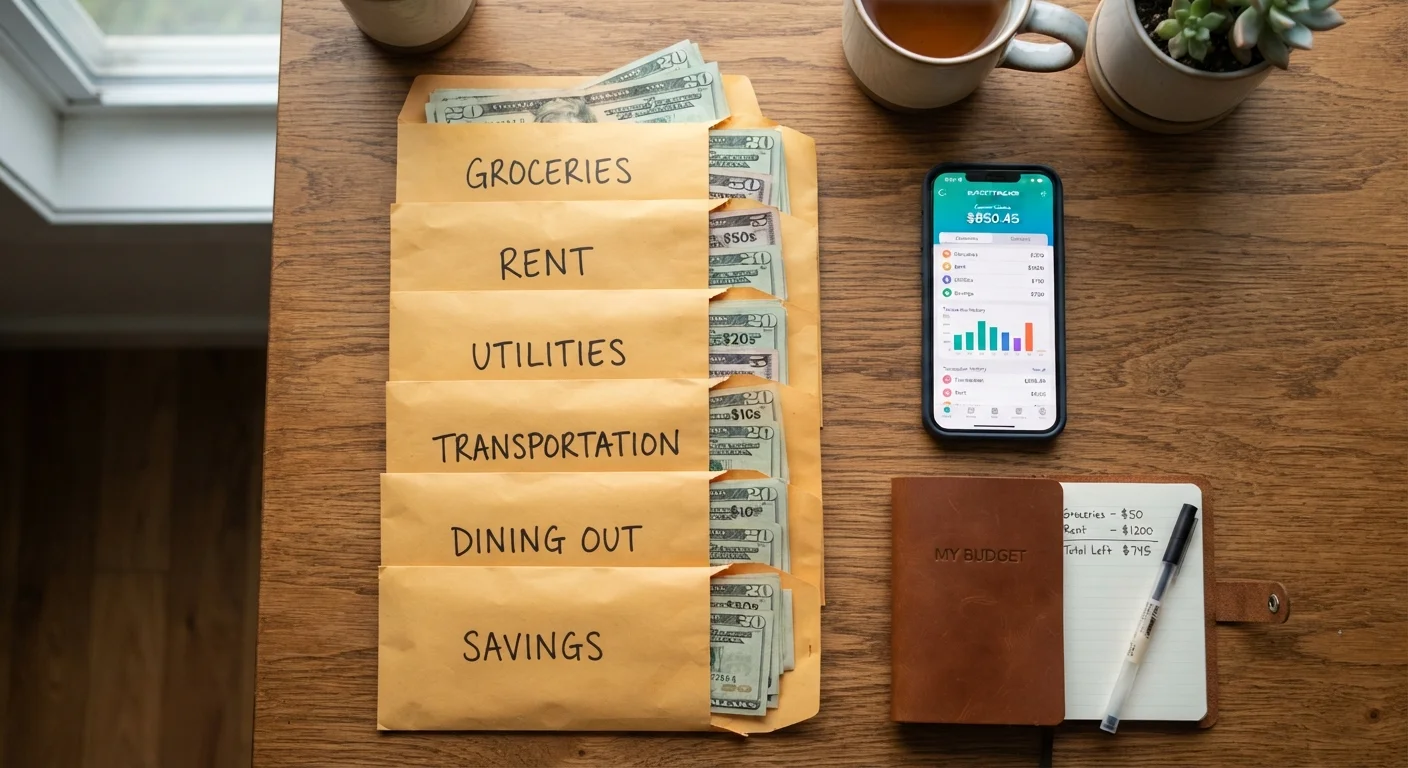
Photo: ShortwebArticles.com | Content For The Curious editorial
Key Takeaways
- Envelope budgeting assigns a fixed cash amount to each spending category before the month begins.
- When the cash in an envelope runs out, spending in that category stops for the month.
- Digital apps now replicate the envelope system without requiring physical cash.
- The method is especially effective for people who struggle with discretionary overspending.
- It works best when paired with a clear picture of your monthly income and fixed expenses.
Creates hard spending limits by category
Once an envelope is empty, the decision is made for you — there's no gray area or negotiation. This removes the mental burden of in-the-moment spending decisions.
Makes overspending immediately visible
You can see at a glance how much is left in each category, so there are no end-of-month surprises. Awareness alone tends to moderate spending behavior.
Reduces reliance on willpower alone
The system creates structural constraints rather than depending on motivation, which tends to be more durable over time.
Works well for discretionary spending control
Categories like dining, entertainment, and clothing — where spending is most variable — benefit most from a defined cap that resets each month.
Simple enough to start immediately
No financial expertise is required to implement it. Even a basic version with a few labeled envelopes or a simple spreadsheet can produce results quickly.
Friction-heavy with card and digital payments
Most Americans pay digitally, making physical cash envelopes impractical. Tracking spending across virtual envelopes requires deliberate, ongoing effort.
Rigid structure doesn't handle surprises well
Unexpected expenses — a car repair, a medical co-pay — can throw off the entire system unless you've built a flexible or miscellaneous envelope from the start.
Time-consuming to set up and maintain
Allocating funds, logging transactions, and reconciling envelopes each month adds administrative overhead that some people find unsustainable long term.
Less effective for fixed or automated expenses
Rent, loan payments, and subscription charges happen automatically. Envelope budgeting adds little value for these and works best applied to variable spending.
Can feel restrictive, leading to abandonment
The hard-stop nature of the system can feel punishing rather than motivating, particularly early on when category allocations aren't yet calibrated to real spending habits.
How Envelope Budgeting Works
The envelope method is straightforward: at the start of each pay period, you divide your take-home income into spending categories — groceries, gas, dining out, clothing, entertainment — and allocate a set dollar amount to each. Traditionally, you'd stuff physical envelopes with cash. When the envelope is empty, spending in that category is done until the next cycle.
It's a zero-sum approach by design. Every dollar gets a job before it has a chance to drift. If you need a primer on how income and spending categories interact, the budgeting fundamentals guide is a good starting point.
In practice, most people today use a hybrid model. They track category limits digitally — using apps or spreadsheets — while still spending with debit or credit cards. The mental framework stays the same: each category has a wall, and once you hit it, you stop. The physical cash is optional; the discipline isn't.
Envelope Budgeting Is Not the Same as Zero-Based Budgeting
The Real Advantages
The envelope system has endured because it solves a specific and common problem: spending more than you intend in categories you don't closely watch. Unlike percentage-based methods that set broad targets, envelope budgeting creates friction at the exact moment you're about to overspend.
Creates hard spending limits by category
Once an envelope is empty, the decision is made for you — there's no gray area or negotiation. This removes the mental burden of in-the-moment spending decisions.
Makes overspending immediately visible
You can see at a glance how much is left in each category, so there are no end-of-month surprises. Awareness alone tends to moderate spending behavior.
Reduces reliance on willpower alone
The system creates structural constraints rather than depending on motivation, which tends to be more durable over time.
Works well for discretionary spending control
Categories like dining, entertainment, and clothing — where spending is most variable — benefit most from a defined cap that resets each month.
Simple enough to start immediately
No financial expertise is required to implement it. Even a basic version with a few labeled envelopes or a simple spreadsheet can produce results quickly.
The method also pairs naturally with goals like building an emergency fund. When you can see exactly how much is left in your "dining out" envelope, redirecting some of it to savings becomes a concrete choice rather than a vague intention. For more on that, see why an emergency fund matters.
The Honest Drawbacks
No budgeting system is a perfect fit for everyone, and the envelope method has real friction points worth considering before committing.
Friction-heavy with card and digital payments
Most Americans pay digitally, making physical cash envelopes impractical. Tracking spending across virtual envelopes requires deliberate, ongoing effort.
Rigid structure doesn't handle surprises well
Unexpected expenses — a car repair, a medical co-pay — can throw off the entire system unless you've built a flexible or miscellaneous envelope from the start.
Time-consuming to set up and maintain
Allocating funds, logging transactions, and reconciling envelopes each month adds administrative overhead that some people find unsustainable long term.
Less effective for fixed or automated expenses
Rent, loan payments, and subscription charges happen automatically. Envelope budgeting adds little value for these and works best applied to variable spending.
Can feel restrictive, leading to abandonment
The hard-stop nature of the system can feel punishing rather than motivating, particularly early on when category allocations aren't yet calibrated to real spending habits.
People with irregular or variable income often find the method harder to implement, since setting firm category limits requires a reasonably predictable income floor. Similarly, if most of your spending is automated — mortgage, utilities, insurance — the envelope system adds less value for those fixed costs and works best applied selectively to discretionary categories.
Adapting It for a Cashless World
Physical cash use has declined significantly, which is the biggest practical challenge for traditional envelope budgeting. The good news is that the underlying logic transfers cleanly to digital tools. Several budgeting apps are built explicitly around the envelope concept, allowing users to create virtual envelopes, fund them at the start of each month, and track spending against each limit in real time.
1 in 3
Americans report having no monthly budget
According to a NFCC Consumer Financial Literacy Survey, a significant share of U.S. adults manage money without any formal spending plan in place.
~$300
Average monthly discretionary overspend estimated
Surveys by financial wellness organizations consistently find that unplanned discretionary purchases are the leading driver of budget shortfalls for working households.
A simpler alternative: use a spreadsheet with one column per category, track spending manually each week, and treat hitting the limit as a hard stop. It takes more self-enforcement but costs nothing. If you're setting this up for the first time, the monthly budget setup checklist can help you organize your categories before you begin.
Some people combine envelopes with the zero-based budgeting approach, where every dollar of income is assigned a purpose — envelopes become the execution layer for that plan. Others prefer to apply envelope-style limits only to their top two or three problem categories rather than mapping every dollar. Both adaptations work; the key is consistency over perfection.
For a broader look at how envelope budgeting fits into your overall financial picture, the complete personal budgeting roadmap covers how to layer different methods as your situation evolves.
This article is for general informational and educational purposes only and does not constitute personalized financial advice. Consult a qualified financial professional for guidance specific to your circumstances.
The content on this site is for informational purposes only and is not a substitute for professional advice. Always consult a qualified professional for guidance specific to your situation.