
Formal Treatment vs. Self-Care Strategies: Understanding Where Each Fits

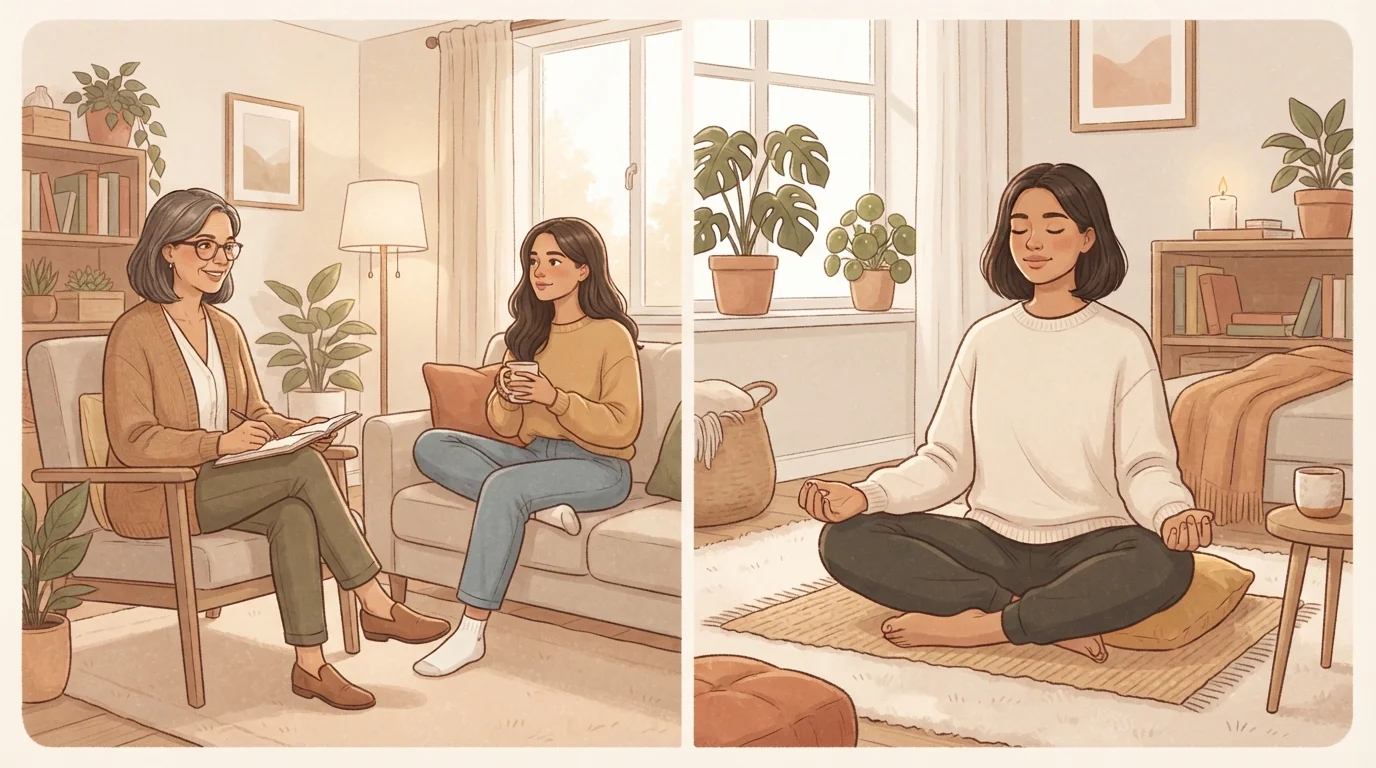
Photo: ShortwebArticles.com | Content For The Curious editorial
Key Takeaways
- Self-care supports everyday mental wellness but is not a substitute for professional treatment when symptoms are serious.
- Formal mental health treatment is appropriate when symptoms are persistent, intense, or interfering with daily functioning.
- Both approaches can and often should coexist — they address different layers of mental well-being.
- Recognizing when to escalate from self-care to professional support is a skill worth developing.
- Consulting a qualified healthcare provider is always the right move when you're unsure which path fits your situation.
Two Pillars of Mental Health — Not a Binary Choice
Mental health care in America has long been treated as an either/or proposition: either you seek professional help, or you manage on your own. That framing does a disservice to both options. In reality, self-care strategies and formal clinical treatment serve distinct but complementary purposes — and understanding the difference helps you make smarter, more timely decisions for your own well-being.
Think of it this way: brushing your teeth every day is not a substitute for a dentist visit, and a dentist visit doesn't eliminate the need for daily oral hygiene. Mental health works similarly. Everyday practices build and maintain a foundation; professional care addresses what those practices cannot.
To get a clearer sense of which circumstances call for which approach, it helps to understand what each one actually offers — and where each has limits. For a broader look at how mental health needs evolve over time, see how mental well-being needs shift across the lifespan.
What Self-Care Strategies Can Realistically Do
Self-care is not a buzzword — it's an umbrella term for the evidence-informed habits and practices that support mental and emotional resilience. Regular physical activity, consistent sleep hygiene, social connection, stress management techniques, and purposeful rest all have well-documented associations with better psychological functioning.
Practices like mindfulness and meditation have accumulated a meaningful body of research linking them to reduced stress reactivity, improved attention, and a modest reduction in symptoms of mild anxiety or low mood. Journaling, creative outlets, time in nature, and setting healthy emotional boundaries can all contribute to a more stable emotional baseline.
Self-care works best as a maintenance and prevention tool. It's most effective when mental health is generally stable and the goal is to protect and strengthen that foundation over time. It can also play a meaningful supportive role alongside formal treatment — for example, practicing relaxation techniques between therapy sessions.
Self-Care Supports Treatment — It Doesn't Replace It
What self-care cannot do is reliably treat diagnosable mental health conditions such as major depressive disorder, generalized anxiety disorder, PTSD, or bipolar disorder. Applying self-care alone to clinical-level symptoms can inadvertently delay effective treatment.
When Formal Treatment Becomes the Appropriate Path
Formal mental health treatment — which includes therapy, counseling, and psychiatry — is designed to assess, diagnose, and treat psychological conditions using structured, evidence-based methods. Understanding the distinctions between these professional options matters; therapy, counseling, and psychiatry each serve different functions.
Several signals suggest it's time to move beyond self-care alone:
- Symptoms are persistent. Feelings of sadness, anxiety, or emotional numbness lasting more than a few weeks warrant professional evaluation.
- Functioning is impaired. When mental health difficulties interfere with work, relationships, or daily responsibilities, that's a meaningful threshold.
- Self-care isn't helping. If consistent effort over several weeks produces no improvement, that's useful information — not a failure.
- Thoughts of self-harm are present. This always calls for immediate professional support. Contact a crisis line or emergency services if you or someone you know is at risk.
| Self-Care Strategies | Formal Treatment | |
|---|---|---|
| Primary purpose | Maintain and build resilience | Assess, diagnose, and treat conditions |
| Best suited for | Mild stress, general wellness | Persistent or impairing symptoms |
| Who delivers it | Individual, with personal effort | Licensed mental health professionals |
| Evidence base | Moderate; varies by practice | Strong for most evidence-based therapies |
| Access and cost | Generally low-cost or free | Varies; insurance coverage applies |
| Limitations | Cannot treat clinical conditions | May have wait times; requires engagement |
Formal treatment provides structured assessment, individualized care plans, and clinical accountability — things that healthy habits, however valuable, cannot replicate.
How to Assess Where You Are Right Now
One practical starting point is developing a habit of checking in with yourself honestly and regularly. A structured mental health self-check-in is not a diagnostic tool, but it can help you notice when patterns are shifting — when fatigue is deepening, when worry is becoming constant, or when your usual coping strategies are no longer sufficient.
That kind of self-awareness is valuable precisely because it can prompt timely action. The earlier a person connects with professional support when symptoms are escalating, the more options tend to be available. Waiting until a crisis point is common, but it's rarely the most effective path.
If you're genuinely unsure whether what you're experiencing warrants professional attention, that uncertainty itself is worth discussing with a primary care provider or licensed mental health professional. There's no threshold you have to cross before being allowed to seek support.
This article is for general informational and educational purposes only and does not constitute medical or mental health advice. Always consult a qualified healthcare or mental health professional for guidance specific to your situation.
The content on this site is for informational purposes only and is not a substitute for professional advice. Always consult a qualified professional for guidance specific to your situation.