
Mindfulness vs. Meditation: Two Practices That Aren't the Same Thing

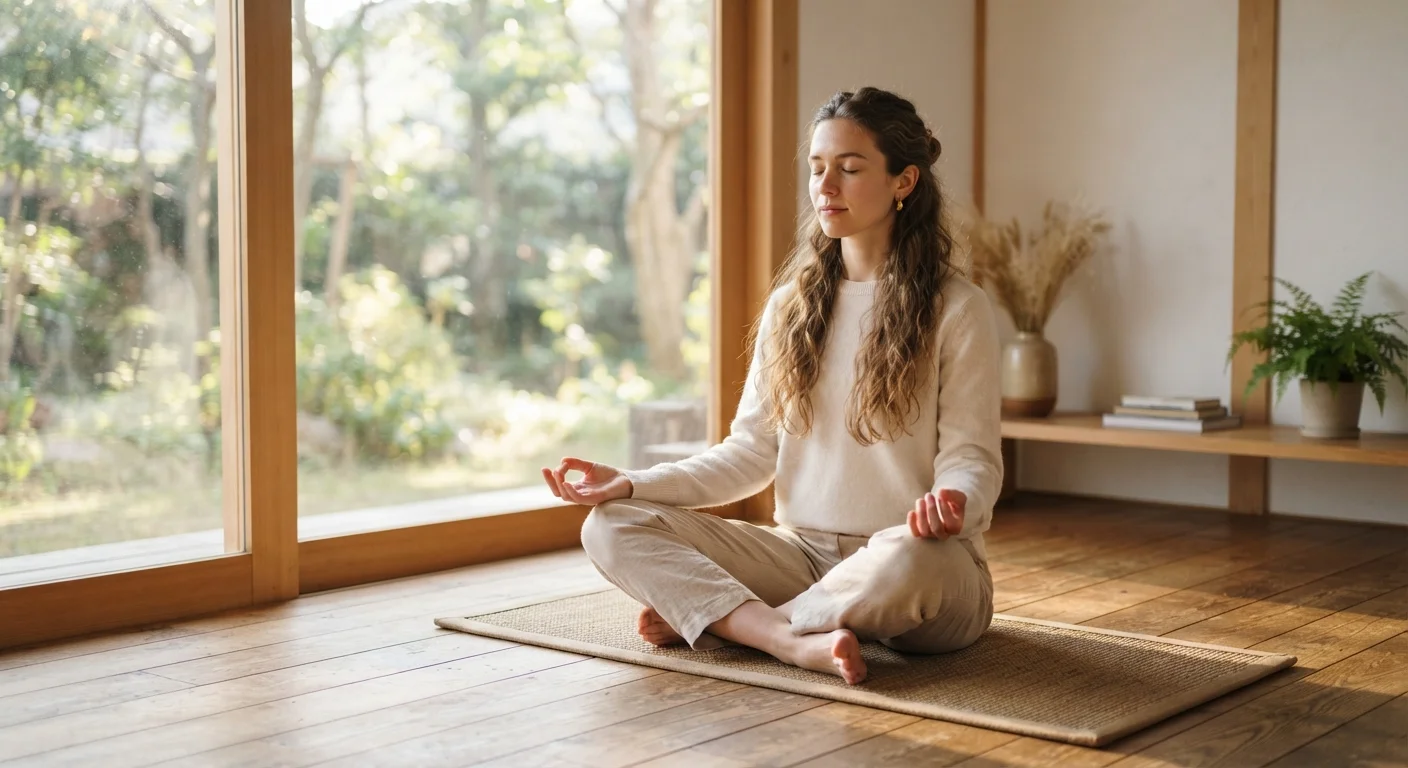
Photo: ShortwebArticles.com | Content For The Curious editorial
Key Takeaways
- Mindfulness is a quality of awareness; meditation is a structured practice used to cultivate it.
- You can be mindful while washing dishes or walking — meditation typically requires a set-aside session.
- Both are supported by research on stress reduction, focus, and emotional regulation.
- Neither replaces professional mental health care when that level of support is needed.
- Combining both approaches often produces stronger results than relying on just one.
What Each Term Actually Means
The words "mindfulness" and "meditation" get used interchangeably so often that many people assume they're synonyms. They're closely related — but they describe different things.
Mindfulness is a mental quality: the ability to pay deliberate, non-judgmental attention to whatever is happening in the present moment. It's something you can bring to almost any activity. Drinking coffee, listening to a colleague, folding laundry — these can all be done mindfully or on autopilot. The quality itself is the point.
Meditation, by contrast, is a practice — a deliberate, usually time-bounded exercise in which you direct your attention in a specific way. Most meditation forms ask you to sit quietly and focus on a chosen object of attention (breath, body sensations, a word or phrase) and notice when the mind wanders. The goal isn't to stop thinking; it's to observe thinking without getting swept away by it.
A useful analogy: mindfulness is like physical fitness — a capacity you want to develop. Meditation is like going to the gym — a structured activity that builds that capacity. You can be physically fit without going to a gym, but the gym makes the process more systematic.
| Criterion | Mindfulness | Meditation |
|---|---|---|
| What it is | A quality of present-moment awareness | A structured practice or exercise |
| When you do it | Woven into existing activities | Dedicated, set-aside sessions |
| Time required | Any moment, any duration | Typically 10–45 minutes per session |
| Equipment or setting | None needed | Quiet space recommended |
| Barrier to starting | Very low — informal, flexible | Moderate — requires scheduling |
| Research depth | Growing, less systematic | Extensive, especially for MBSR programs |
| Primary goal | Reduce autopilot in daily life | Build focused attention and regulation |
How Each Works in Practice
Because mindfulness requires no special conditions, it fits into moments you already have. Research on what's sometimes called "informal mindfulness practice" suggests that deliberately paying attention during routine tasks — eating without screens, pausing to notice physical sensations before reacting to a stressful email — can meaningfully reduce perceived stress over time.
Meditation, being more formal, requires a bit more upfront commitment. Most evidence-based programs (such as MBSR) recommend sessions ranging from roughly 10 to 45 minutes. The structure is what makes it effective: repeated cycles of focusing, noticing distraction, and gently returning attention are thought to strengthen the brain's capacity for sustained focus and emotional regulation — somewhat like repetitions in strength training.
It's worth noting that many forms of meditation are explicitly designed to cultivate mindfulness. Breath-focused meditation, body-scan meditation, and loving-kindness meditation all use formal practice as a vehicle for developing moment-to-moment awareness. In this sense, meditation is often a method and mindfulness is often the outcome — though you can work toward mindfulness informally, too. For a broader look at how self-directed practices like these relate to professional support, see how formal treatment and self-care strategies compare.
Not All Meditation Is the Same
What the Research Suggests
Both practices have a meaningful body of research behind them, though the evidence is stronger for structured meditation programs than for informal mindfulness alone — largely because formal programs are easier to study consistently.
47%
Time minds spend wandering
A Harvard study using experience-sampling found people's minds were wandering nearly half the time during daily activities, regardless of what they were doing.
8 weeks
Typical MBSR program length
The standard Mindfulness-Based Stress Reduction (MBSR) course, developed at the University of Massachusetts Medical School, runs over eight weeks of structured sessions.
Moderate
Evidence strength for anxiety reduction
A meta-analysis in JAMA Internal Medicine rated evidence for mindfulness meditation's effect on anxiety as moderate — meaningful, but not definitive for all individuals.
A frequently cited meta-analysis published in JAMA Internal Medicine found that mindfulness meditation programs showed moderate evidence of improvement in anxiety, depression, and pain. Importantly, the researchers noted that evidence for other outcomes was less robust, underscoring that meditation is not a cure-all. As with any wellness practice, individual results vary considerably.
Research on informal mindfulness is more limited but growing. Studies suggest even brief mindful-awareness exercises during daily tasks can lower cortisol response and improve attentional control in the short term. The key limitation: without a formal structure, people tend to be less consistent, which may reduce cumulative benefit.
Neither practice has been found to be harmful for the general population, though some people — particularly those with certain trauma histories — may find intensive meditation uncomfortable. If that describes you, a conversation with a mental health professional before starting is a sensible step.
This article is for general informational purposes only and is not a substitute for professional medical or mental health advice. If you have concerns about your mental health, please consult a qualified healthcare provider.
The content on this site is for informational purposes only and is not a substitute for professional advice. Always consult a qualified professional for guidance specific to your situation.