
New Construction vs. Existing Homes: How Each Shapes Local Markets

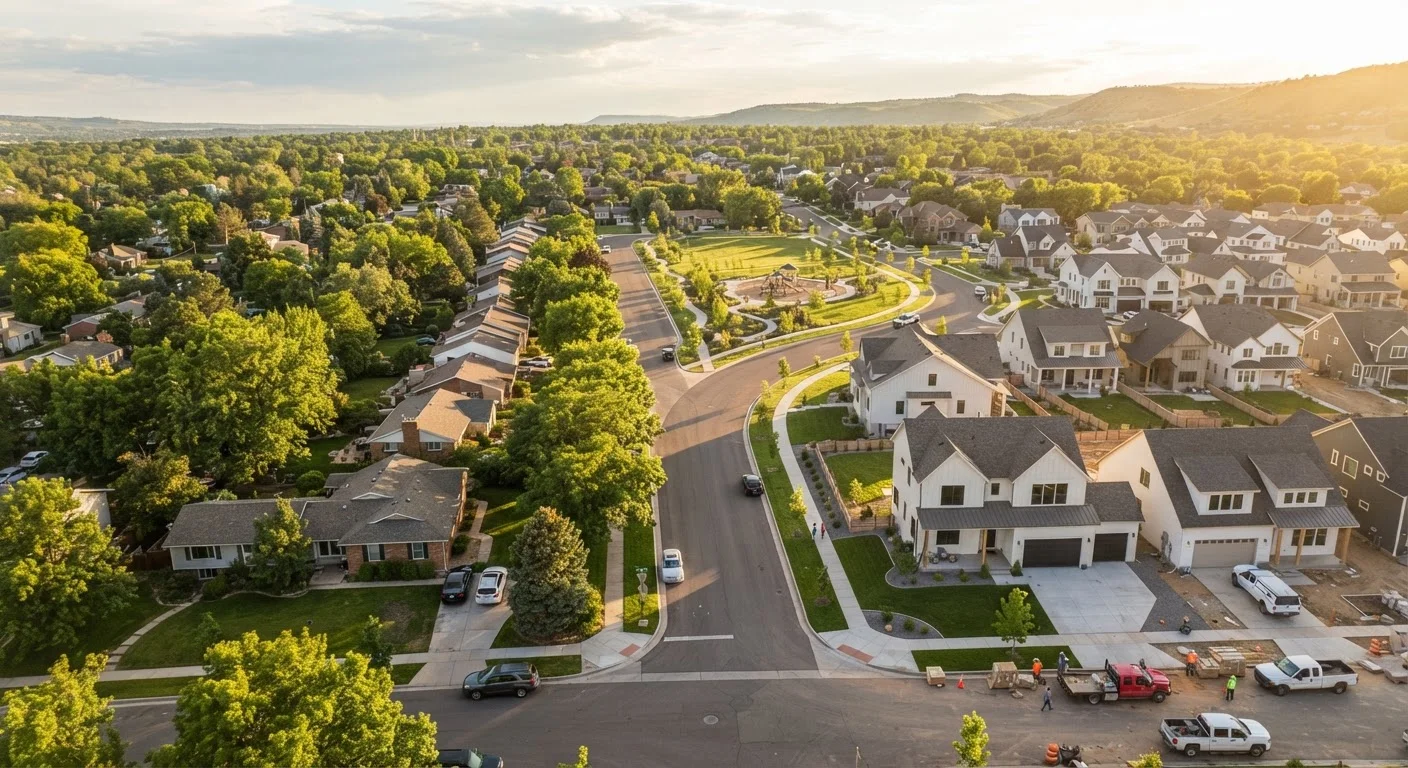
Photo: ShortwebArticles.com | Content For The Curious editorial
Key Takeaways
- New construction and existing homes affect local supply, pricing pressure, and negotiating dynamics differently.
- Markets heavy in new construction often give buyers more leverage; resale-dominated markets tend to favor sellers.
- New builds typically carry higher list prices but may include builder incentives; existing homes may need renovation costs factored in.
- Understanding your local inventory mix helps you interpret market signals more accurately before making decisions.
How Inventory Mix Signals Market Conditions
When real estate professionals talk about inventory, they usually mean the total number of homes available for sale — but that number alone doesn't tell the full story. Whether those homes are freshly built or decades old matters a great deal for how a local market behaves.
In areas where builders are active and new subdivisions are opening regularly, buyers tend to have more options. That additional supply puts a natural ceiling on how aggressively sellers can price resale homes. In contrast, markets where almost no new construction is possible — think dense urban neighborhoods or geographically constrained suburbs — rely entirely on existing homeowners deciding to sell. That tighter pipeline often sustains higher prices and faster sale timelines.
Local price dynamics are almost always tied to this underlying supply structure, which is why national housing headlines rarely match what buyers experience on the ground.
| New Construction | Existing Homes | |
|---|---|---|
| Effect on local supply | Adds inventory, can ease price pressure | Supply depends on owner decisions to sell |
| Typical buyer leverage | Higher — builder incentives often available | Lower in low-inventory markets |
| Price transparency | Builder sets base price with add-ons | Market-driven, comp-dependent pricing |
| Move-in condition | New systems, builder warranty included | Varies — may need immediate repairs |
| Location availability | Outer suburbs, areas with open land | Established neighborhoods, urban areas |
| Timeline predictability | Can vary — build delays are common | More predictable once under contract |
What New Construction Does to a Local Market
When builders are active in an area, they introduce supply that didn't previously exist — and that has ripple effects. Resale sellers often adjust their pricing expectations downward when comparable new homes are available nearby at competitive prices. Buyers also gain a fallback option, which is a meaningful form of leverage.
New construction tends to cluster in areas with available land: outer suburbs, exurbs, and newly incorporated developments. This can gradually shift where population centers are, influencing school district quality, commute patterns, and long-term neighborhood character. For buyers, it's worth asking not just what a new community looks like today, but what the surrounding area is expected to become once all the lots are built out.
Ask About Builder Incentives Explicitly
One common misconception is that new builds are always more expensive than comparable resale homes. While new construction does typically carry a price premium for modern features and warranties, builders also have more flexibility to offer incentives — rate buydowns, closing cost credits, or upgraded finishes — that effectively reduce the true cost of purchase.
What Existing Home Supply Signals
In markets where most available homes are resale properties, conditions tend to be more volatile. When few homeowners are willing to sell — a dynamic sometimes called a lock-in effect, where owners feel anchored to low mortgage rates they locked in years earlier — inventory stays thin and competition heats up. That benefits sellers but can make it difficult for buyers to find options without moving quickly or stretching their budgets.
Existing home markets also show price stickiness in a way new construction doesn't. Sellers set prices partly based on emotional attachment and neighborhood comparables, not just construction costs. This is one reason understanding buyer's vs. seller's market conditions matters — the same type of home can behave very differently depending on whether supply is expanding or contracting.
Another consideration: existing homes may require immediate investment. Older roofing, HVAC systems, or electrical panels can add significant costs that don't show up in the list price. See how renovation costs are priced before assuming a resale home at a lower number is the cheaper path overall.
~85%
Share of US home sales that are existing homes
According to the National Association of Realtors, existing homes have historically accounted for roughly 85% or more of total US home sales annually.
30–60 days
Typical days on market in a balanced market
Real estate industry benchmarks generally treat 30–60 days on market as an indicator of a roughly balanced supply-demand environment.
Reading These Signals as a Buyer
When you're evaluating a local market, look at the ratio of new permits issued to resale listings. High permit activity relative to sales volume generally suggests a buyer-friendlier environment ahead. Low permit activity alongside rising prices and short days-on-market is a hallmark of seller-side leverage.
It also helps to look at absorption rate — the pace at which available homes are being purchased. A market absorbing homes in under 30 days regardless of type suggests limited inventory; a market where homes sit for 60–90 days provides more room to negotiate. A structured local market checklist can help you pull together these data points before committing to a neighborhood or purchase.
Finally, don't overlook the neighborhood-level picture. Two ZIP codes in the same metro can have entirely different inventory compositions — and therefore different pricing pressures. Evaluating a neighborhood carefully before you focus your search is one of the most useful steps a buyer can take.
This article is for general informational purposes only and does not constitute financial, legal, or real estate advice. Consult a licensed real estate professional for guidance specific to your situation.
The content on this site is for informational purposes only and is not a substitute for professional advice. Always consult a qualified professional for guidance specific to your situation.