
Renting vs. Buying in Today's Market: The Real Trade-Offs

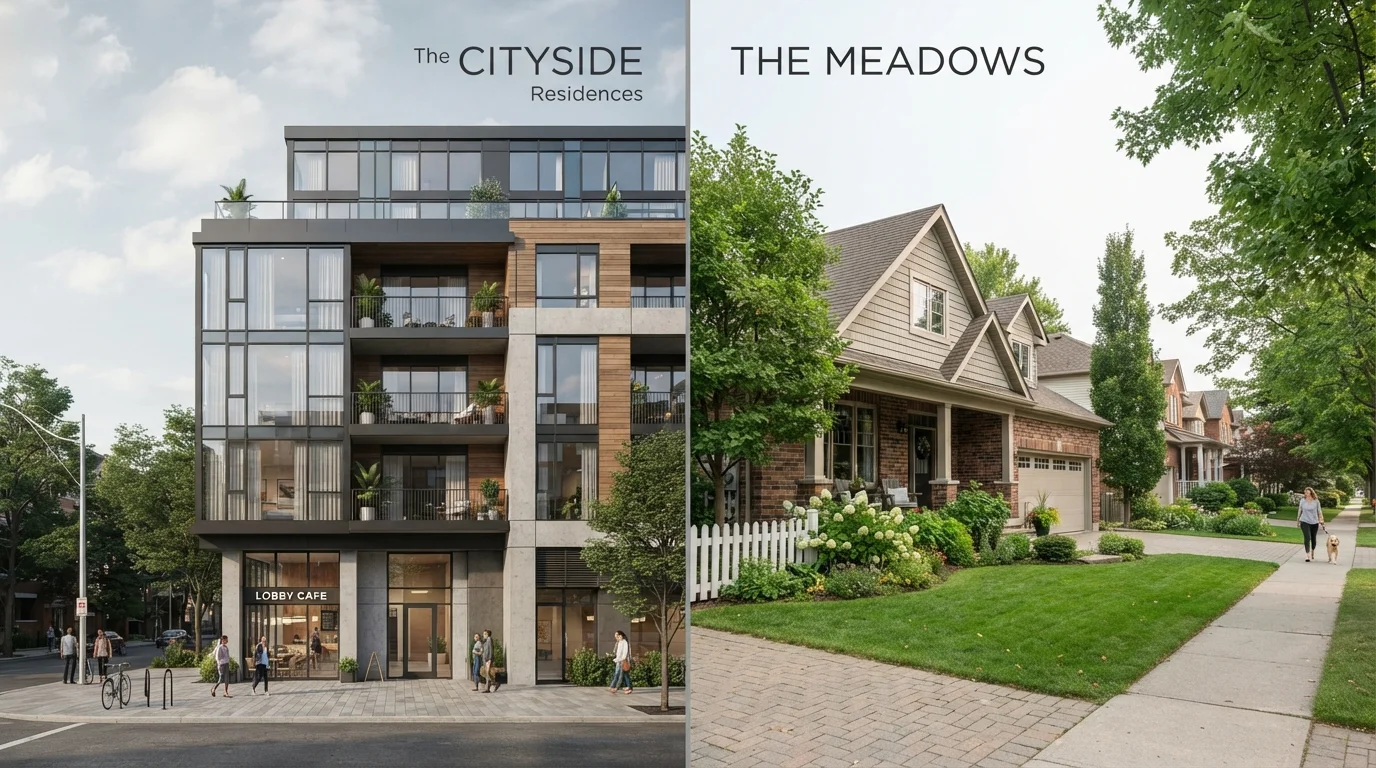
Photo: ShortwebArticles.com | Content For The Curious editorial
Key Takeaways
- Buying builds equity over time, but upfront costs and market conditions significantly affect whether it pays off.
- Renting offers flexibility and lower maintenance responsibility, but provides no ownership stake.
- Your local housing market matters as much as national trends when weighing this decision.
- How long you plan to stay is one of the most important factors in the rent-vs-buy calculation.
- Neither option is universally superior — the right choice depends on your finances, goals, and lifestyle.
Builds equity over time
Each mortgage payment reduces the loan balance and increases the owner's stake in the property, creating a financial asset that may appreciate in value.
Stability in monthly housing costs
A fixed-rate mortgage keeps the principal and interest portion of your payment consistent, unlike rent which can increase at lease renewal.
Freedom to customize your home
Owners can renovate, paint, landscape, and modify their property without landlord approval, improving both livability and resale value.
Flexibility to relocate without selling costs
Renters can move at the end of a lease term with minimal financial penalty, making it easier to follow job opportunities or lifestyle changes.
Lower upfront financial commitment
Renting typically requires a security deposit and first month's rent, far less than the down payment, closing costs, and inspections required to purchase a home.
No exposure to maintenance costs
Major repairs — roof, HVAC, plumbing — are the landlord's responsibility, shielding renters from unpredictable expenses that can run into thousands of dollars.
High upfront purchase costs
Between the down payment and closing costs, buying a home typically requires tens of thousands of dollars before the first mortgage payment is due.
Responsible for all maintenance and repairs
Homeowners bear the full financial burden of upkeep, and unexpected repairs — like a failed water heater or roof damage — can arrive without warning.
Market risk can erode value
Home values don't only go up; buyers who need to sell during a market downturn may receive less than they paid, especially if they purchased recently.
Rent subject to annual increases
In most US markets, landlords can raise rent at lease renewal, meaning a renter's housing cost is not fully within their control over the long term.
No equity accumulation while renting
Monthly payments benefit the landlord's asset, not the renter's balance sheet — though this trade-off may be offset by investing the difference in upfront costs elsewhere.
Limited ability to personalize the space
Most leases restrict painting, renovation, and structural changes, limiting how much a renter can adapt their home to their preferences.
The Myth of the 'Wasted' Rent Check
The idea that renting means throwing money away has been repeated so often it's treated as financial wisdom. In reality, it's a significant oversimplification. Renters pay for a real service — housing — just as buyers pay interest, property taxes, insurance, and maintenance costs that never build equity. The question isn't whether one path is inherently wasteful, but which one fits your financial position and life circumstances right now.
Consider that a homeowner who sells after just two or three years may lose money once closing costs, agent commissions, and upfront financing fees are factored in. Meanwhile, a renter in the same period retains capital flexibility and avoids those transaction costs entirely. Context is everything.
For a deeper look at how the financial picture breaks down across different timeframes, see how to think through the rent-vs-buy decision.
Builds equity over time
Each mortgage payment reduces the loan balance and increases the owner's stake in the property, creating a financial asset that may appreciate in value.
Stability in monthly housing costs
A fixed-rate mortgage keeps the principal and interest portion of your payment consistent, unlike rent which can increase at lease renewal.
Freedom to customize your home
Owners can renovate, paint, landscape, and modify their property without landlord approval, improving both livability and resale value.
Flexibility to relocate without selling costs
Renters can move at the end of a lease term with minimal financial penalty, making it easier to follow job opportunities or lifestyle changes.
Lower upfront financial commitment
Renting typically requires a security deposit and first month's rent, far less than the down payment, closing costs, and inspections required to purchase a home.
No exposure to maintenance costs
Major repairs — roof, HVAC, plumbing — are the landlord's responsibility, shielding renters from unpredictable expenses that can run into thousands of dollars.
The Real Costs on Both Sides
Most rent-vs-buy comparisons focus on the monthly payment, but that's only part of the picture. Buyers face closing costs typically ranging from 2% to 5% of the loan amount, plus ongoing property taxes, homeowner's insurance, HOA fees where applicable, and maintenance — commonly estimated at 1% to 2% of a home's value annually. These costs vary considerably by location and home age.
Renters aren't cost-free either. Security deposits, pet fees, and annual rent increases can add up. To get a full picture of what renting actually costs month to month, explore the full cost of renting beyond the base figure. And for buyers wondering about their down payment, how much you actually need for a down payment may challenge some common assumptions.
~2–5%
Typical closing cost range for homebuyers
According to general industry guidance, buyers should budget 2%–5% of the loan amount in closing costs on top of their down payment.
1–2%
Annual home maintenance cost estimate
A widely cited rule of thumb suggests homeowners budget roughly 1%–2% of their home's value per year for maintenance and repairs.
5+ years
Typical break-even horizon for buying
Housing economists generally suggest that buyers who move within five years are at higher risk of not recouping transaction and financing costs.
Market Conditions Shape the Math
National headlines about housing affordability or rising rents can be misleading because real estate is intensely local. In some metros, buying a starter home requires a household income well above the regional median. In others, mortgage payments compare favorably to rent — even after accounting for taxes and maintenance. Understanding whether you're in a buyer's or seller's market changes the calculus considerably. What shifts in a buyer's vs. seller's market affects negotiating power, pricing expectations, and the risk of overpaying.
Interest rates also matter enormously. When borrowing costs are elevated, the monthly payment on a given home price rises substantially, sometimes making renting comparatively affordable even in mid-cost markets. Conversely, periods of lower rates can dramatically improve the buying equation.
Local Markets Vary Widely
Weighing the Trade-Offs: Stability vs. Flexibility
Ownership provides something renting can't: the ability to modify your space, build a long-term asset, and benefit from price appreciation in growing markets. For households seeking stability — particularly families with school-age children or those with strong ties to a community — these are meaningful advantages that go beyond spreadsheet math.
Renting, on the other hand, offers mobility that ownership cannot match without significant cost. A renter can relocate for a job, downsize after a life change, or simply wait out a turbulent market without the pressure of selling. For younger workers, households in transition, or anyone uncertain about their five-year horizon, that flexibility has genuine financial value.
For guidance specific to navigating leases and tenant rights, the renting a home resource hub covers what renters need to know. For those leaning toward buying, the buying a home hub walks through financing, offers, and closing in accessible terms.
High upfront purchase costs
Between the down payment and closing costs, buying a home typically requires tens of thousands of dollars before the first mortgage payment is due.
Responsible for all maintenance and repairs
Homeowners bear the full financial burden of upkeep, and unexpected repairs — like a failed water heater or roof damage — can arrive without warning.
Market risk can erode value
Home values don't only go up; buyers who need to sell during a market downturn may receive less than they paid, especially if they purchased recently.
Rent subject to annual increases
In most US markets, landlords can raise rent at lease renewal, meaning a renter's housing cost is not fully within their control over the long term.
No equity accumulation while renting
Monthly payments benefit the landlord's asset, not the renter's balance sheet — though this trade-off may be offset by investing the difference in upfront costs elsewhere.
Limited ability to personalize the space
Most leases restrict painting, renovation, and structural changes, limiting how much a renter can adapt their home to their preferences.
The content on this site is for informational purposes only and is not a substitute for professional advice. Always consult a qualified professional for guidance specific to your situation.