
What a Housing Market 'Correction' Really Looks Like

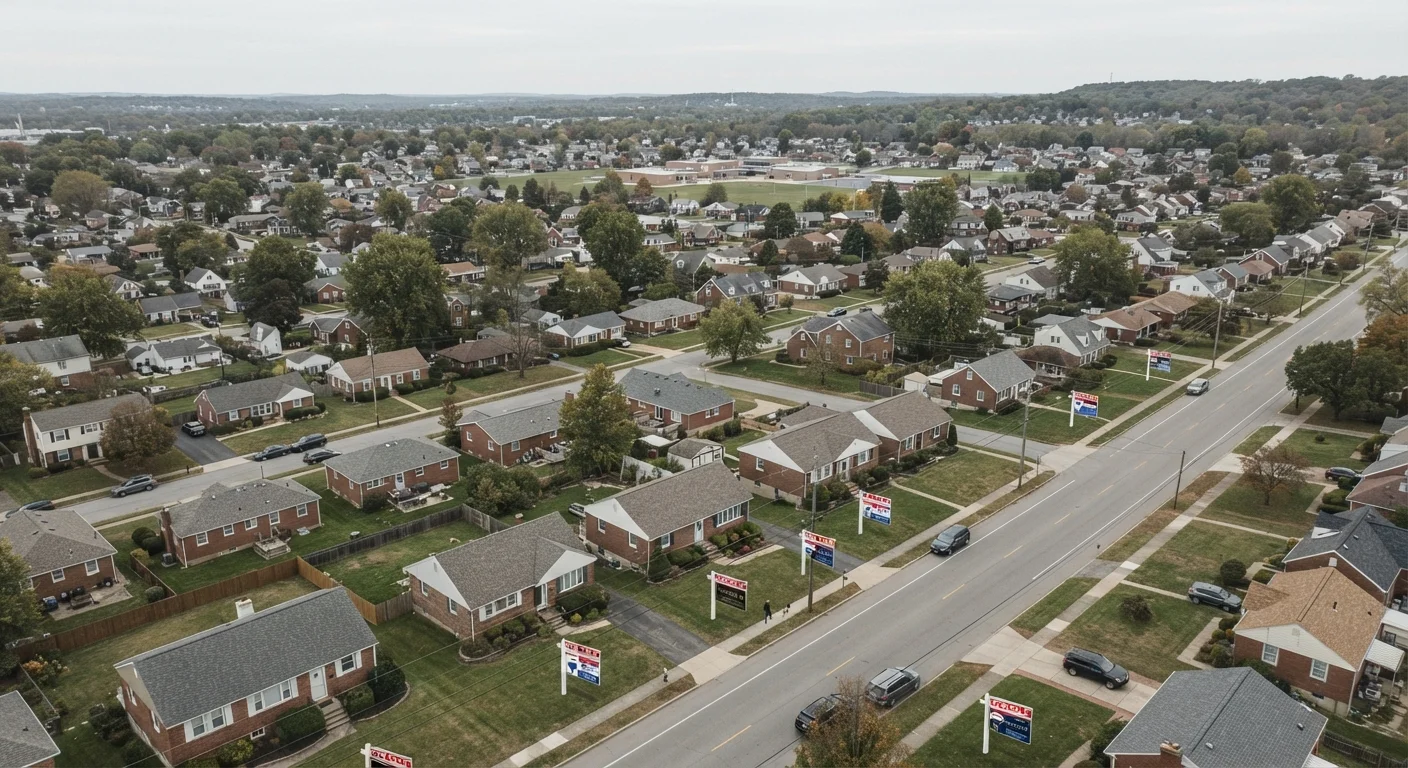
Photo: ShortwebArticles.com | Content For The Curious editorial
Key Takeaways
- A correction means prices are falling from a recent high, not that the market is collapsing.
- Corrections are a normal part of real estate cycles, not rare emergencies.
- National correction headlines may not reflect what is happening in your specific local market.
- Buyers, sellers, and homeowners are each affected differently during a correction.
- A correction can improve affordability for buyers who have been priced out of the market.
The Word That Worries People More Than It Should
Whenever headlines announce a housing market "correction," anxiety follows quickly. Homeowners worry their equity is vanishing. Would-be buyers wonder whether to freeze. The word carries weight — but it is often misunderstood.
In everyday use, "correction" implies something went wrong. In market terminology, it simply means prices have pulled back after rising faster than underlying fundamentals — income growth, job levels, population — could support. It is the market finding its footing, not falling off a cliff.
Understanding this distinction matters whether you own a home, are hoping to buy one, or are just trying to make sense of the news. For context on how to interpret related signals, see our guide on how people misread housing market news.
Corrections Are a Normal Market Feature
What Actually Happens During a Correction
During a correction, several things shift — not all at once, and not uniformly across the country. Prices soften, meaning sellers can no longer command the same premiums they could during peak demand. Homes sit on the market longer before finding a buyer. Bidding wars become less common. Sellers may start accepting offers below their asking price.
Supply and demand rebalance. Housing inventory typically rises as demand cools, giving buyers more options and more negotiating power than they had during the run-up. The atmosphere shifts from frantic to measured.
What does not happen in a typical correction: widespread foreclosures, a complete halt in sales activity, or a sudden and catastrophic wipeout of home values. Those outcomes are associated with a crash — a fundamentally different event driven by systemic failures, not a routine market adjustment.
~10%
Common benchmark for a price correction
A decline of roughly 10% or more from a recent peak is widely referenced by analysts as the threshold distinguishing a correction from ordinary price fluctuation.
26%+
Peak-to-trough decline in 2008 crisis
The S&P/Case-Shiller U.S. National Home Price Index recorded a decline exceeding 26% from peak to trough during the 2008 housing crisis — far beyond a typical correction.
Corrections Look Different Depending on Who You Are
Your experience of a correction depends heavily on your position in the market.
- Current homeowners who bought years before the peak have likely accumulated equity that a modest correction does not erase. If you are not selling, the correction is largely a paper change in your home's estimated value.
- Recent buyers who purchased at or near peak prices face a more uncomfortable period, particularly if their equity is thin. Staying put and avoiding the need to sell quickly is the most effective buffer.
- Prospective buyers may find that a correction improves affordability — prices ease, competition drops, and the frenzied market dynamics that pushed many people out begin to normalize.
- Sellers need to recalibrate expectations. Pricing realistically and understanding that the dynamics described in a buyer's market vs. seller's market comparison now apply in the buyer's favor is essential.
How to Read Market News Without Overreacting
One of the most important things to understand about corrections: national data rarely tells the whole local story. A correction in one metro area may be severe while a neighboring market holds steady or even appreciates. Real estate remains fundamentally local.
When you see a correction headline, ask a few grounding questions: Is this a national average or a specific market? How large is the price decline being reported, and from what peak? What is driving the pullback — interest rates, overbuilding, job losses, or simply post-pandemic normalization?
Common assumptions — like "home values always go up" or "now is always a bad time to buy" — deserve scrutiny. Our article on things people get wrong about US housing prices examines these ideas against what the data actually shows.
For those actively planning a purchase, understanding market fundamentals is foundational. Explore our homebuying guide for context on the full process, from financing to closing.
“Real estate markets do not move in straight lines. Periods of price acceleration are almost always followed by some degree of normalization — that is not a failure of the market, it is how markets work.”
— Housing Market Editorial Team, Real Estate Research and Analysis
This article is for general informational purposes only and does not constitute financial, investment, or real estate advice. Consult a licensed real estate professional and a qualified financial adviser regarding decisions specific to your situation.
Frequently Asked Questions
The content on this site is for informational purposes only and is not a substitute for professional advice. Always consult a qualified professional for guidance specific to your situation.