
Battery, Alternator, and Starter: Understanding Your Car's Electrical Starting System

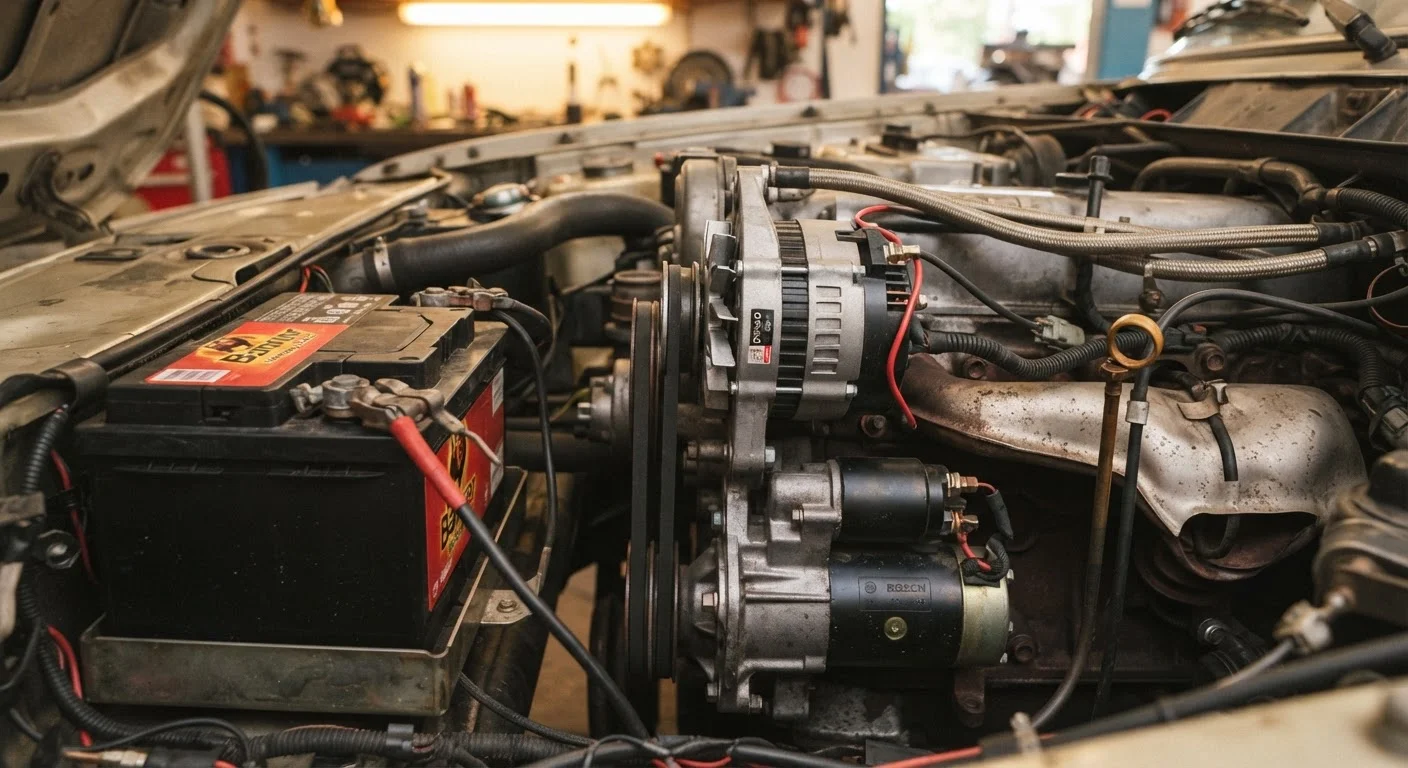
Photo: ShortwebArticles.com | Content For The Curious editorial
Key Takeaways
- The battery, alternator, and starter are separate components with distinct roles in starting your car.
- A dead battery is the most common cause of a car that won't start, but it's not always the root cause.
- The alternator keeps the battery charged while you drive - a failing one can drain a healthy battery.
- Slow cranking, clicking sounds, and dashboard warning lights are early signs of electrical system trouble.
- A qualified mechanic should diagnose electrical system failures before you replace parts unnecessarily.
The Battery: Your Car's Energy Reserve
Think of the battery as a rechargeable tank of electrical energy. When you start the car, it delivers a powerful burst of electricity to the starter motor. It also powers your lights, radio, and other electronics when the engine isn't running.
Car batteries are rated in cold cranking amps (CCA) - a measure of how much power they can deliver in cold conditions. The higher the CCA, the more reliable the battery tends to be in winter. Most batteries last three to five years, but heat, short trips, and leaving lights on all accelerate wear.
Signs of a weakening battery include slow engine cranking, dim headlights when idling, and a battery warning light on the dashboard. If you see that light, our guide to dashboard warning lights explains what it means and when to act.
Test Your Battery Before Winter
The Alternator: Your Car's Mobile Charger
The alternator is a generator driven by the engine via a belt. While you drive, it converts mechanical energy into electrical energy and sends it back to the battery, keeping it charged. It also powers your car's electrical systems directly while the engine is running.
A healthy alternator outputs roughly 13.5 to 14.5 volts. If it drops significantly below that, the battery won't stay charged. Because the alternator works silently in the background, drivers often don't notice it failing until the battery dies.
Warning signs include flickering headlights, electronics behaving erratically, a burning rubber smell (from a slipping belt), and - most tellingly - a battery that keeps dying even after replacement.
3-5 years
Typical car battery lifespan
Battery life varies with climate and usage patterns; heat tends to shorten lifespan more than cold, according to automotive industry data.
~70%
No-start calls attributed to battery issues
Roadside assistance data consistently shows battery failure as the leading cause of calls for vehicles that won't start.
The Starter: The Muscle Behind Ignition
The starter is an electric motor with one job: to spin your engine fast enough that it can fire on its own power. When you turn the key or press the start button, a signal triggers a small relay called the solenoid, which connects the battery to the starter motor. The starter's gear (called the pinion) then engages the engine's flywheel, cranking it until combustion begins.
Starters are durable, but they wear out over time - particularly in vehicles with stop-start systems that cycle the starter dozens of times per day. Symptoms of a failing starter include a clicking sound with no crank, a grinding noise during startup, and intermittent failure where the car sometimes starts and sometimes doesn't.
Starter and alternator issues can overlap in symptoms with other problems, which is why a proper diagnostic test at a shop matters before replacing anything. This is a different kind of failure mode than, say, worn brake components - for a comparison of how other systems signal trouble, see our guide to braking system wear.
How to Tell Which Component Is Failing
These three components can produce overlapping symptoms, which makes accurate diagnosis important. Here's a general pattern to recognize:
- Dead battery: No power at all, no interior lights, no dash lights, completely silent when you turn the key.
- Weak battery or bad connection: Slow cranking, dim lights, clicking sound.
- Bad starter: Battery is fine (lights work normally), but engine won't crank - just one click or a grinding sound.
- Failing alternator: Car starts but dies while driving, battery warning light appears, electronics flicker.
Most auto parts stores offer free battery and charging system tests. A mechanic can also run a full electrical diagnostic to pinpoint the issue. Replacing parts based on guesswork often means spending money on a component that wasn't actually faulty.
Frequently Asked Questions
The content on this site is for informational purposes only and is not a substitute for professional advice. Always consult a qualified professional for guidance specific to your situation.