
Merging onto the Highway Without Causing a Near-Miss

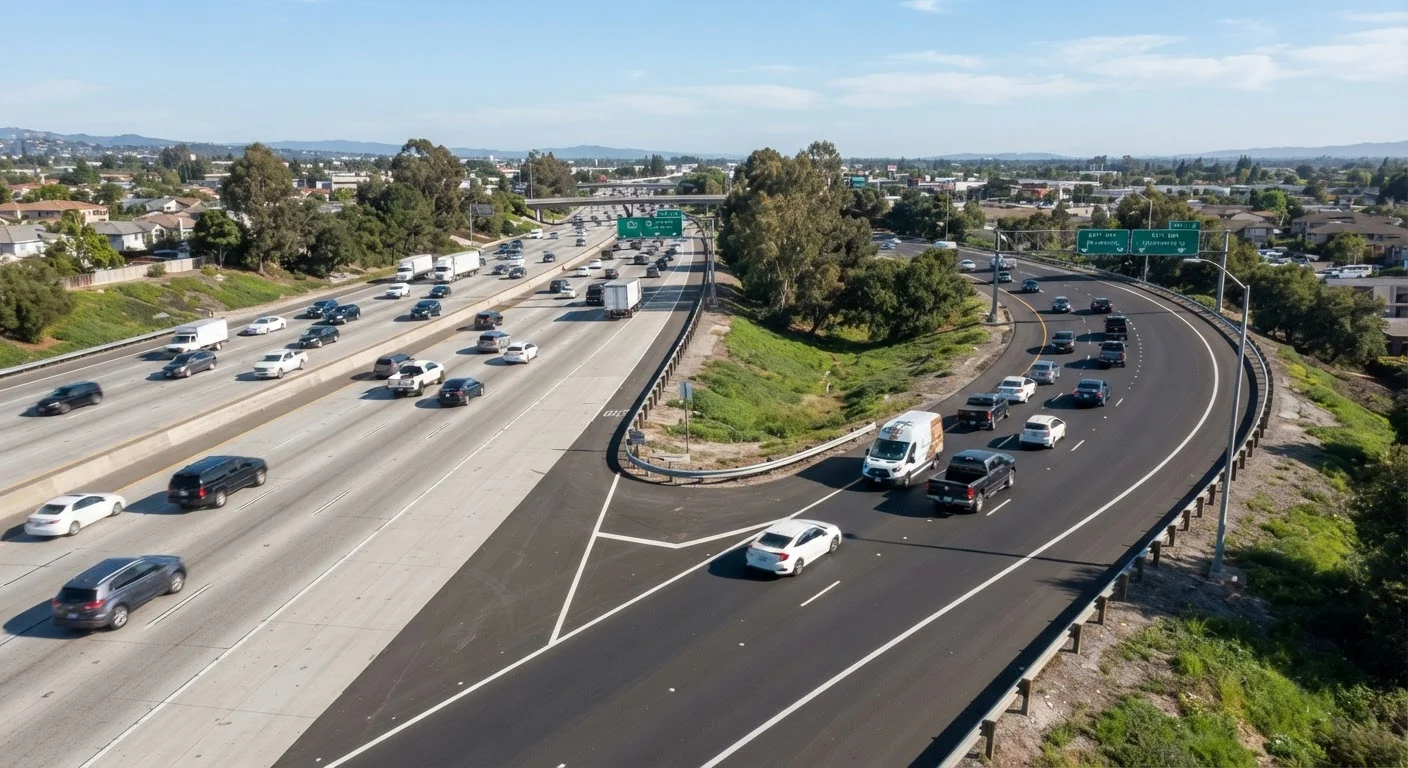
Photo: ShortwebArticles.com | Content For The Curious editorial
Key Takeaways
- Match highway traffic speed before you reach the merge point — not after.
- Check mirrors and blind spots while you're still accelerating on the ramp.
- Identify a gap before you need it, not at the last second.
- Signaling early communicates your intent and gives nearby drivers time to adjust.
- Never stop at the end of an on-ramp unless a collision is truly unavoidable.
Why the Merge Is a High-Risk Moment
Highway merging is one of those driving tasks that looks routine until something goes wrong. The core challenge is a speed differential: you're accelerating from a stop or low speed while traffic on the highway is already moving at 60–70 mph. Any hesitation, misjudgment, or distraction compresses the time available to make safe decisions.
According to Federal Highway Administration research, merging and weaving zones are consistently among the highest-conflict areas on any freeway. That's not because drivers are careless — it's because the task requires several things to happen simultaneously: reading traffic, adjusting speed, signaling, and timing a lane change, all within a limited stretch of road.
Understanding the mechanics of merging helps. The acceleration lane isn't just a physical feature — it's a dedicated window to match speeds before joining the flow. Drivers who treat it as an extension of local street driving (slow, cautious) tend to create the exact conditions for a near-miss.
For context on how highway driving differs from urban environments in terms of required attention and speed management, see our guide on city vs. highway driving habits.
What you will need
Step-by-Step: How to Merge Safely
The steps below reflect how experienced drivers approach the merge sequence. Follow them in order — the sequence matters because each action sets up the next one.
Never Stop at the End of an On-Ramp
Read the on-ramp as you enter it
As soon as you turn onto the on-ramp, start gathering information. How long is the ramp? Is it curved or straight? Can you already see gaps in highway traffic? A curved ramp limits your sightlines, so you'll need to begin checking traffic earlier. A straight ramp gives you more time but don't waste it.
Accelerate steadily to match traffic speed
The acceleration lane exists for one purpose: to get your speed up to match the flow of highway traffic before you merge. Use the full length of the ramp to build speed. Most U.S. highways flow between 60 and 70 mph — your goal is to arrive at the merge point at roughly that speed, not 40 mph with a gap to close.
Driving too slowly at the merge forces an abrupt adjustment from both you and highway drivers, which increases collision risk significantly.
Signal your intent early
Activate your turn signal as soon as you're committed to merging — ideally within the first third of the acceleration lane. This is not a formality. It tells drivers in the right lane that you're coming and gives them a few extra seconds to decide whether to hold their speed, ease off, or shift left.
Check mirrors and blind spot while accelerating
You cannot wait until you're at the merge point to start checking traffic. While you're still accelerating, use your left side mirror to scan the right lane of the highway. Then do a quick over-the-shoulder glance to cover your blind spot — the area your mirrors don't capture. This should happen naturally as part of your speed-building, not as a last-second scramble.
For a deeper look at why blind spots matter in adjacent-lane situations, see our guide on safe following distance and reaction time.
Identify a gap and commit to it
A usable gap is one where you can slot in without requiring the car behind to brake hard. A good rule of thumb: the gap should be large enough that once you're in it, you have at least two seconds of following distance behind the car ahead of you.
Pick your gap while you still have ramp left. Committing late — or changing your mind — creates hesitation that confuses other drivers and narrows your options fast.
Merge smoothly and hold your lane
Once you've chosen your gap and your speed matches traffic, steer left across the line with a smooth, deliberate motion. Don't dart across — a gradual lane change gives everyone around you time to react. Once in the lane, maintain your speed. Slowing down immediately after merging disrupts the flow behind you and can cause the very near-miss you were trying to avoid.
New drivers often underestimate how disruptive erratic speed changes are in high-speed traffic. Our article on where new drivers most commonly make errors covers this and other high-risk moments in detail.
Highway Drivers Can Help, Too
Short On-Ramps Require Earlier Action
Once you're comfortably on the highway, resist the urge to cut immediately across multiple lanes. Settle into the right lane, establish your following distance, and then plan any additional lane changes deliberately. Rushing across lanes right after a merge is a common pattern in freeway incidents — and one that scanning and patience habits from other high-risk situations can help you avoid.
The content on this site is for informational purposes only and is not a substitute for professional advice. Always consult a qualified professional for guidance specific to your situation.