
Road & Driving Tips

Driving Through Intersections Safely: Habits Worth Building

Driving Through Intersections Safely: Habits Worth Building

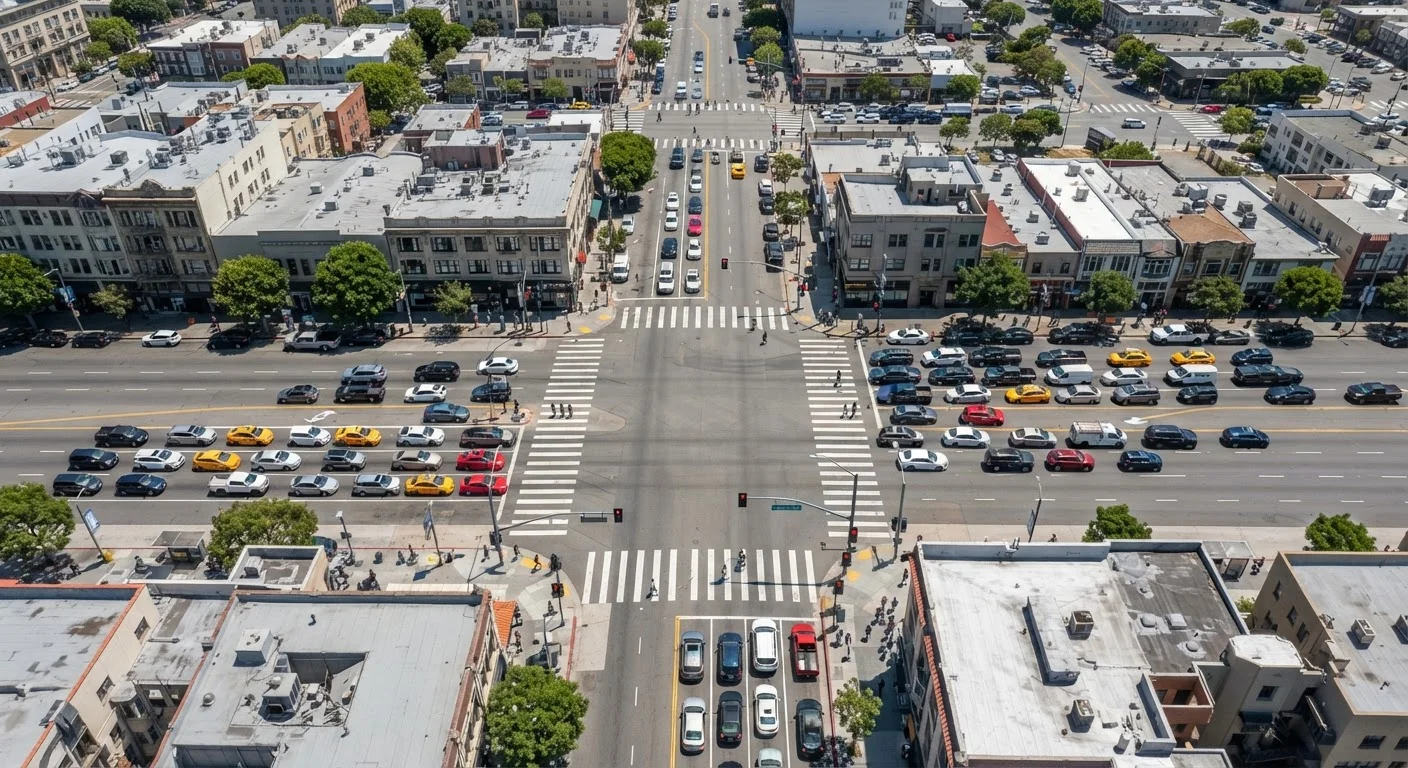
Photo: ShortwebArticles.com | Content For The Curious editorial

Intersections account for a large share of U.S. crashes. These habits — scanning, covering the brake, checking before proceeding — can reduce your exposure.

Key Takeaways

  • Intersections are among the most dangerous locations on U.S. roads, accounting for a significant share of traffic fatalities.
  • Scanning left-right-left before entering any intersection is a foundational habit that catches threats a single glance misses.
  • Covering the brake — hovering your foot over the pedal — reduces reaction time meaningfully at high-risk moments.
  • A green light grants permission to proceed, not a guarantee that the path is clear.
  • Consistent habits, not occasional caution, are what actually reduce crash exposure over time.

Why Intersections Demand Extra Attention

According to the Federal Highway Administration, roughly 40 percent of all U.S. traffic crashes involve intersections. That number makes intersections the single most hazardous location most drivers encounter on a routine trip — more so than highway merges, lane changes, or parking lots.

The reason is straightforward: intersections concentrate conflicting paths of travel into one point. Vehicles approach from multiple directions, pedestrians cross, cyclists navigate alongside traffic, and everyone is making decisions in real time. Distraction, misjudgment, or a single failure to yield can produce a collision with little warning.

Understanding where crashes cluster is a useful first step. See how intersections compare to other high-risk moments in our companion piece on situations where new drivers most commonly make costly errors.

1

Scan left-right-left before entering any intersection

A single glance captures a snapshot; a left-right-left sequence gives traffic time to move into your field of view between checks. Threats approaching from the left — the direction of oncoming traffic in left turns — get a second look because they pose the highest initial risk.
Example: Before crossing on a green light, a driver checks left for late-runners, right for cross-traffic, then left again before rolling through — catching a cyclist who entered the frame during the first sweep.
2

Cover the brake as you approach every intersection

Covering the brake — moving your foot off the accelerator and hovering it over the brake pedal without pressing — can shave a fraction of a second off your reaction time. At 35 mph, that fraction translates to several feet of stopping distance, which can be the difference between a near-miss and a collision.
Example: A driver approaching a yellow light lifts off the gas and hovers over the brake, allowing them to stop smoothly when a pedestrian steps into the crosswalk a moment later.
3

Treat a green light as permission to check, not permission to go

Red-light running is a leading cause of intersection fatalities, and it happens at lights that have already turned green for the cross direction. A one- to two-second pause after your light turns green lets any red-light runners clear the box before you enter it.
Example: At a busy urban intersection, a driver waits one beat after the light turns green and observes a vehicle running the tail end of the opposing red before proceeding without incident.
4

Reduce speed before reaching the intersection, not inside it

Slowing down on your approach — rather than coasting through at full speed — gives you more time to process what is happening inside the box and more distance to stop if something unexpected occurs. It also keeps you from being committed to a path before you have confirmed it is clear.
Example: On an unfamiliar rural road, a driver reduces speed 200 feet before a partially obscured intersection, spotting a stop sign they would have reached too fast to safely obey.
5

Eliminate distractions before reaching the intersection

Distracted driving consistently ranks among the top contributing factors in intersection crashes. Glancing at a phone, adjusting the radio, or reaching for something in the passenger seat during those critical seconds removes the visual attention the situation demands.
Example: A driver sets their navigation before leaving a parking lot so they are not looking down at a phone when they reach the first signalized intersection.
6

Make your intentions visible to others early

Signaling well before a turn — not as you begin turning — gives other drivers, cyclists, and pedestrians time to anticipate your movement and adjust. Predictability is a safety tool; unexpected movements are a common crash trigger.
Example: A driver signals a left turn approximately 100 feet before the intersection, giving oncoming traffic and pedestrians in the crosswalk enough time to recognize the intended path.

Core Habits That Reduce Intersection Risk

The following practices are grounded in defensive driving principles taught by safety organizations and driving instructors across the country. None of them require special skill — they require consistency.

high On your next drive, consciously perform a left-right-left scan at every intersection — even ones you cross every day.
high Practice covering the brake whenever you see a yellow light ahead or approach an intersection with limited sight lines.
medium Before your next trip, silence your phone and place it out of reach so intersection moments are distraction-free.
medium Start signaling turns at least three to four seconds before reaching the intersection rather than mid-turn.

Four-way stops deserve particular attention because the right-of-way rules trip up even experienced drivers. Our article on why so many drivers still get four-way stops wrong breaks down exactly how arrival order and position determine who goes first.

Building These Habits Over Time

Knowing a habit intellectually and executing it automatically under pressure are different things. The gap closes only through deliberate repetition. Each time you approach an intersection, treat it as a structured task: scan, check speed, cover the brake, confirm clearance, then proceed. Over hundreds of repetitions, the sequence becomes instinct.

Habits Work Because They Are Automatic

The value of a driving habit lies in its consistency — it activates without requiring a conscious decision every time. Research on driver behavior suggests that experienced drivers who build structured routines around high-risk moments make fewer errors under stress or fatigue. The goal is not to think harder at intersections, but to make safe behavior the default that requires no extra thought.

Intersection habits also interact with broader driving context. City driving — with its denser intersections and more pedestrian activity — places higher demands on your scanning routine than open highway travel. Our article on how your approach should shift between city and highway driving covers how to adjust your attention accordingly.

If you drive after dark, reduced visibility makes these habits even more critical. Night driving habits that reduce risk after dark can help you extend these practices into lower-visibility conditions.

This article is for general informational purposes only. Traffic laws and intersection rules vary by state and municipality — always follow the laws applicable in your area and consult official driving resources for jurisdiction-specific guidance.

Cars Editorial Team

ShortwebArticles.com | Content For The Curious

Cars Editorial Team is the collective byline for our editorial team and contributor network. Articles published under this byline or an editorial pen name are researched, written, and reviewed according to our editorial standards for clarity, consistency, and independence before publication.

Car MaintenanceCar OwnershipRoad & Driving Tips
View author profile

The content on this site is for informational purposes only and is not a substitute for professional advice. Always consult a qualified professional for guidance specific to your situation.