
Road & Driving Tips

Night Driving Habits That Reduce Risk After Dark

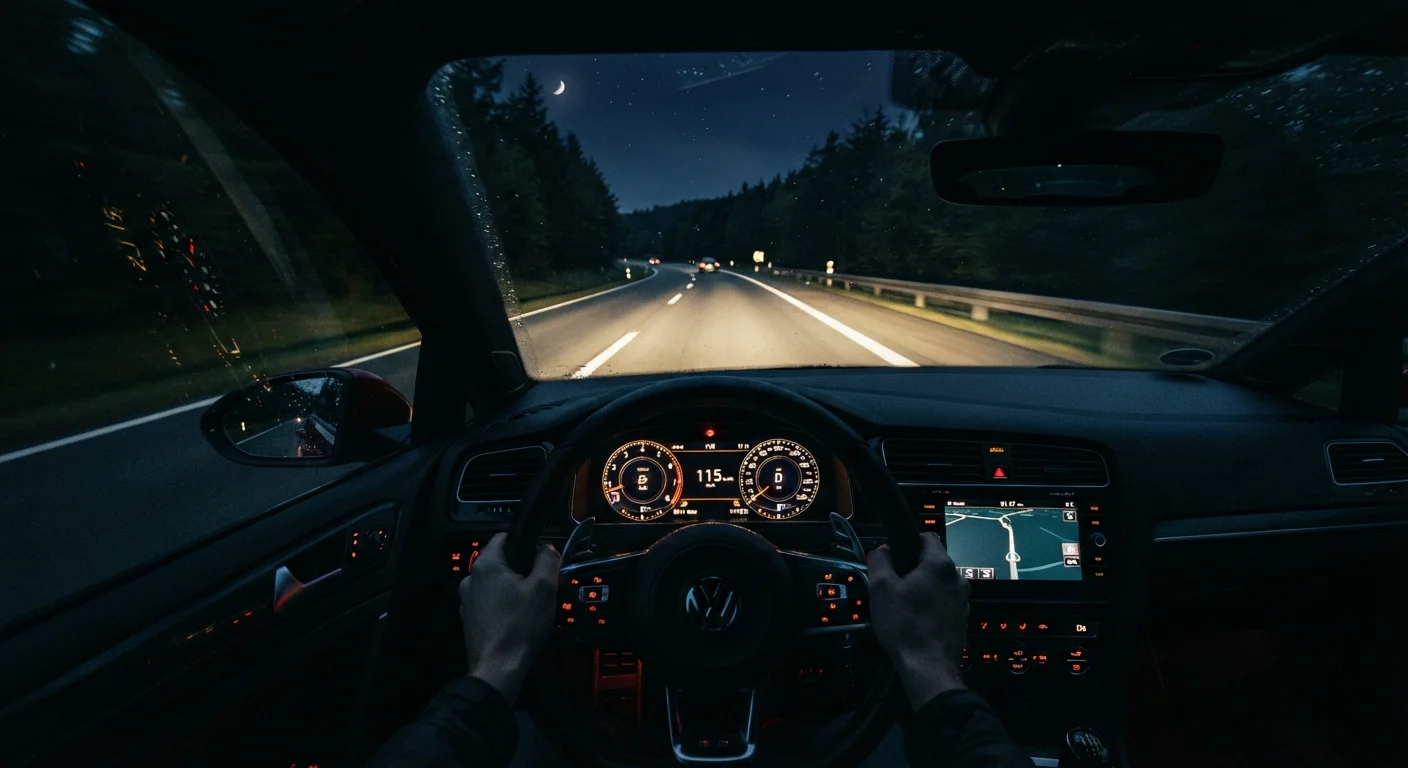
Night Driving Habits That Reduce Risk After Dark

Photo: ShortwebArticles.com | Content For The Curious editorial

Reduced visibility, drowsy drivers, and glare from oncoming headlights all increase after-dark risk. These practices help you manage each one.

Key Takeaways

  • Night driving carries a disproportionately higher fatal crash risk compared to daytime driving.
  • Reduced visibility, glare, and fatigue are the three primary after-dark hazards to actively manage.
  • Slowing down, increasing following distance, and keeping headlights clean are immediate, effective steps.
  • Recognizing early signs of drowsiness and stopping before impairment sets in can be life-saving.

Why Night Driving Is More Dangerous Than It Feels

Most drivers instinctively feel comfortable driving after dark — the roads are quieter, traffic is lighter, and familiar routes feel routine. But the numbers tell a different story. According to the National Safety Council, traffic fatality rates per mile driven are roughly three times higher at night than during the day, despite lower overall traffic volume.

Three factors account for most of the added risk: reduced visibility that shrinks your reaction window, glare from oncoming headlights that temporarily disrupts your vision, and driver fatigue that degrades judgment and reaction time in ways that often go unnoticed. None of these risks are unavoidable — each responds directly to specific driving habits.

Understanding what's actually working against you after dark is the first step toward countering it. The practices below address each hazard in concrete, actionable terms.

Best Practices for Safer Night Driving

These habits address the most common causes of after-dark crashes. Some take seconds to implement; others require building a new mental routine over time.

1

Slow down by at least 5–10 mph below your normal speed on unlit roads.

Your headlights illuminate roughly 160–250 feet ahead at low beam, but at 60 mph you need nearly 200 feet to stop. Reducing speed closes that gap and gives you more time to react to hazards — animals, debris, pedestrians — that appear with little warning.
Example: On a rural county road where you'd normally cruise at 55 mph, dropping to 45 mph gives you an extra half-second of reaction time — enough to avoid many obstacles entirely.
2

Increase your following distance to at least four seconds behind the vehicle ahead.

The standard three-second rule applies in daylight with good conditions. At night, your perception of the car ahead's speed and braking is slower, and your own stopping distance doesn't change. Adding a full second of buffer buys you meaningful reaction time. For more on why following distance matters, see why tailgating is more dangerous than most drivers realize.
Example: When following a truck on a dark interstate, choose a gap that lets you count to four before reaching the same landmark the truck just passed.
3

Use the right edge of the road — not oncoming headlights — as your visual guide when being blinded by glare.

Staring into bright oncoming headlights causes temporary night blindness that can last several seconds. Shifting your gaze to the road's right edge line keeps you tracking your lane without staring into the source of the glare.
Example: When a truck with high-mounted lights approaches, glance down and right toward the white lane edge marking until the vehicle passes, then return your gaze forward.
4

Keep your windshield and headlight lenses clean inside and out.

A film of road grime or interior haze on your windshield scatters oncoming headlight glare dramatically, reducing your effective field of vision. Cloudy or yellowed headlight lenses can reduce light output by up to 80 percent, according to the American Automobile Association.
Example: A two-minute wipe of the windshield interior with a microfiber cloth before a long evening drive significantly reduces glare scatter from oncoming traffic.
5

Recognize drowsiness early and stop before it becomes impairment.

Fatigue impairs reaction time, attention, and judgment in ways that closely resemble alcohol impairment — and drowsy drivers are often the last to recognize how impaired they are. Common early signs include frequent blinking, drifting between lanes, and missing exits. Pulling over to rest is always the right call.
Example: If you notice you've blinked hard three or more times in the past minute, treat it as a warning sign — find a lit rest area or gas station and take a 20-minute break before continuing.

Distraction compounds every night-driving risk. See why distraction is harder to detect than most drivers think — the problem is especially acute when visibility is already reduced.

Quick Wins You Can Apply Tonight

Not every safety improvement requires a behavior overhaul. These are immediate steps any driver can take before or during the next after-dark trip.

high Turn your headlights on at dusk — not full dark. Switch to low beams at least 30 minutes before sunset so other drivers can see you earlier.
medium Dim your dashboard and instrument panel lighting to reduce interior reflection on the windshield, which competes with your forward vision.
medium Set your rearview mirror to 'night' mode (or use the auto-dimming feature if your car has one) before driving after dark to reduce glare from vehicles behind you.
high Check that all exterior lights — headlights, taillights, turn signals — are functioning before any planned night drive.

If night driving often puts you on highways, it's worth reviewing how open-road driving differs from urban environments. City versus highway driving demands a different approach, and those differences matter even more after dark.

When Conditions Stack Against You

Night driving becomes significantly more hazardous when combined with adverse weather. Rain, fog, or ice on a dark road compounds every visibility and traction challenge. If you regularly drive after dark in variable weather, the habits covered in how each weather condition changes the rules are worth understanding alongside this guidance.

Intersections are another elevated risk zone at night — traffic signals and lane markings are harder to read at speed. Building the habit of scanning and covering the brake before entering any intersection pays dividends after dark. Learn more about intersection safety habits worth building.

A Note on High Beams

High beams roughly double your visibility distance and should be used on unlit rural roads when no other vehicles are present. The key rule: switch back to low beams when an oncoming vehicle is within approximately 500 feet, or when you're following another car closely. Failing to dim your high beams is both a traffic violation in most states and a direct hazard to other drivers.

Night driving risk is real but manageable. The drivers who stay safest after dark aren't the ones who avoid it — they're the ones who approach it with adjusted habits and honest self-awareness about fatigue.

Cars Editorial Team

ShortwebArticles.com | Content For The Curious

Cars Editorial Team is the collective byline for our editorial team and contributor network. Articles published under this byline or an editorial pen name are researched, written, and reviewed according to our editorial standards for clarity, consistency, and independence before publication.

Car MaintenanceCar OwnershipRoad & Driving Tips
View author profile

The content on this site is for informational purposes only and is not a substitute for professional advice. Always consult a qualified professional for guidance specific to your situation.