
Why Drivers Underestimate Distraction Behind the Wheel

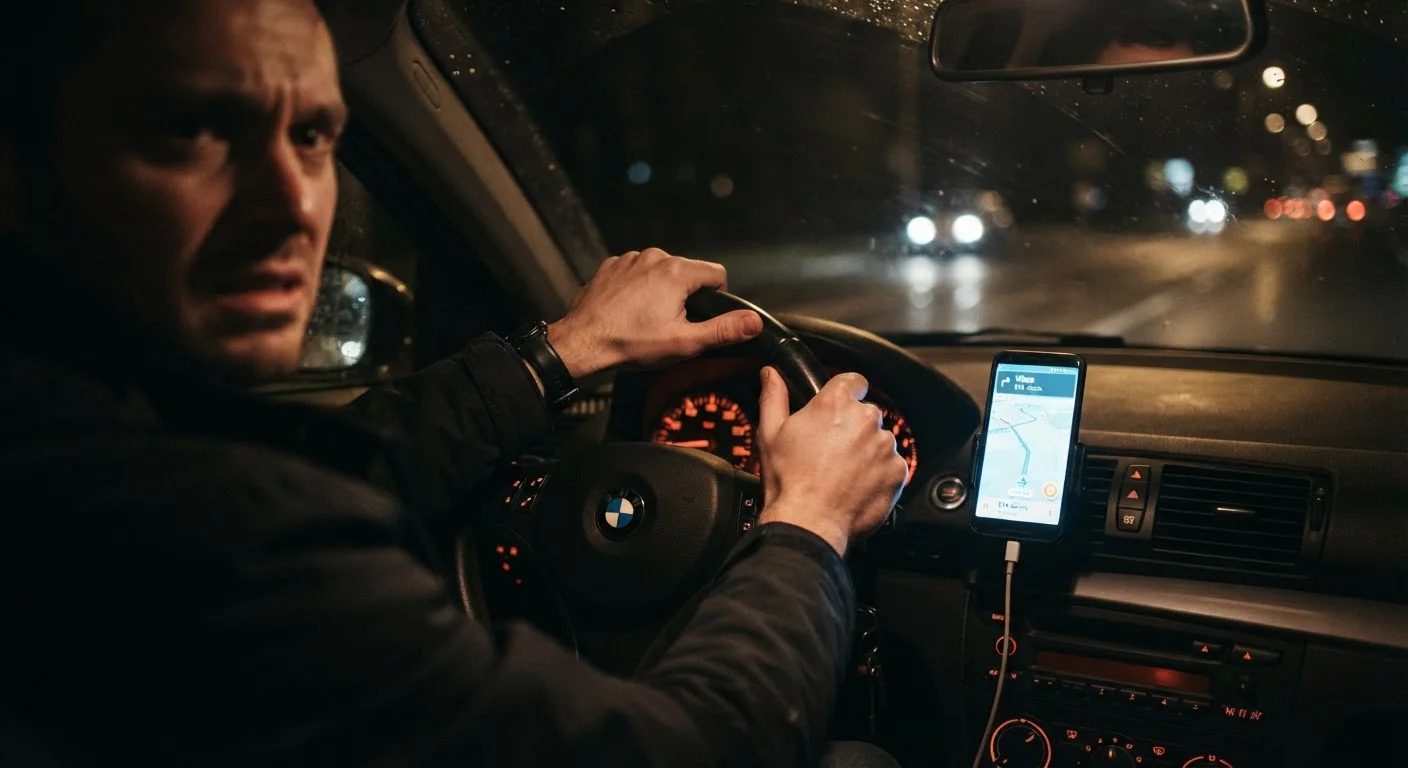
Photo: ShortwebArticles.com | Content For The Curious editorial
Key Takeaways
- Hands-free calls still significantly impair driving because cognitive load — not hand position — is the core problem.
- Research suggests drivers overestimate their ability to multitask, a bias sometimes called 'distraction blindness.'
- Even brief glances away from the road — two seconds or more — dramatically increase crash risk.
- Eating, adjusting climate controls, and daydreaming are all forms of distraction that drivers routinely overlook.
The Self-Assessment Problem
Ask most drivers whether they're distracted behind the wheel, and the majority will say no — even when they're in the middle of doing something that research consistently flags as dangerous. This gap between perceived and actual attentiveness is one of the most stubborn problems in road safety.
Distraction isn't just a phone problem. It's any activity that pulls your eyes, hands, or — critically — your mental focus away from driving. That covers a wider range of behaviors than most people expect: eating a sandwich, tuning the radio, thinking through a stressful conversation, or managing a hands-free call. Understanding what distraction actually means is the first step toward recognizing it in yourself.
For a closer look at how inattention contributes to collision risk, see our piece on why tailgating is more dangerous than most drivers realize.
Myth
Hands-free calling is safe because my hands stay on the wheel.
Fact
Hands-free calls still impair driving because the cognitive demand — not hand position — is what degrades performance.
Multiple studies, including research cited by the AAA Foundation for Traffic Safety, have found that hands-free phone conversations impair reaction time, reduce hazard detection, and narrow a driver's effective visual field. The brain can't fully allocate attention to both a conversation and the complex, dynamic task of driving. Using a speakerphone or earpiece doesn't eliminate that mental load.
Myth
Glancing at my phone for just a second isn't really dangerous.
Fact
Even two seconds of eyes-off-road time significantly increases crash risk at typical highway speeds.
At 55 mph, a vehicle travels roughly 160 feet in two seconds — longer than most people intuitively estimate. NHTSA research on distraction-related crashes has repeatedly identified brief visual diversions as a leading factor in rear-end and lane-departure incidents. What feels like a quick glance is enough time for traffic conditions to change dramatically.
Myth
Eating or drinking behind the wheel is fine as long as I'm not on my phone.
Fact
Eating while driving is a manual and visual distraction that measurably slows reaction time.
Consuming food or beverages requires at least one hand off the wheel, repeated glances away from the road, and mental bandwidth for the task. Traffic safety researchers have classified it alongside phone use as a secondary task that degrades driving performance. Spills or dropped items can also cause sudden, reflexive movements that create immediate risk.
Myth
Experienced drivers can safely multitask because they've automated most of driving.
Fact
Experience doesn't neutralize cognitive distraction — it may actually increase overconfidence in the ability to handle it.
While experienced drivers do automate many low-level tasks (steering, basic lane-keeping), high-level hazard detection and response remain cognitively demanding and sensitive to divided attention. Research on driver overconfidence suggests that veterans often underestimate their own impairment precisely because they've managed distracted driving without incident before — a form of survivorship bias rather than evidence of skill.
Myth
Daydreaming doesn't count as distraction if my eyes are on the road.
Fact
Mind-wandering is a form of cognitive distraction that impairs hazard response even when gaze stays forward.
Eyes-open, mind-elsewhere driving — sometimes called 'highway hypnosis' — is an example of inattention blindness. Research published in traffic psychology literature has found that drivers whose minds wander are slower to respond to brake lights, pedestrians, and other hazards, even though they appear to be watching the road. Long monotonous stretches of highway are particularly associated with this state.
What the Research Actually Shows
Studies from the National Highway Traffic Safety Administration and independent traffic safety researchers have consistently found that cognitive distraction — where the brain is occupied with something other than the driving task — degrades reaction time, narrows the visual field, and reduces hazard detection, even when the driver's eyes appear to be on the road.
~8 sec
Average duration of a phone-related distraction event
NHTSA research has found that phone interactions typically take a driver's attention for around 4–8 seconds, covering substantial road distance at highway speeds.
3x
Crash risk increase while using a hand-held device
AAA Foundation for Traffic Safety and NHTSA analyses have estimated that hand-held phone use roughly triples crash risk compared to undistracted driving.
The concept of 'inattention blindness' explains why a driver can look directly at a hazard and fail to register it. The eyes transmit the image, but the occupied brain doesn't fully process it. This is distinct from simply not looking — and it's why hands-free technology doesn't fully solve the problem.
Intersections are a particularly high-risk environment for distracted drivers. Driving through intersections safely depends on active scanning habits that distraction directly undermines. Newer drivers are especially vulnerable — distraction is a recurring factor in the kinds of errors detailed in our guide on situations where new drivers most commonly make costly errors.
Hands-Free Does Not Mean Risk-Free
Building Habits That Reduce Distraction
Awareness alone doesn't change behavior, but it's a prerequisite. Drivers who understand that their confidence in multitasking is likely misplaced are better positioned to adopt practical countermeasures: silencing phones before starting the car, pre-setting navigation and audio, pulling over to eat, and treating any non-driving mental demand as a signal to reduce speed and increase following distance.
Distraction also compounds with other risk factors. After dark, for instance, your brain is already managing reduced visibility and potential fatigue — adding cognitive load from a phone call or mental preoccupation makes that harder. Night driving habits that reduce risk after dark covers how to protect attention when conditions are already working against you.
The honest takeaway is this: distraction is underestimated because it's invisible and because drivers rarely experience the near-miss that would otherwise recalibrate their risk perception. Treating every drive as a task that deserves full attention — not a backdrop for productivity — is the most evidence-consistent approach available.
The content on this site is for informational purposes only and is not a substitute for professional advice. Always consult a qualified professional for guidance specific to your situation.