
City Driving vs. Highway Driving: How Your Approach Should Shift

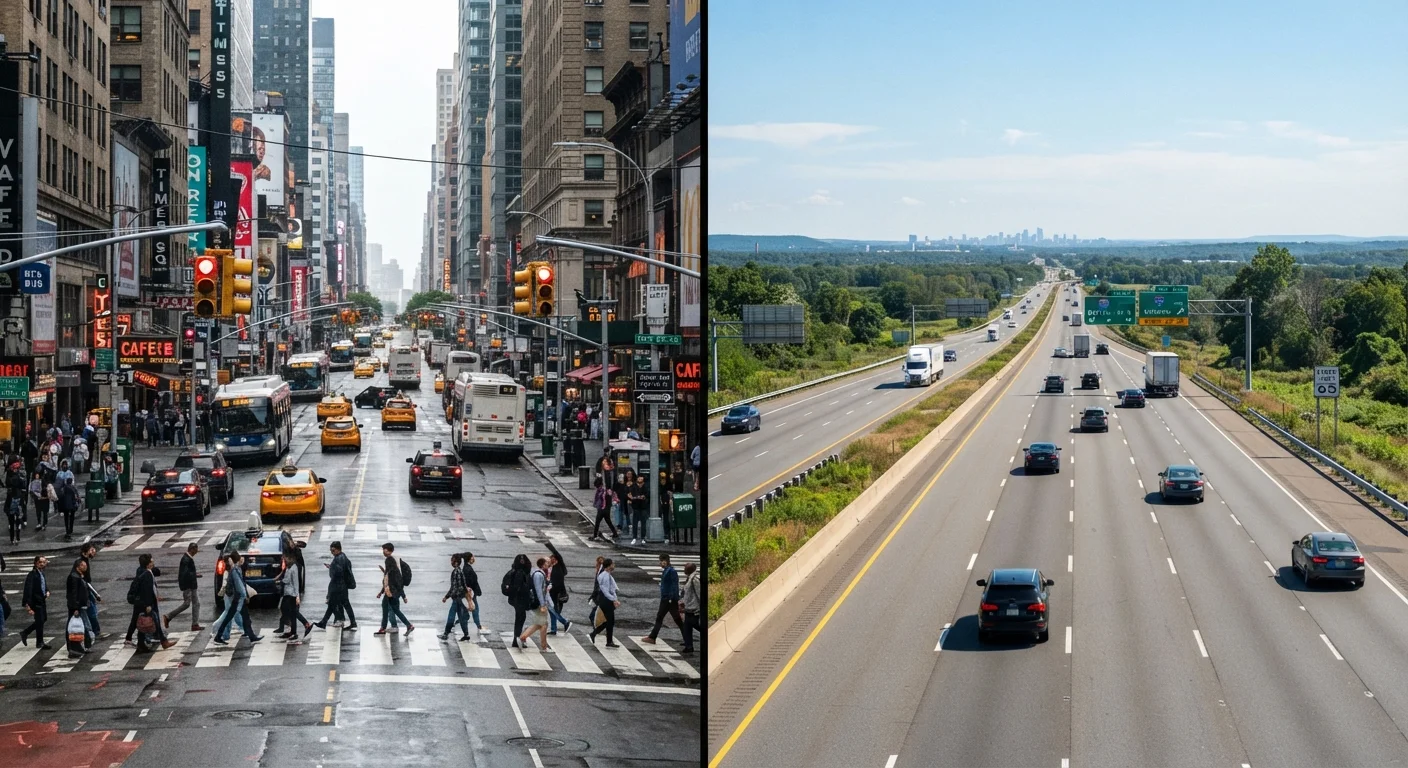
Photo: ShortwebArticles.com | Content For The Curious editorial
Key Takeaways
- City driving demands constant hazard scanning due to pedestrians, cyclists, and frequent signal changes.
- Highway driving requires managing higher speeds, larger following distances, and smooth lane changes.
- Attention fatigue is a bigger risk on highways; distraction is a bigger risk in cities.
- Following distance rules differ — two seconds is a minimum, but three or more is recommended at highway speeds.
- Both environments reward the same foundation: anticipation, space management, and eyes well ahead.
The Core Difference: Decision Rate vs. Sustained Attention
City driving and highway driving are not simply fast and slow versions of the same task. They make fundamentally different demands on your attention.
In a city, you're processing a high volume of inputs in a compressed space — traffic signals, crosswalks, cyclists, parked cars, delivery vehicles, and pedestrians who may step into the road without warning. The pace is slower, but the number of decisions per mile is far higher. Missing a cue at an urban intersection has immediate consequences. For a closer look at intersection-specific habits, see intersection safety habits that reduce your exposure.
On the highway, inputs thin out but speed amplifies their consequences. A lapse in attention at 70 mph covers far more ground in the same two seconds than it does at 30 mph. The challenge shifts from rapid decision-making to sustained vigilance — staying alert over longer stretches when the scenery doesn't change and stimulation is low.
| Criterion | City Driving | Highway Driving |
|---|---|---|
| Typical speed range | 15–45 mph | 55–80 mph |
| Primary attention demand | Rapid, frequent decisions | Sustained vigilance over time |
| Recommended following distance | 2 seconds minimum | 3–4 seconds recommended |
| Main pedestrian/cyclist risk | High — constant presence | Low — limited access roads |
| Lane change complexity | Frequent, lower-speed | Less frequent, higher-stakes |
| Biggest distraction risk | Sensory overload, in-city stimuli | Monotony and attention drift |
| Signal and sign density | Very high | Lower, spaced further apart |
Speed Management and Following Distance
Speed management looks very different across these environments. In city traffic, speed is constantly adjusted — accelerating from stops, slowing for signals, navigating narrow lanes. The risk is not necessarily raw speed but the frequency of situations where a split second of inattention causes a collision.
On the highway, maintaining a consistent speed that matches the flow of traffic is the goal. Erratic speed changes create hazards for everyone around you. The general rule for following distance — two seconds of space at minimum — becomes more critical at higher speeds, not less. At 65 mph, two seconds translates to roughly 190 feet. Many safety guidelines recommend three to four seconds on freeways to account for reaction time and braking distance at speed.
~40%
Urban share of U.S. traffic fatalities
According to NHTSA data, a significant share of fatal crashes occur on urban roads despite lower speeds, reflecting the density of hazards.
1.5x
Higher fatality rate per crash at highway speeds
Physics dictates that crash energy increases with the square of speed, making high-speed highway impacts disproportionately severe.
3–4 sec
Recommended highway following distance
Traffic safety guidelines broadly recommend a minimum three-second gap at freeway speeds to allow adequate braking and reaction time.
Tailgating is among the most common precursors to rear-end collisions on both road types, but the severity of impact at highway speeds makes the habit significantly more dangerous on interstates. Defensive driving principles — particularly space management — apply in both environments but carry higher stakes at freeway speeds.
Lane Discipline and Merging
In city driving, lane changes are frequent but typically occur at lower speeds where minor errors are more forgivable. That said, urban lane changes near intersections, bus stops, or bike lanes still demand careful mirror checks and signaling well in advance.
On the highway, lane discipline is more structured. The left lane is generally intended for passing, and sitting in it while blocking faster traffic is a source of frustration and, in many states, a moving violation. Smooth, deliberate lane changes with mirrors, signal, and a blind-spot check are essential.
Merging onto a highway is its own skill set — one that trips up many drivers regardless of experience. The key is matching the speed of highway traffic before entering the lane, not waiting until you're forced to. Merging safely onto the highway covers the specific habits — speed-matching, mirror timing, and gap selection — that make on-ramp entries predictable for everyone involved.
Construction Zones Blend Both Environments
Attention Fatigue, Distraction, and the Mental Shift
One underappreciated aspect of highway driving is how monotony breeds complacency. Long stretches of straight road, consistent speeds, and predictable surroundings can cause attention to drift — a phenomenon sometimes called highway hypnosis. Drivers often arrive at a destination with no clear memory of the last several miles. This is a genuine risk, not just a figure of speech.
City driving has the opposite problem: sensory overload. When too much is happening at once, the temptation to check a phone, skip a signal check, or rush a turn increases. Distraction in this environment is especially costly because hazards can materialize within feet, not hundreds of yards.
Both scenarios reward the same underlying habit: keeping your eyes well ahead, not just on the vehicle in front. In cities, that means scanning beyond the nearest intersection. On highways, it means watching traffic patterns several cars ahead to anticipate slowdowns before brake lights appear. New driver error patterns often cluster precisely around these transitions — moments when the environment changes but the driver's mental approach hasn't caught up.
Weather adds another dimension to both environments. Rain changes braking distances in cities and increases hydroplaning risk at highway speeds. How each weather condition changes the rules is a useful companion if your route crosses both urban and open-road terrain in challenging conditions.
The content on this site is for informational purposes only and is not a substitute for professional advice. Always consult a qualified professional for guidance specific to your situation.