
Defensive Driving: What It Actually Means and How to Practice It

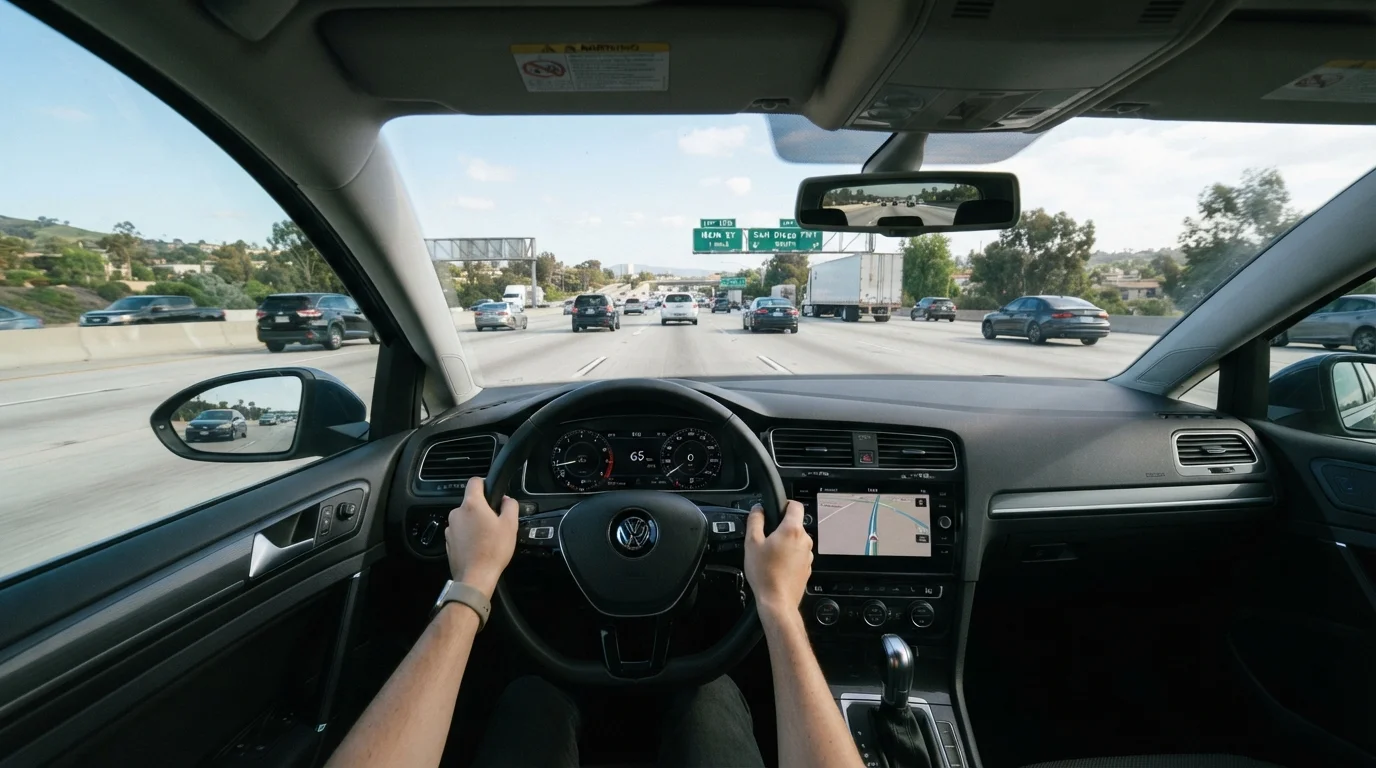
Photo: ShortwebArticles.com | Content For The Curious editorial
Key Takeaways
- Defensive driving means anticipating hazards before they develop, not just reacting to them.
- Maintaining adequate following distance is one of the highest-impact habits any driver can adopt.
- Scanning intersections and checking mirrors every 5–8 seconds are core situational awareness practices.
- Driver error — not mechanical failure — is the leading factor in most U.S. crashes.
- Defensive driving applies equally on city streets and open highways, just with different focal points.
What Defensive Driving Actually Means
Defensive driving is often reduced to a single idea — slow down — but that misses the point. At its core, defensive driving is a set of mental habits that keep you prepared for what other drivers, road conditions, and the environment might do next. It shifts your role from passive participant to active manager of risk.
The National Safety Council describes defensive driving as driving to save lives, time, and money despite the conditions around you and the actions of others. That framing matters: you cannot control other drivers, but you can control your position, speed, attention, and readiness to respond.
Three pillars hold the concept together: hazard anticipation, space management, and situational awareness. Each one reinforces the others, and each is a learnable skill rather than an innate talent.
When traffic ahead seems normal, resist the urge to match the pace of the car immediately in front of you. Watch two or three vehicles ahead and let their behavior guide your speed decisions.
If another driver is behaving aggressively or erratically, slow down and create as much distance as possible rather than matching their pace or engaging with them.
Hazard Anticipation: Reading the Road Ahead
Anticipating hazards means scanning the environment for conditions that could become dangerous — before they do. A ball rolling into the street suggests a child may follow. A truck with an unsecured load is a potential debris source. Brake lights three cars ahead mean traffic is slowing, even if the car immediately in front of you has not reacted yet.
The key technique is visual scanning: looking well ahead of your vehicle rather than fixating on the bumper in front of you. Driving instructors and safety researchers generally recommend scanning 10–15 seconds ahead at highway speeds — roughly a quarter mile at 60 mph.
Hazard anticipation also applies to other drivers' behavior. A vehicle drifting within its lane, a driver looking at a phone, or a car hovering in your blind spot are all signals worth registering and responding to — by adjusting your speed or position — before anything goes wrong.
Overconfidence Is a Real Risk Factor
Space Management: Your Buffer Is Your Safety Net
Space management is the practice of maintaining adequate distance from other vehicles and objects so you have room to react. The most commonly cited guideline is the three-second following distance rule: choose a fixed point ahead, and make sure at least three seconds pass between when the car in front of you passes it and when you do. In rain, fog, or other reduced-traction conditions, extend that to five or six seconds.
Tailgating dramatically compresses your reaction window. At 60 mph, a car travels about 88 feet per second. If a hazard requires 1.5 seconds of perception-reaction time alone, you will cover more than 130 feet before your brakes even engage. A generous following distance is not timidity — it is physics.
Space management extends beyond following distance. It includes lane positioning (staying centered, avoiding the blind spots of large trucks), merging behavior, and how you approach intersections. The habits that make intersections safer — covering the brake, scanning cross-traffic — are space management in practice.
94%
Crashes attributed to driver behavior
According to NHTSA research, approximately 94% of serious crashes involve a driver-related factor as a critical reason.
3 sec
Minimum recommended following distance
Safety organizations widely recommend at least a three-second gap in normal conditions, extended in adverse weather or lower visibility.
~1.5 sec
Average driver perception-reaction time
Research on driver behavior suggests perception-reaction time averages around 1.5 seconds — which translates to significant distance at highway speeds.
Situational Awareness Behind the Wheel
Situational awareness means knowing what is happening around your vehicle at all times, not just in front of it. A common guideline: check your mirrors every 5–8 seconds and before any speed or lane change. This keeps your mental picture of surrounding traffic current.
Distractions are the primary enemy of situational awareness. The Centers for Disease Control and Prevention identifies three types: visual (eyes off road), manual (hands off wheel), and cognitive (mind off driving). Texting while driving engages all three simultaneously, which is why it is treated as one of the most dangerous driver behaviors studied.
Fatigue degrades situational awareness in ways drivers often underestimate. Drowsy driving impairs reaction time and judgment in patterns that parallel impairment from alcohol. If you are driving after dark, the practices that reduce after-dark risk address how low visibility and driver fatigue interact specifically.
Common Situations Where Defensive Driving Pays Off
Defensive driving is not a special mode reserved for storms or heavy traffic. These principles are most tested — and most valuable — in everyday situations that drivers routinely underestimate:
- Merging and lane changes: Always signal early, check mirrors and blind spots, and match the speed of traffic you are entering. New drivers are especially prone to errors here — the common mistakes new drivers make cluster heavily around merging and highway entry.
- Intersections: Even on a green light, a brief scan of cross-traffic before proceeding gives you a fraction of a second that can prevent a T-bone collision.
- Following large vehicles: Trucks and buses have significant blind spots and require longer stopping distances. Stay out of their blind zones and give extra following distance.
- City vs. highway driving: The defensive tactics shift between environments. Urban and highway driving demand different approaches — city driving prioritizes pedestrian awareness and gap judgment, while highways demand sustained attention and mirror discipline.
Practice One Habit at a Time
Building the Habit: Practical Steps
Defensive driving becomes automatic with deliberate repetition. A few practices worth building into every drive:
- Set your mirrors before moving. Adjust side and rearview mirrors so you have maximum coverage with minimal head movement.
- Narrate hazards mentally. As you drive, quietly identify potential risks — a parked car that might pull out, a cyclist at the edge of the lane. This keeps anticipation active.
- Establish a pre-drive routine. A moment to put the phone away, adjust your seat, and clear distractions sets an intentional tone before you pull out.
- Take a formal defensive driving course. Many state-accredited courses reinforce these principles and may offer insurance premium benefits — check with your provider for details.
Defensive driving is not about being a perfect driver. It is about consistently reducing the variables within your control so that when something unexpected happens — and it will — you have the time and space to respond.
The content on this site is for informational purposes only and is not a substitute for professional advice. Always consult a qualified professional for guidance specific to your situation.