
Driving in Rain, Snow, Ice, and Fog: How Each Condition Changes the Rules

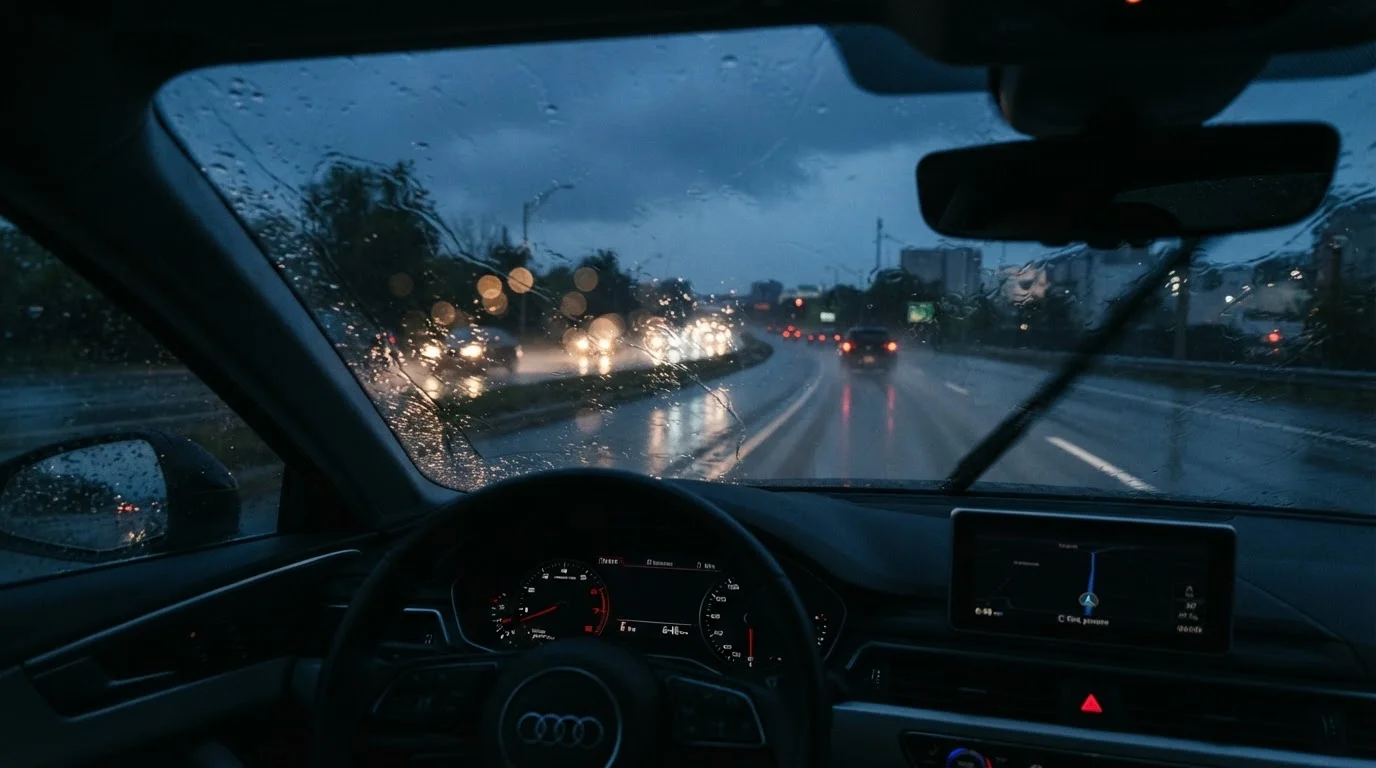
Photo: ShortwebArticles.com | Content For The Curious editorial
Key Takeaways
- Rain reduces braking distance and traction — slow down and increase following distance.
- Black ice is often invisible; bridges and overpasses freeze before road surfaces.
- Snow demands smooth, deliberate inputs — abrupt steering or braking causes slides.
- Fog requires low-beam headlights and a speed matched to your actual sight distance.
- Each condition calls for distinct driving adjustments, not a single generic caution.
Why Weather Conditions Aren't Interchangeable
Many drivers apply a generic slow-down-and-be-careful approach across all bad weather. That's a reasonable starting point, but it misses the physics. Rain, ice, snow, and fog each undermine vehicle control and visibility in different ways — and that means the right response differs too.
Understanding what each condition actually does to your tires, braking, and sight lines helps you make faster, better decisions when conditions change mid-drive. For a foundation on how your tires interact with all of these surfaces, see our guide on tire pressure, tread depth, and rotation.
| Rain | Ice | Snow | Fog | |
|---|---|---|---|---|
| Primary hazard | Hydroplaning, reduced grip | Extreme friction loss | Traction loss on acceleration/braking | Severely reduced visibility |
| Speed adjustment | Reduce speed moderately | Drive very slowly | Slow, steady pace | Match speed to sight distance |
| Following distance | Double normal gap | Triple or more | Double to triple | Maximum possible gap |
| Headlight setting | Low beams on | Low beams on | Low beams on | Low beams only — never high beam |
| Braking approach | Gradual, early braking | Extremely gentle, early braking | Engine braking + gradual | Early, gradual braking |
| Biggest driver mistake | Too-fast highway speeds | Overconfidence, cruise control use | Overestimating AWD ability | Driving too fast for sight distance |
Rain: Traction Loss and Hydroplaning
Water between your tires and the pavement reduces grip. At higher speeds, tires can't channel water away fast enough and lift off the surface entirely — a phenomenon called hydroplaning. When that happens, steering and braking inputs have almost no effect until contact is restored.
Key adjustments for rain:
- Reduce speed — at highway speeds, even a shallow layer of water increases stopping distance significantly.
- Increase following distance — doubling your normal gap gives you more reaction time on slick pavement.
- Turn headlights on — required by law in most U.S. states when wipers are running, and critical for being seen.
- Avoid sudden inputs — sharp braking or steering increases the chance of a skid.
If you feel the steering go light (a sign of hydroplaning), ease off the accelerator gently and hold the wheel straight — don't brake hard.
Check Tires Before Winter Weather Arrives
Ice: The Invisible Hazard
Ice — especially black ice, a thin, transparent glaze on pavement — is the most dangerous surface condition because it's often undetectable until you're already on it. Bridges, overpasses, shaded stretches, and intersections freeze first because cold air circulates beneath them or traffic hasn't worn the surface clear.
Friction on ice is so low that even gentle braking can send a car into a slide. The priorities here are different from rain:
- Slow to a speed where stopping is possible — if you can't stop in the distance you can see, you're going too fast.
- Brake gradually and earlier than feels necessary — threshold braking (steady, moderate pressure) is more effective than stomping the pedal.
- If you start to slide — steer in the direction you want the front of the car to go; don't overcorrect.
- Avoid cruise control — on ice, you need instant throttle control.
Intersections on icy days deserve extra caution. Our article on driving through intersections safely covers scanning and braking habits that apply directly here.
Snow: Smooth Is Everything
Packed snow sits between rain and ice on the friction scale, but the governing principle is the same: smooth inputs. Abrupt acceleration, braking, or steering on snow transfers weight dramatically and can break traction instantly.
Practical guidance for snowy roads:
- Accelerate slowly — spinning wheels dig into snow rather than gripping it.
- Use engine braking — easing off the accelerator early adds a braking effect without the risk of wheel lockup.
- Know your vehicle's drivetrain — all-wheel drive helps you get moving but doesn't improve stopping. Don't overestimate your capability.
- Clear all snow from your car — snow sliding off your roof onto following traffic is both dangerous and, in many states, a ticketable offense.
AWD Does Not Mean All-Condition Safe
Fog: Speed to Match Your Sight Distance
Fog is a visibility problem, not primarily a traction problem — but it's lethal because it collapses the distance in which you can perceive and respond to hazards. Dense fog can reduce visibility to a few car lengths.
The core rule for fog: drive only as fast as you can stop within the distance you can see. Other adjustments:
- Use low-beam headlights — high beams scatter off water droplets and reflect back at you, reducing visibility further.
- Use fog lights if your vehicle has them — they're designed to illuminate the road surface below the fog layer.
- Increase following distance considerably — rear-end collisions are common in fog because drivers underestimate closing speeds.
- Don't stop on the road — if conditions become unnavigable, pull fully off the road, turn off your headlights (to avoid attracting following traffic), and keep hazard lights on.
Low-visibility conditions share some characteristics with night driving. Our guide on night driving habits covers complementary practices for managing reduced sight distance.
Applying the Right Response
Conditions often overlap — freezing rain combines ice-level grip with rain-level onset speed; foggy mornings in winter may mean frost on bridges. Experienced drivers don't just categorize the weather before driving; they continuously reassess as conditions change.
A useful mental check before and during any adverse-weather drive:
- What's the primary hazard? Traction loss, visibility loss, or both?
- At what speed can I realistically stop? Drive at or below that speed.
- Am I visible to others? Headlights on, even in daylight if conditions are poor.
- What's my following distance? Double or triple normal gaps.
These aren't just defensive driving clichés — they're grounded in the physics of how vehicles actually behave on compromised surfaces. The gap between a managed situation and a serious crash is often one second of reaction time. Giving yourself that margin costs nothing except a few extra minutes on your commute.
This article provides general educational information about driving in adverse weather conditions. It is not a substitute for professional driver training. Driving conditions vary widely; always exercise your own judgment and comply with local traffic laws and official guidance.
The content on this site is for informational purposes only and is not a substitute for professional advice. Always consult a qualified professional for guidance specific to your situation.