
Tire Pressure, Tread Depth, and Rotation: Making Sense of Tire Care

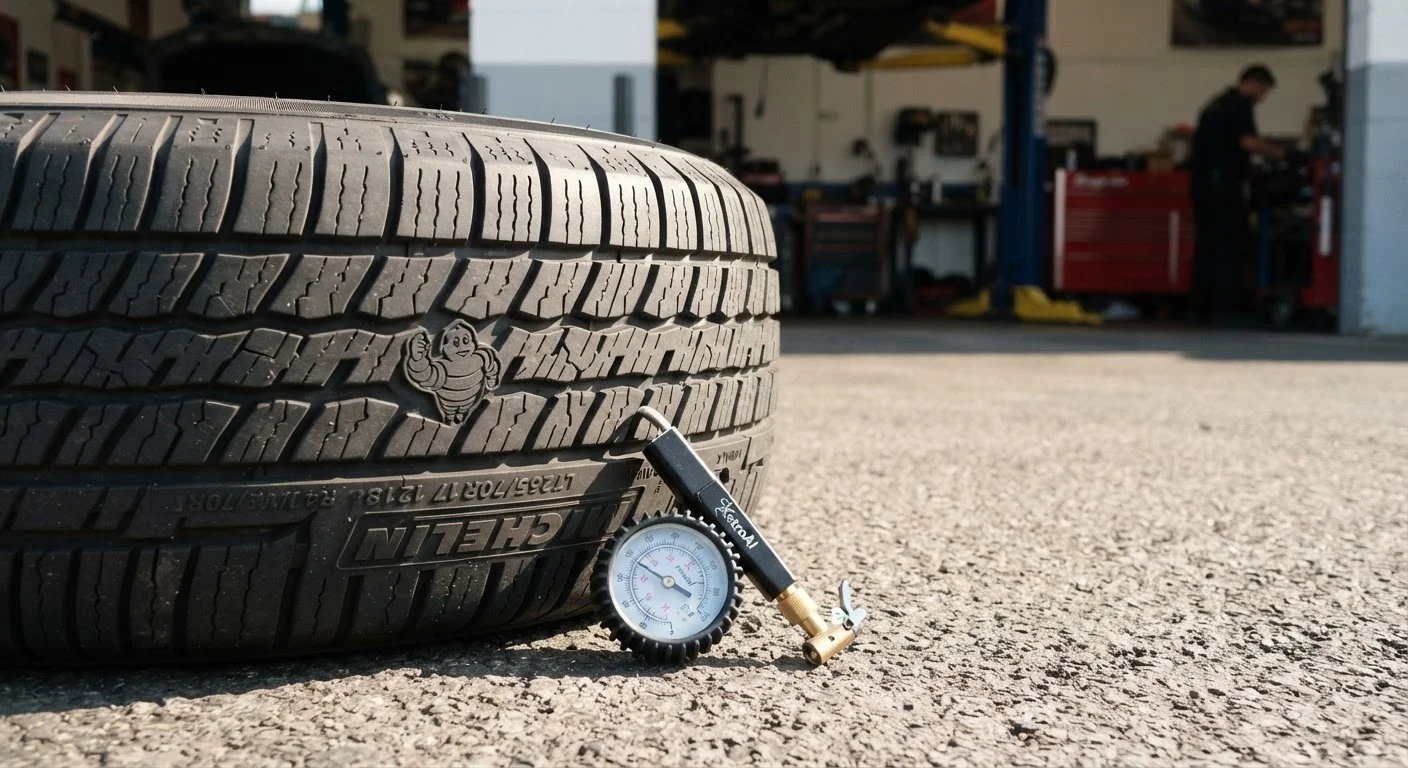
Photo: ShortwebArticles.com | Content For The Curious editorial
Key Takeaways
- Your vehicle's correct tire pressure is printed on the driver's door jamb sticker, not on the tire sidewall.
- Tires with less than 2/32" of tread depth lose meaningful grip in wet conditions and should be replaced.
- Rotating tires every 5,000–7,500 miles helps even out wear and extends overall tire life.
- Temperature swings of 10°F can change tire pressure by roughly 1 PSI — check monthly, not just seasonally.
- The penny test is a fast, free way to check whether tread depth is dangerously low.
Why Tires Deserve More Attention Than They Get
Tires are the only part of your vehicle actually touching the road. Every bit of steering, braking, and acceleration happens through four contact patches — each roughly the size of a hand. Yet tire care is one of the most overlooked parts of routine vehicle maintenance.
The good news is that the basics are genuinely simple. Keeping tires properly inflated, monitoring tread depth, and rotating them on schedule requires minimal time and no specialized knowledge. It does, however, require knowing what to look for — and that's exactly what this guide covers. For how tire-related warning lights fit into the broader dashboard picture, see Your Car's Warning Lights, Explained.
PSI
Pounds per square inch — the unit used to measure how much air pressure is inside a tire. Your vehicle's recommended PSI is different from the tire's maximum PSI.
Tread depth
The measurement of how much rubber remains in a tire's grooves. As tread wears down, the tire's ability to channel water and maintain grip decreases.
TPMS
Tire Pressure Monitoring System — a built-in sensor that triggers a dashboard warning light when tire pressure drops significantly below the recommended level.
Tire rotation
Moving tires from one wheel position to another on a set schedule so that all four tires wear at a more even rate over time.
Directional tires
Tires designed to roll in one specific direction, indicated by an arrow on the sidewall. Their rotation pattern is more limited than non-directional tires.
Tire Pressure: The Number That Changes Everything
Tire pressure is measured in PSI — pounds per square inch. Running at the wrong pressure affects fuel economy, handling, and how evenly your tires wear. It's one of the easiest things to check and one of the most commonly neglected.
Where to Find Your Target Pressure
The correct PSI for your vehicle is printed on a sticker inside the driver's door jamb (sometimes also in the glove box or owner's manual). Ignore the number on the tire sidewall — that's the maximum the tire can hold structurally, not a recommended driving pressure.
Why Pressure Drifts
Tires naturally lose a small amount of air over time. More significantly, pressure drops about 1 PSI for every 10°F decrease in temperature. That means a tire properly inflated in summer can be noticeably underinflated by January. Check pressure at least once a month and always with a cold tire — driving heats the air inside and gives a falsely elevated reading.
Always Check Pressure With a Cold Tire
The TPMS Warning Light
Most vehicles built after 2008 have a Tire Pressure Monitoring System (TPMS) that alerts you when pressure drops significantly below the recommended level. Don't wait for that light to check pressure — by the time it illuminates, the tire is already meaningfully underinflated.
Tread Depth: Knowing When Your Tires Are Done
Tread is the grooved rubber on a tire's surface. Those grooves channel water away from the contact patch, helping the tire maintain grip on wet roads. As tread wears down, that ability diminishes — sometimes dramatically.
The Legal and Practical Minimums
In most U.S. states, tires are considered legally worn out at 2/32" of tread depth. But tire safety research consistently shows that wet-road performance degrades meaningfully before that threshold is reached. A tire at 4/32" already takes significantly longer to stop in rain compared to a new tire.
The Penny Test
To do a quick check, take a penny and insert it into a tread groove with Abraham Lincoln's head pointing down into the groove. If you can see the top of Lincoln's head, the tread is at or below 2/32" — replace the tire. For a more conservative check, use a quarter: if you can see the top of Washington's head, you're at about 4/32" and should start budgeting for replacements.
Uneven wear patterns — more wear on the edges than the center, or on one side only — often signal a pressure or alignment issue worth investigating. See how tire care fits into a year-round maintenance routine in the Seasonal Car Maintenance Schedule.
Worn Tread in Wet Weather Is a Serious Risk
Tire Rotation: Why Moving Tires Around Matters
Tires on different positions of your car wear at different rates. Front tires on front-wheel-drive vehicles handle both steering and power delivery, so they wear faster than the rears. Rotation moves tires to different positions on a regular schedule so wear spreads more evenly across all four.
How Often to Rotate
Most manufacturers recommend rotating tires every 5,000 to 7,500 miles. Many drivers do it at every oil change or every other oil change, depending on interval. Your owner's manual has the manufacturer's specific guidance — that's the most reliable source for your vehicle.
What Rotation Involves
A mechanic moves each tire to a different wheel position following a set pattern — front-to-rear, side-to-side, or a cross-pattern — depending on whether your vehicle is front-, rear-, or all-wheel drive, and whether the tires are directional (designed to spin in one direction only). This is typically a quick, affordable service when bundled with other maintenance.
If you drive a high-mileage vehicle, consistent rotation becomes even more valuable as a way to get the most life out of aging rubber. For more on managing an older vehicle, see Keeping a High-Mileage Car Running Well.
Putting It All Together
Tire care doesn't require technical expertise — it requires consistency. Check pressure monthly and before long trips. Use the penny or quarter test on tread every couple of months or when something looks off. Schedule rotation with your regular service intervals.
These three habits address the most common causes of premature tire wear, poor fuel economy, and reduced wet-weather traction. They also cost very little compared to replacing tires before their time — or dealing with a blowout.
For drivers who want to understand how tires interact with road conditions at a deeper level, Driving in Rain, Snow, Ice, and Fog covers how surface grip and stopping distances shift across weather scenarios. And if you want a full picture of what maintenance looks like across your car's systems, the guide to how your braking system works pairs well with what you've learned here.
Tire Age Matters Too
Frequently Asked Questions
The content on this site is for informational purposes only and is not a substitute for professional advice. Always consult a qualified professional for guidance specific to your situation.