
The Seasonal Car Maintenance Schedule Every Driver Should Know

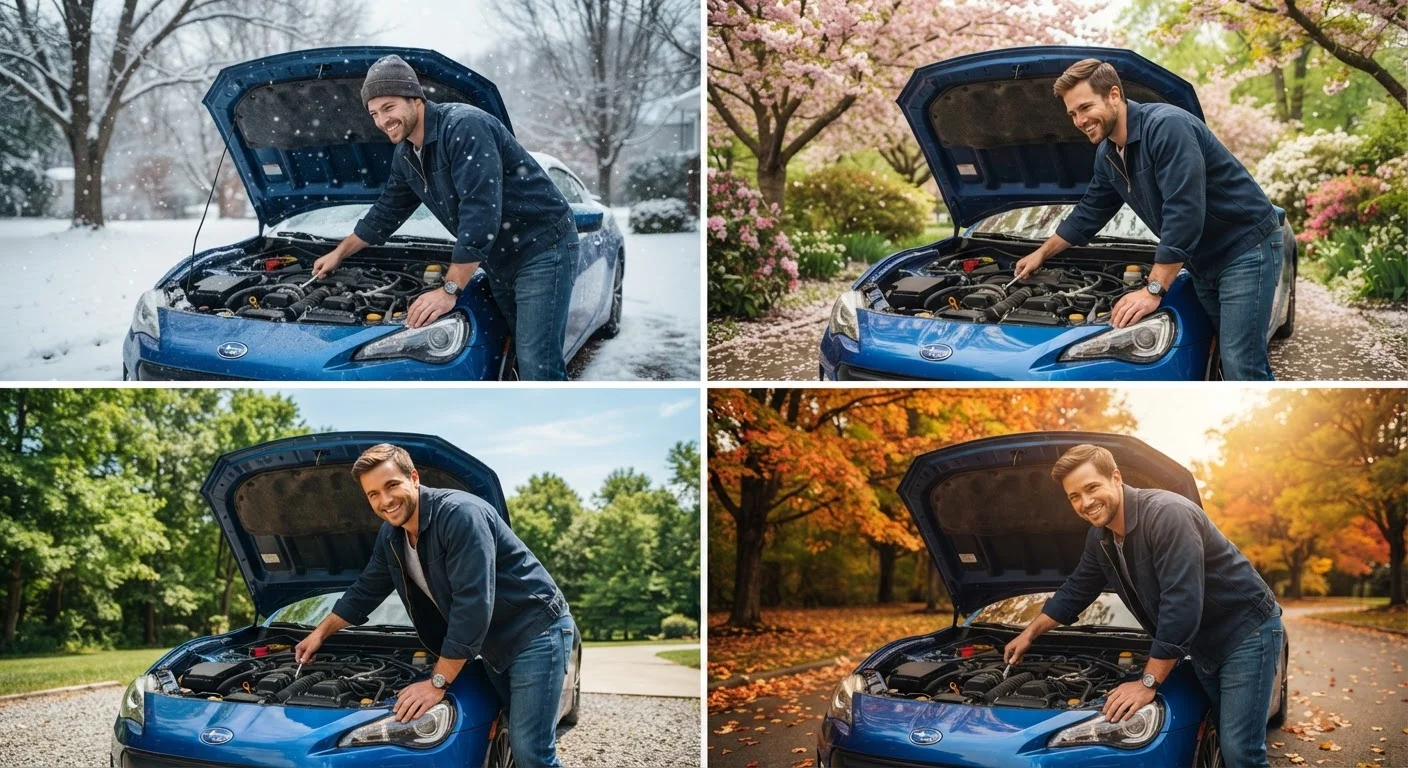
Photo: ShortwebArticles.com | Content For The Curious editorial
Key Takeaways
- Each season brings specific stress points — tires, battery, fluids, and brakes are the recurring priorities.
- Most seasonal checks take under an hour and can prevent far more expensive repairs later.
- Some tasks are safely owner-friendly; others should go to a qualified mechanic for safety.
- Keeping a simple log of completed checks supports resale value and warranty documentation.
- Your owner's manual is the authoritative source for your vehicle's specific service intervals.
Why a Seasonal Approach Makes Sense
Most drivers think about car maintenance only when something goes wrong — a warning light flickers on, a tire goes flat, or the engine turns sluggish on a cold morning. A seasonal approach flips that script. Instead of reacting to problems, you anticipate them based on what your car is about to face.
Temperature swings, road conditions, and driving patterns all shift with the seasons, and each shift puts different demands on your vehicle. A battery that performed fine all summer may struggle to start your car in January. Tires properly inflated in warm weather lose pressure as temperatures fall. Brake fluid absorbs moisture over time, reducing its boiling point — a real concern heading into summer mountain driving.
Working through a short checklist four times a year costs far less time and money than dealing with a roadside breakdown or an avoidable repair. If you drive a high-mileage vehicle, a seasonal structure is even more valuable — see our guide to keeping a high-mileage car running well for what to prioritize beyond the basics.
Not every task below is a DIY job. If you're unsure whether a task is within your skill level, consult our DIY vs. shop decision guide before proceeding.
Spring (Post-Winter Recovery)
Summer (Heat and Long-Distance Preparation)
Fall (Pre-Winter Preparation)
Winter (Cold-Weather Operation)
Tools You'll Need for Seasonal Checks
You don't need a fully equipped garage to work through most of these checks. A modest collection of basic tools covers the majority of owner-friendly inspections listed here.
Tire pressure gauge
Check tire inflation accurately during each seasonal inspection.
Tread depth gauge
Measure remaining tire tread to assess whether replacement is needed.
Battery terminal brush
Clean corrosion from battery terminals during spring and fall checks.
Antifreeze tester (strip or float type)
Verify coolant concentration is adequate for expected winter temperatures.
Flashlight or work light
Illuminate the engine bay and undercarriage during visual inspections.
Maintenance log notebook or app
Record completed checks and service dates to build a trackable history.
For anything beyond a visual inspection — brake pad depth, suspension wear, or fluid condition — a qualified mechanic's assessment is the safer call. Once you've completed your seasonal checks, keeping organized service records helps you track what was done and when, which matters at resale time.
Know When to Step Back
Making the Checklist Work for You
Treat each seasonal check as a 30-to-60-minute appointment you set with yourself — ideally in early spring, early summer, early fall, and early winter. Pair it with something you already do seasonally, like switching out your floor mats or rotating your closet, so it becomes a habit rather than a chore.
Your owner's manual is the single most authoritative source for your vehicle's specific service intervals and fluid specifications. Manufacturer guidance overrides any general rule of thumb you may have heard. Some commonly repeated maintenance beliefs — like needing to warm up your engine for several minutes in winter — don't hold up against current mechanical guidance. Our article on car maintenance myths that keep costing drivers money covers several that are worth revisiting.
If you're planning to keep your vehicle for the long haul, a consistent seasonal rhythm is one of the most reliable habits you can build. Our guide on what well-maintained vehicles actually require goes deeper on the checkpoints that matter most past 100,000 miles.
Your Owner's Manual Overrides General Rules
The content on this site is for informational purposes only and is not a substitute for professional advice. Always consult a qualified professional for guidance specific to your situation.