
DIY Car Maintenance vs. Taking It to a Shop

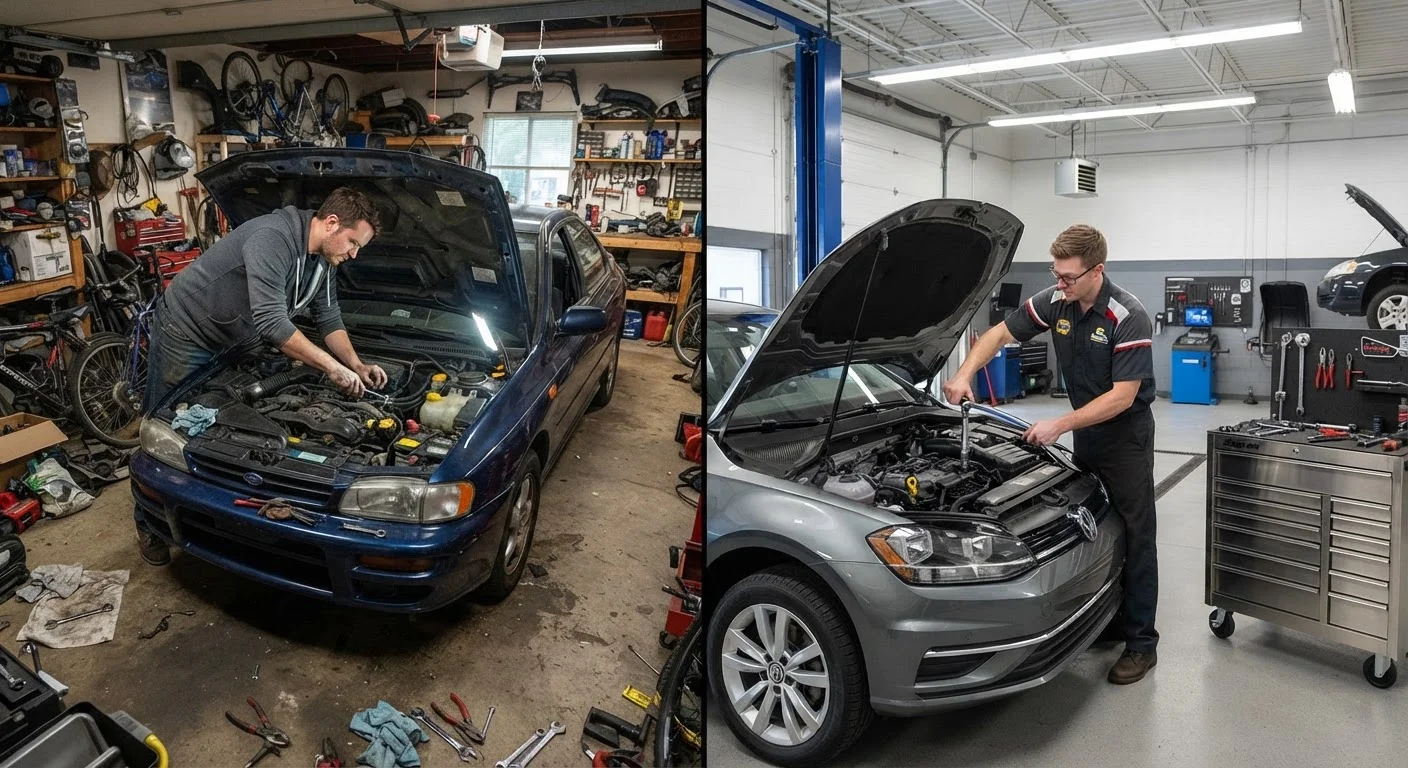
Photo: ShortwebArticles.com | Content For The Curious editorial
Key Takeaways
- Simple tasks like oil changes, air filter swaps, and wiper replacements are genuinely owner-friendly with basic tools.
- Brake, suspension, and electrical work carry real safety risks and generally warrant a qualified mechanic.
- DIY can save money on labor, but mistakes on complex jobs often cost more to fix than the original service.
- Your owner's manual and vehicle warranty terms should inform every DIY decision.
- Good maintenance records matter whether you do the work yourself or pay a shop.
Saves money on routine labor costs
Shop labor rates typically range from $80 to $150 per hour. Handling simple tasks yourself eliminates that charge for jobs that take 20–30 minutes.
Builds practical knowledge of your vehicle
Doing your own oil changes or filter swaps forces you to look under the hood regularly, making it easier to spot leaks, worn belts, or low fluid levels early.
Convenient scheduling on your own timeline
You're not waiting for a shop appointment or a loaner car — routine tasks can be done on a weekend morning without disrupting your week.
Parts quality is in your hands
When you source your own parts, you control which grade of oil, filter, or component goes into your car rather than relying on whatever a shop has in stock.
Safety risk on complex or safety-critical jobs
Brake systems, suspension components, and steering linkages require precise installation. Errors in these areas can lead to component failure at speed, with serious consequences.
Upfront tool investment can erode savings
A basic socket set, oil drain pan, torque wrench, and jack stands represent a real upfront cost that takes multiple jobs to recoup.
Mistakes can void warranty coverage
Using incorrect fluids or improper procedures on a vehicle still under manufacturer or extended warranty may create grounds for a claim to be denied.
Diagnostic errors can mask deeper problems
Clearing fault codes without understanding their cause is a common DIY pitfall — the underlying issue continues to develop while the warning light stays off.
Disposal and environmental compliance falls on you
Used motor oil, coolant, and batteries are regulated materials. Proper disposal requires finding a recycling or drop-off location; improper disposal carries fines.
The Real Question: Risk vs. Reward
Most drivers aren't choosing between zero DIY and doing everything themselves. The smarter question is: which tasks are genuinely safe to tackle at home, and which ones should go to a professional?
The answer depends on three things — the complexity of the job, the tools required, and the consequence of getting it wrong. Replacing a cabin air filter takes ten minutes and no special tools. A brake job done incorrectly can cause brake failure. Those aren't in the same category.
It's also worth checking your owner's manual before starting any maintenance task. Some manufacturers specify procedures or fluids that, if ignored, can void warranty coverage or cause damage that voids coverage claims. See our guide to keeping maintenance records — it explains why documentation matters whether you do the work yourself or use a shop.
Saves money on routine labor costs
Shop labor rates typically range from $80 to $150 per hour. Handling simple tasks yourself eliminates that charge for jobs that take 20–30 minutes.
Builds practical knowledge of your vehicle
Doing your own oil changes or filter swaps forces you to look under the hood regularly, making it easier to spot leaks, worn belts, or low fluid levels early.
Convenient scheduling on your own timeline
You're not waiting for a shop appointment or a loaner car — routine tasks can be done on a weekend morning without disrupting your week.
Parts quality is in your hands
When you source your own parts, you control which grade of oil, filter, or component goes into your car rather than relying on whatever a shop has in stock.
Where DIY Makes Sense
Several routine tasks are genuinely owner-friendly, require minimal tools, and carry low risk if done incorrectly (meaning: you'll notice the problem before it becomes dangerous).
- Engine and cabin air filter replacements — typically a matter of unclipping a housing and swapping the filter
- Windshield wiper blades — most clip on and off in under five minutes
- Checking and topping off fluids — coolant, washer fluid, and power steering fluid reservoirs are labeled and accessible
- Battery terminal cleaning — a wire brush and some baking soda solution handles corrosion safely
- Oil and filter changes — straightforward for confident beginners, though it requires proper disposal of used oil
For drivers managing a vehicle with significant miles, these small tasks add up. Our guide to high-mileage car maintenance covers which items deserve closer attention as your odometer climbs.
$80–$150
Typical U.S. shop labor rate per hour
Labor rates vary by region and shop type; dealerships typically charge at the higher end of this range compared with independent shops.
~35%
U.S. drivers who perform some DIY maintenance
Industry surveys have consistently found that roughly a third of American car owners handle at least some routine maintenance tasks themselves.
When to Hand It Off
Some jobs look approachable on a video tutorial but involve safety systems where a mistake isn't just inconvenient — it's dangerous.
Safety risk on complex or safety-critical jobs
Brake systems, suspension components, and steering linkages require precise installation. Errors in these areas can lead to component failure at speed, with serious consequences.
Upfront tool investment can erode savings
A basic socket set, oil drain pan, torque wrench, and jack stands represent a real upfront cost that takes multiple jobs to recoup.
Mistakes can void warranty coverage
Using incorrect fluids or improper procedures on a vehicle still under manufacturer or extended warranty may create grounds for a claim to be denied.
Diagnostic errors can mask deeper problems
Clearing fault codes without understanding their cause is a common DIY pitfall — the underlying issue continues to develop while the warning light stays off.
Disposal and environmental compliance falls on you
Used motor oil, coolant, and batteries are regulated materials. Proper disposal requires finding a recycling or drop-off location; improper disposal carries fines.
Brake pad replacement, rotor resurfacing, suspension components, timing belt service, and anything involving the fuel system or airbag electronics should generally go to a qualified mechanic. These jobs require torque specifications, specialized tools, and knowledge of failure modes that come with training.
Electrical diagnostics is another area where DIY can quickly spiral. Modern vehicles rely on interconnected systems — pulling the wrong fuse or misreading a fault code can mask a deeper issue. A shop with a proper diagnostic scanner will interpret codes in context, not just clear them.
When in Doubt, Get a Second Opinion
For a full picture of what your car needs across the year, the seasonal car maintenance schedule breaks down checks and services by season so nothing gets missed.
The Cost Calculation Is More Nuanced Than It Looks
The appeal of DIY is usually labor savings — shop labor rates in the U.S. commonly run between $80 and $150 per hour. On a straightforward oil change, doing it yourself can save $30–$60. Over a year of routine maintenance, those savings add up.
But factor in the full picture. Tools have upfront costs. Parts purchased without shop discounts may cost more than you expect. And a repair done incorrectly — stripped drain plug threads, a brake caliper installed backward — can turn a $40 job into a $400 fix. The math only favors DIY when the task is within your honest skill level.
It's also worth separating common maintenance beliefs from actual best practice. Our article on car maintenance myths tests some widely held ideas against what mechanics actually recommend — a useful read before you commit to a maintenance routine.
The content on this site is for informational purposes only and is not a substitute for professional advice. Always consult a qualified professional for guidance specific to your situation.