
The Four-Way Stop: Why So Many Drivers Still Get It Wrong

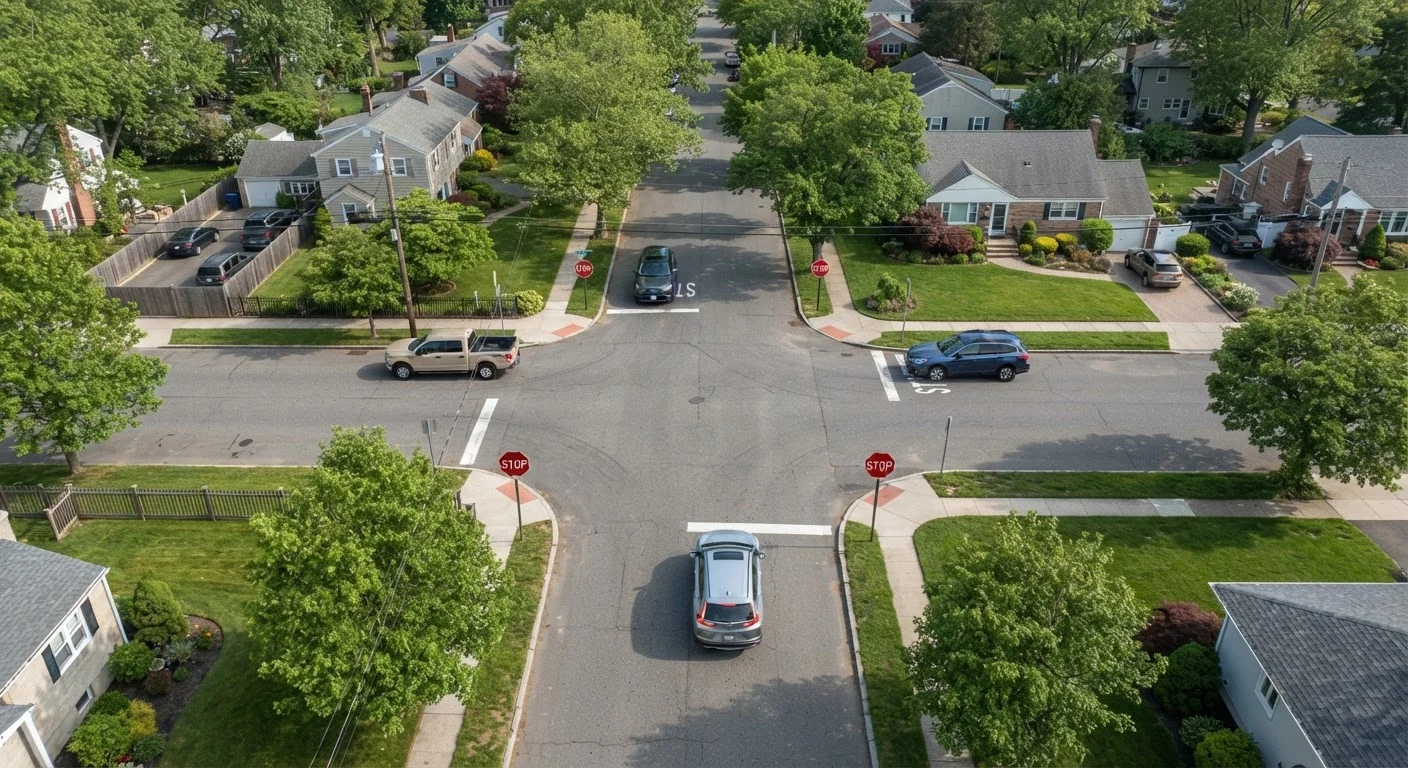
Photo: ShortwebArticles.com | Content For The Curious editorial
Key Takeaways
- The first driver to arrive and stop has the right of way to go first.
- When two cars stop at the same time, the driver on the right goes first.
- A car going straight generally has priority over one turning left from the same side.
- Making eye contact and using clear turn signals reduces confusion at busy four-way stops.
- Waving another driver through when you have the right of way can create dangerous confusion.
The Rules Are Simple. The Execution Is Where Things Break Down.
Four-way stops are among the most common intersections in American neighborhoods, school zones, and suburban grids — and among the most misunderstood. Studies of intersection crashes consistently show that right-of-way errors are a leading cause of collisions, and the all-way stop is a frequent scene of confusion.
The core rules are actually straightforward. The challenge is that they require drivers to accurately judge simultaneous arrival, read other drivers' intentions, and respond in real time — all while managing the social awkwardness of eye contact through windshields.
Understanding how the rules stack up removes that uncertainty. For a broader look at intersection safety habits, see our guide on driving through intersections safely.
~40%
Of all U.S. traffic crashes occur at intersections
According to the Federal Highway Administration, intersections are the site of a significant share of total crashes and fatalities on U.S. roads.
Top cause
Right-of-way errors as a crash factor
NHTSA crash causation data consistently identifies failure to yield right of way as one of the most frequently cited driver-related factors in intersection collisions.
The Right-of-Way Hierarchy, In Order
Four-way stop rules follow a clear priority ladder. Apply them in this order:
- First to stop, first to go. The driver who arrives at the intersection and comes to a complete stop before all others proceeds first. This is the primary rule and covers the majority of situations.
- Simultaneous arrival: yield to the right. If two vehicles stop at the same moment, the driver on the left yields to the driver on the right. This mirrors the standard right-of-way rule used throughout traffic law.
- Facing traffic, going straight vs. turning left. When two vehicles are directly across from each other and stop at the same time, the one going straight or turning right proceeds before the one turning left. The left-turning driver must yield.
- Three- or four-way simultaneous arrival. This scenario is rare in practice. The right-hand yield rule still applies sequentially — each driver looks to their right and yields if someone is there.
These rules are designed to eliminate ambiguity. Problems occur when drivers skip the full stop, misjudge who arrived first, or improvise instead of following the sequence.
Use Signals Early at Four-Way Stops
Common Mistakes That Cause the Confusion
Most four-way stop errors fall into a handful of patterns. Recognizing them helps you avoid contributing to the problem — and anticipate what other drivers might do.
- Rolling stops. Failing to come to a full stop makes it impossible to accurately judge arrival order. It is also a traffic violation in every U.S. state.
- Assuming simultaneous arrival when you arrived second. Drivers sometimes feel they stopped at the same time as another vehicle when in fact the other car was there first. When in doubt, yield.
- Waving others through. Gestures of courtesy disrupt the established order and can mislead other drivers about who has cleared the intersection to proceed.
- Ignoring turn signals. Not signaling a left turn leaves the driver across from you unable to judge whether it is safe to proceed simultaneously.
New drivers are particularly vulnerable to these errors. For a broader look at where mistakes cluster early in driving experience, see situations where new drivers most commonly make costly errors.
How Four-Way Stops Compare to Other Intersection Types
Four-way stops require active judgment from every driver — no signals, no yielding lane, just rules and awareness. That makes them different in character from signalized intersections and from roundabouts, which manage flow through geometry rather than rules.
Roundabouts, increasingly common on U.S. roads, eliminate the need to judge arrival order entirely: vehicles in the circle always have priority. If roundabouts are on your regular route, our explainer on roundabout rules for American drivers covers how to enter, yield, and exit correctly.
The four-way stop also behaves very differently depending on context. In city driving vs. highway driving, urban stop-and-go environments mean four-way stops appear frequently and at higher traffic volumes, demanding faster and more confident application of the rules.
When you know the priority sequence cold, the four-way stop becomes routine rather than stressful. Stop completely, assess who arrived first, apply the right-hand tie-breaker if needed, signal your intentions clearly, and go when it is unambiguously your turn.
Frequently Asked Questions
The content on this site is for informational purposes only and is not a substitute for professional advice. Always consult a qualified professional for guidance specific to your situation.