
Saving and Paying Down Debt at the Same Time: A Complete Walkthrough

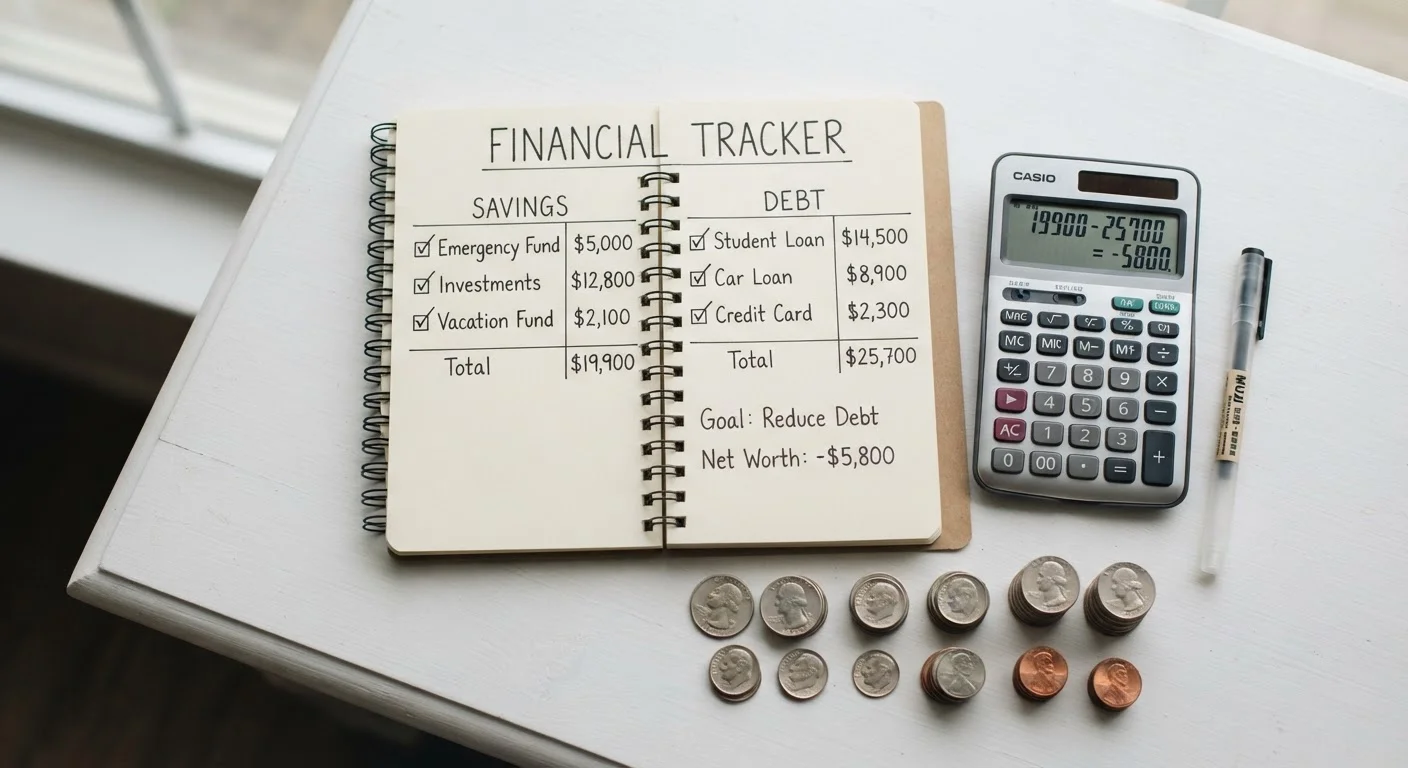
Photo: ShortwebArticles.com | Content For The Curious editorial
Key Takeaways
- An emergency fund and debt payoff can run in parallel — they don't have to be sequential.
- High-interest debt (above ~7%) usually warrants priority over general savings.
- Even small, consistent savings contributions build a financial cushion that prevents new debt.
- Automating transfers removes decision fatigue and keeps both goals on track.
- Revisit your split allocation whenever your income, expenses, or debt balances change significantly.
Why You Don't Have to Choose Just One
One of the most common pieces of financial advice tells you to pay off all debt before saving a single dollar. Another equally common piece of advice tells you to max out your savings first. Both are oversimplifications — and for most Americans carrying mixed debt while trying to build a cushion, neither extreme works.
The reality is that saving nothing while attacking debt leaves you financially fragile. One unexpected car repair or medical bill lands on a credit card, and you're right back where you started. At the same time, parking money in a low-yield savings account while carrying 22% APR credit card debt is a mathematical loss every month.
The smarter approach is a split strategy: allocate money intentionally to both goals based on your specific interest rates, income stability, and risk exposure — not based on a one-size-fits-all rule. Before deciding how to split resources, it helps to understand the key factors that shape this decision.
Start With One Month's Buffer, Not Six
Start With a Baseline: Know What You Owe and What You Have
You can't allocate money wisely without a clear picture first. Pull together two lists:
- All debts: Balance, minimum payment, and interest rate for every account — credit cards, auto loans, student loans, personal loans, medical debt.
- All savings: Current balances in checking, savings, retirement accounts, and any other liquid assets.
From there, calculate your net position: total savings minus total debt. This number is sobering for many people, but it's honest — and honest is useful. A structured financial checkup can help you work through this systematically.
Also note your monthly cash flow: income minus all fixed and variable expenses. Whatever is left — your discretionary surplus — is the pool you'll split between extra debt payments and savings contributions.
$6,501
Average American credit card balance
According to TransUnion's Q4 2023 consumer credit report, average credit card balances reached this level, underscoring the scale of revolving debt many households carry simultaneously with savings goals.
57%
Adults with less than 3 months of emergency savings
A Federal Reserve Report on the Economic Well-Being of U.S. Households found that a majority of Americans lack a full three-month emergency cushion, highlighting why building savings alongside debt payoff matters.
The Interest Rate Test: Where Your Money Works Hardest
Interest rates are the engine of this decision. Here's a simple framework:
| Debt Interest Rate | Recommended Priority |
|---|---|
| Above ~7–8% | Prioritize debt payoff aggressively; save only a small emergency buffer |
| 4–7% | Split more evenly; contribute to both debt and savings meaningfully |
| Below ~4% | Minimum payments may be sufficient; direct extra cash toward savings or investing |
These aren't rigid rules — they're guidelines. A 6% student loan might warrant different treatment than a 6% personal loan depending on tax deductibility and your income stability. The point is that the spread between your debt's interest rate and your savings yield tells you whether paying extra on debt or saving more is mathematically advantageous.
If you're unsure which debts to attack first once you've decided to prioritize payoff, understanding the debt avalanche and snowball methods can help you sequence payments effectively.
Treat your savings contribution like a bill payment, not a leftover. Assign it a fixed dollar amount and move it on payday — before you have a chance to spend it.
When in doubt about the split, start at 80% toward debt and 20% toward savings if your debt carries rates above 7%. Adjust upward on savings once high-rate balances are gone.
Building a Split Strategy That Actually Holds
Once you know your surplus and your interest rates, you can design a realistic allocation. A common starting framework:
- Step 1 — Secure a starter emergency fund. Before splitting, set aside $500–$1,000 in a dedicated savings account. This is your firewall against using credit cards for surprises.
- Step 2 — Cover all minimum payments. Every debt minimum must be met, no exceptions. Missing minimums triggers fees and credit score damage.
- Step 3 — Capture any employer 401(k) match. If your employer matches retirement contributions, contribute enough to get the full match before making extra debt payments. Forgoing the match is effectively leaving part of your compensation on the table.
- Step 4 — Split the remaining surplus. Direct a defined percentage toward extra debt payments and the rest toward savings. A 70/30 or 60/40 split (toward debt/savings) often makes sense for high-interest debt situations; adjust based on your rates and risk tolerance.
For a more detailed roadmap to structuring your payments, see building a debt payoff plan from scratch.
The 401(k) Match Is Not Optional
Automating Both Sides Without Losing Control
The single biggest threat to a split strategy is inconsistency — spending the surplus before it reaches its intended destination. Automation solves this.
Set up two automatic transfers on or just after your payday:
- One to your savings account (even $25–$50 a paycheck compounds over time)
- One extra payment directly to your highest-priority debt
Automating savings has real advantages, though it comes with tradeoffs worth understanding. Automating your savings can also surface issues — like overdrafts from poorly timed transfers — so review your setup quarterly.
Pair automation with a simple monthly check-in: confirm the transfers went through, review balances, and note progress. This keeps you in control without requiring daily attention.
“Budgeting is not about limiting yourself — it's about making the things that excite you possible. When you know where your money goes, you can direct it with intention toward both safety and freedom.”
— Tiffany Aliche, Personal finance educator and author of 'Get Good with Money'
When to Shift the Balance
A split strategy isn't a set-it-and-forget-it arrangement. Several triggers warrant revisiting your allocation:
- A debt is paid off. Redirect that payment amount — don't let it dissolve into spending.
- Income increases. Raises and side income are a prime opportunity to accelerate both goals simultaneously.
- Emergency fund reaches its target. Once you have 3–6 months of expenses saved, you can redirect savings contributions toward heavier debt payoff or longer-term investing.
- Interest rates change. Variable-rate debt (some credit cards, HELOCs) can shift the math significantly.
- Financial shock. Job loss or a large expense may require temporarily suspending extra payments beyond minimums to protect cash reserves.
Knowing where plans typically break down matters as much as building the plan itself. Understanding the patterns that derail debt payoff progress can help you stay on course before problems surface.
A solid budget is the backbone of any split strategy — without one, it's difficult to know what surplus actually exists. The Budgeting Basics hub offers straightforward approaches to tracking spending and building a workable budget.
This article is for general informational and educational purposes only and does not constitute personalized financial, investment, tax, or legal advice. Consult a qualified financial professional before making decisions specific to your situation.
The content on this site is for informational purposes only and is not a substitute for professional advice. Always consult a qualified professional for guidance specific to your situation.