
The Real Difference Between Decluttering, Tidying, and Organizing

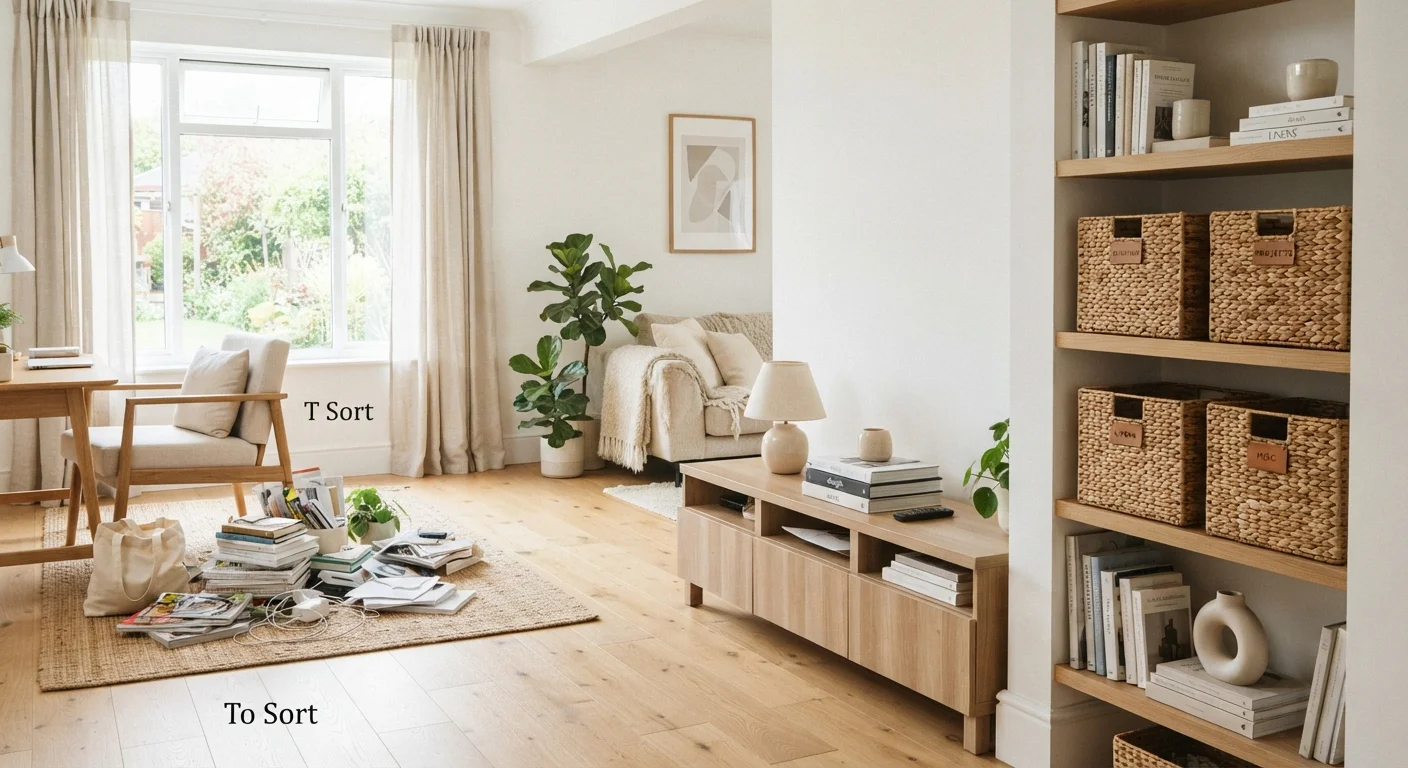
Photo: ShortwebArticles.com | Content For The Curious editorial
Key Takeaways
- Decluttering, tidying, and organizing are three different actions, not three words for the same task.
- Decluttering comes first — you cannot organize things you should not own.
- Tidying is an ongoing habit; organizing is a one-time system design that makes tidying easier.
- Skipping decluttering before organizing is a common reason organizational systems fail.
- Each approach requires different time, energy, and decision-making effort.
Why the Confusion Matters
Walk through any home improvement store and you'll see bins, labels, and drawer dividers marketed as solutions to a messy home. The implied promise: buy the right container and your space will stay clean. Most people who have tried this approach know how quickly it fails. The reason is usually a confusion between three distinct concepts — decluttering, tidying, and organizing — that require different actions, different mindsets, and a specific sequence to actually work.
Treating them as synonyms leads to a predictable cycle: you buy storage, fill it with things you don't need, run out of space, and start over. Understanding what each word actually means — and what it requires of you — breaks that cycle.
Start With One Category, Not One Room
Decluttering: The Elimination Phase
Decluttering is the process of deciding what leaves your home. It is an act of evaluation and reduction — examining what you own, item by item, and choosing to keep only what serves you. This is the most mentally demanding of the three tasks because it requires making decisions, often about objects with emotional weight or uncertain future usefulness.
Common decluttering targets include duplicate items, broken things kept with vague repair intentions, gifts that don't fit your life, and things you've grown out of. The goal isn't minimalism for its own sake — it's reducing volume to a level your space and systems can realistically maintain.
If you feel paralyzed about where to begin, our guide to decluttering when you don't know where to start offers a low-pressure, room-by-room approach.
Tidying: The Daily Maintenance Habit
Tidying is not the same as cleaning, and it is not the same as organizing. It is the routine act of returning items to the places they already have. The dishes go back to the cabinet. The shoes go back to the rack. The remote goes back to the end table. Tidying works only when a system already exists — you can't tidy something that has no designated home.
This is why tidying feels effortless in some homes and impossible in others. When a home has been thoughtfully organized, tidying takes minutes. When it hasn't, tidying either doesn't happen or involves making micro-decisions about where things go every single time — which is exhausting and unsustainable.
Tidying Is Not a Personality Trait
Organizing: The System Design Step
Organizing is the design work. It means deciding where each category of item lives, how it will be stored, and what containers or structures will support that storage. A well-organized space doesn't need to look Pinterest-worthy — it needs to be logical for the people who use it.
Good organizational systems reflect how people actually move through a space. Keys go near the door because that's where you need them. Frequently used kitchen tools live at eye level because they're reached for daily. The goal is to reduce friction: every item should be easy to find, easy to use, and easy to return.
For homes with multiple people, organizing a shared home requires additional consideration — systems need to account for different habits and standards across residents.
80%
Of household items rarely or never used
Home organization researchers and professional organizers commonly cite that the majority of items in a typical American home are used infrequently, which underscores the value of decluttering before organizing.
~40%
Of housework time attributed to clutter
Estimates from home management studies suggest that a significant portion of household cleaning and tidying time is spent managing disorganized clutter rather than actual dirt or grime.
The Right Order Makes All the Difference
The sequence matters enormously. Organizing before decluttering means designing systems around items you'll eventually want to remove. Tidying before organizing means constantly deciding where things go from scratch. The effective order is: declutter first, organize second, tidy as an ongoing habit.
Think of it like this — decluttering determines what belongs in your home, organizing determines where it lives, and tidying maintains that arrangement day to day. Each step depends on the one before it. Skipping to organizing without decluttering is one of the most common reasons well-intentioned organizational projects fail within months.
This same logic applies beyond physical spaces. If you're weighing where your effort has the most impact, digital versus physical organization follows similar principles: reduce before you structure.
Frequently Asked Questions
The content on this site is for informational purposes only and is not a substitute for professional advice. Always consult a qualified professional for guidance specific to your situation.