
Digital Organization vs. Physical Organization: Where to Prioritize Your Energy

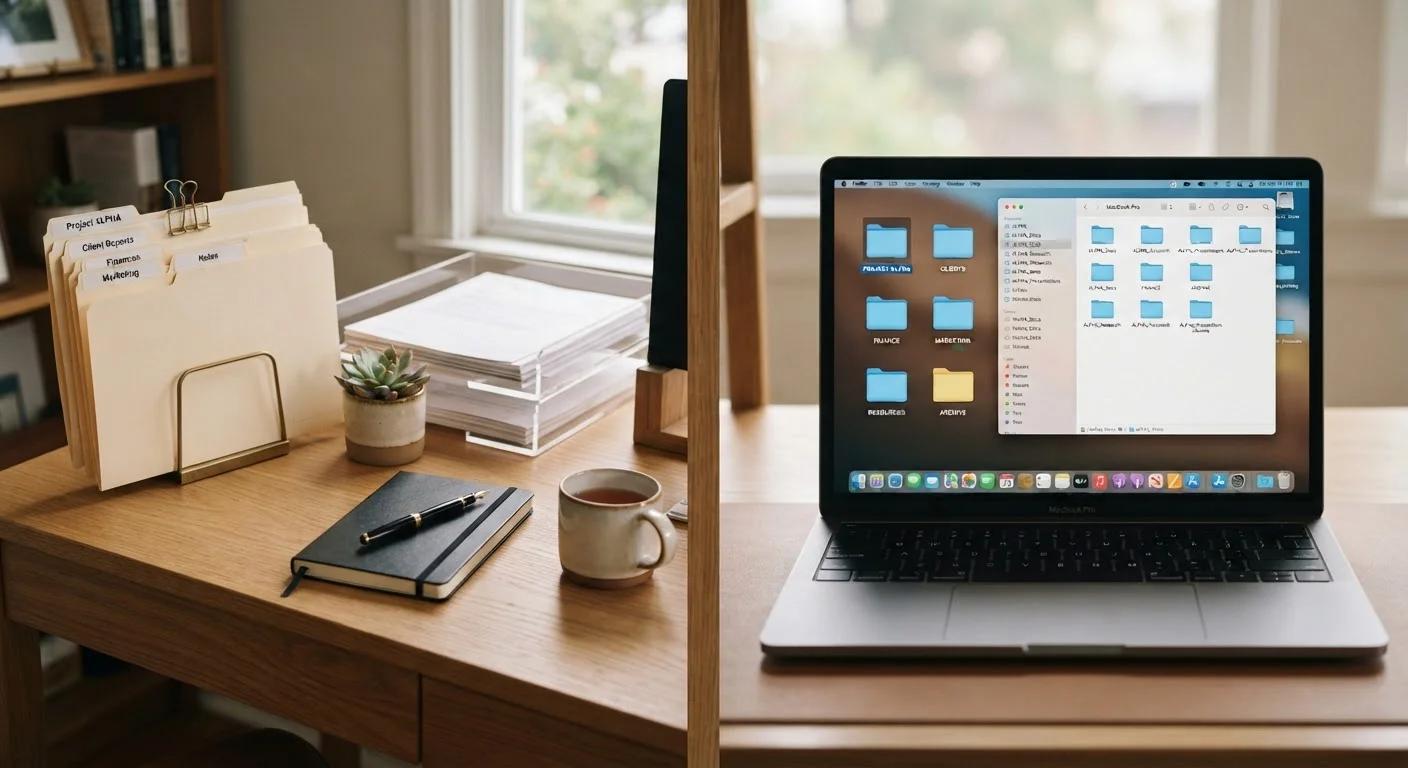
Photo: ShortwebArticles.com | Content For The Curious editorial
Key Takeaways
- Physical clutter tends to create immediate, visible stress that affects daily movement and mood.
- Digital disorganization often builds silently but erodes focus and wastes significant time.
- The most effective approach addresses both domains, but physical organization usually delivers faster relief.
- Shared living situations and work-from-home setups may shift which type of organization deserves priority.
- Sustainable systems — not one-time purges — are what keep both spaces manageable long-term.
How Each Type of Clutter Affects You Differently
Physical and digital clutter share a common root — accumulated stuff without a clear system — but they create friction in different ways. Understanding that distinction is what lets you direct your energy where it counts most.
Physical clutter is visible. Piles on the counter, overstuffed drawers, and boxes that never got unpacked all register in your peripheral vision constantly. Research in environmental psychology suggests that visual clutter competes for cognitive attention even when you're not actively looking at it. That background noise adds up. If you've ever felt inexplicably tense in a messy room, the science behind clutter and stress helps explain why.
Digital clutter is invisible until it isn't. Thousands of unread emails, a Downloads folder containing five years of mystery files, and duplicate photos spread across three devices don't occupy floor space — but they surface at the worst moments. You can't find the document you need before a call, your device slows to a crawl, or you realize important files were never backed up. The cost is mostly measured in time and cognitive load rather than physical discomfort.
Comparing the Two Approaches Side by Side
Before choosing where to start, it helps to weigh each domain against the criteria that actually matter in daily life.
| Physical Organization | Digital Organization | |
|---|---|---|
| Visibility of clutter | Immediately visible, constant reminder | Hidden until you need something specific |
| Daily friction caused | Affects movement, mood, and routine tasks | Affects productivity, focus, and time spent searching |
| Time to see results | Fast — visible progress within hours | Slower — benefits build over weeks of use |
| Emotional payoff | High and immediate | Moderate, felt more during work tasks |
| Maintenance required | Daily habits keep spaces functional | Periodic audits prevent file and inbox bloat |
| Who feels it most | Everyone in the household | Remote workers, frequent file users |
| Risk if neglected | Chronic stress, lost items, wasted time | Data loss, missed deadlines, device slowdowns |
As the table shows, physical organization typically wins on immediate emotional payoff, while digital organization tends to compound its benefits over time — particularly for anyone who works from home or manages complex file systems regularly.
When Physical Organization Should Come First
For most households, physical spaces deserve first priority. The reasons are practical: a cluttered kitchen slows down meal prep, a disorganized entryway creates daily friction, and a bedroom that doesn't feel restful affects sleep. These are immediate, tangible costs you feel every day.
Physical organization also tends to yield faster motivation. Clearing a single counter or reorganizing one closet produces visible results within an hour — and that sense of progress sustains momentum. If you're not sure where to begin, a room-by-room decluttering approach can prevent the paralysis that often stalls big organizing projects.
Start With One High-Traffic Zone
One important note: paper occupies a middle ground between physical and digital organization. Stacks of mail and unfiled documents are physically present but often represent information that could live digitally. Tackling your paper trail often bridges the two worlds effectively.
When Digital Organization Deserves the Spotlight
If your physical spaces are reasonably functional but your digital life is a tangle, flipping the priority makes sense. Remote workers, freelancers, and anyone who manages finances, health records, or creative projects digitally will feel digital disorganization acutely — sometimes more than any physical mess.
A few situations where digital organization clearly takes precedence:
- You regularly lose time searching for files before meetings or deadlines.
- Your devices run slowly due to storage overload.
- You have no reliable backup system for important documents or photos.
- Subscription accounts, passwords, and financial statements are scattered without a clear system.
For the file-storage side of digital organization, understanding the trade-offs between approaches is foundational — see cloud vs. local storage trade-offs for a grounded breakdown. More broadly, digital life and safety resources cover the habits that keep your online world manageable.
Building Systems That Work Across Both Domains
The most durable approach isn't choosing one over the other permanently — it's building lightweight, repeatable systems in both areas so neither accumulates to crisis point. Organization isn't a one-time event; it's a set of ongoing habits applied consistently in small doses.
A few principles that transfer across both domains:
- One-in, one-out: When a new physical item enters the home, something leaves. When a new folder or account is created digitally, old redundant ones get cleared.
- Dedicated homes for everything: Both physical objects and digital files drift into chaos when they don't have a designated location. Assign one and use it consistently.
- Regular maintenance windows: A 15-minute weekly reset for physical spaces and a monthly digital audit (clearing downloads, archiving old emails) prevents accumulation.
For households with more than one person, shared-home organization strategies address the real challenge of maintaining systems when people have different standards. And if you want a fuller picture of the organizing process itself, understanding what decluttering, tidying, and organizing each mean prevents the common mistake of conflating tasks that actually require different approaches.
The content on this site is for informational purposes only and is not a substitute for professional advice. Always consult a qualified professional for guidance specific to your situation.