
Fixed-Rate vs. Adjustable-Rate Mortgages

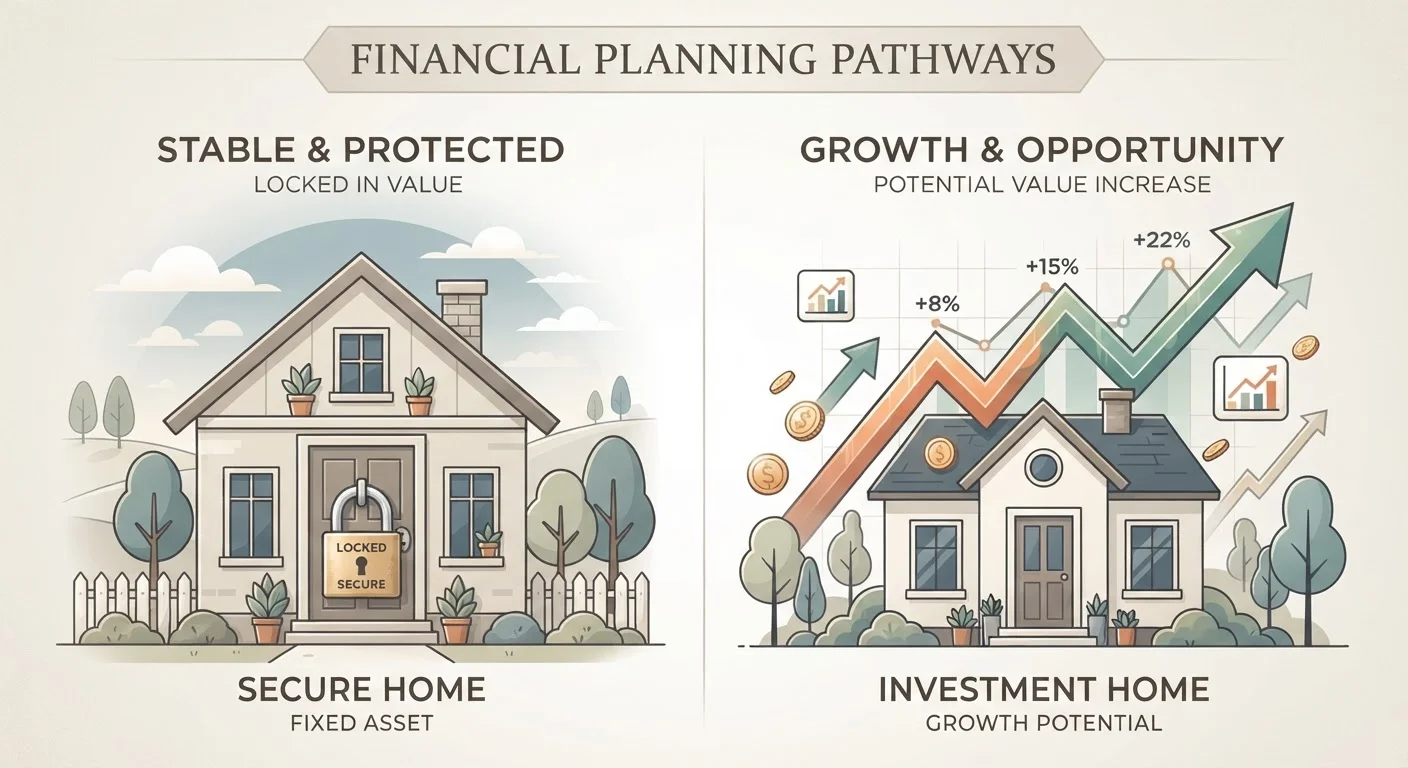
Photo: ShortwebArticles.com | Content For The Curious editorial
Key Takeaways
- Fixed-rate mortgages lock in your interest rate for the entire loan term, keeping payments stable.
- ARMs offer a lower initial rate that adjusts periodically after an introductory fixed period ends.
- Fixed rates suit long-term homeowners; ARMs may benefit those with shorter ownership horizons.
- Rate caps on ARMs limit how much your rate can increase, but upward movement is still possible.
- Your break-even timeline and financial flexibility are critical factors when choosing between the two.
How Each Mortgage Structure Works
A fixed-rate mortgage carries the same interest rate from the first payment to the last — whether your loan term is 15, 20, or 30 years. Your principal and interest payment never changes, though your total monthly bill can shift slightly if property taxes or homeowners insurance (typically held in escrow) are adjusted annually.
An adjustable-rate mortgage (ARM) begins with a fixed introductory period — commonly 5, 7, or 10 years — during which the rate stays constant. After that period, the rate adjusts at set intervals (often annually) based on a benchmark index, such as the Secured Overnight Financing Rate (SOFR), plus a lender margin. A loan labeled "5/1 ARM" means the rate is fixed for 5 years and then adjusts once per year thereafter.
Understanding how interest rates move at a macro level helps put this choice in context. See how interest rates shape what homes cost you for a broader look at that relationship.
| Criterion | Fixed-Rate Mortgage | Adjustable-Rate Mortgage (ARM) |
|---|---|---|
| Interest Rate | Locked for full loan term | Fixed initially, then adjusts periodically |
| Initial Rate Level | Typically higher than ARM | Typically lower than fixed-rate |
| Payment Predictability | Completely stable P&I payment | Can rise or fall after fixed period |
| Rate Risk | None — lender absorbs risk | Borrower absorbs risk after intro period |
| Rate Caps | Not applicable | Per-adjustment and lifetime caps apply |
| Best Ownership Horizon | Long-term (10+ years) | Short-to-medium term (under 7–10 years) |
| Refinancing Incentive | Lower — rate already stable | Higher — rate uncertainty may prompt refinance |
Costs, Caps, and the Rate Risk Question
Fixed-rate mortgages typically carry a slightly higher initial interest rate than ARMs because lenders absorb the risk of future rate increases on your behalf. Over a 30-year loan, that premium can add up — but so can the peace of mind.
ARMs include rate caps that limit how much the interest rate can rise. A typical cap structure might look like 2/2/5: the rate cannot increase more than 2% at the first adjustment, 2% at each subsequent adjustment, and 5% above the initial rate over the life of the loan. Still, even capped increases can meaningfully raise monthly payments over time.
30 years
Most common fixed-rate mortgage term in the US
The 30-year fixed-rate mortgage remains the most widely used home loan product among American borrowers, according to Freddie Mac data.
5/1
Most common ARM structure offered by lenders
The 5/1 ARM — fixed for five years, adjusting annually after — is among the most frequently offered adjustable products in the US mortgage market.
2/2/5
Typical ARM rate cap structure
Many ARMs carry a 2/2/5 cap structure, limiting the initial adjustment, each subsequent adjustment, and the lifetime maximum increase respectively.
For buyers weighing the broader decision of whether to buy at all, renting vs. buying a home offers a useful framework before committing to any mortgage structure. And if you are also evaluating loan types, FHA, VA, and conventional loans compared walks through eligibility and cost differences.
What Happens If Rates Fall After You Lock In?
Which Structure Fits Your Situation?
The right choice depends heavily on how long you plan to own the home and your tolerance for payment variability. If you sell or refinance before the ARM's fixed period ends, you may never experience a rate adjustment — capturing the lower initial rate without the associated risk.
Your broader budget discipline matters too. If a potential payment increase of several hundred dollars per month would strain your finances, a fixed-rate loan provides a more reliable foundation. For a refresher on how fixed versus variable expenses fit into household budgeting generally, see fixed vs. variable expenses.
First-time buyers should also consult a licensed mortgage professional or HUD-approved housing counselor before selecting a loan structure. Individual credit profiles, down payment size, and local market conditions all influence which option is financially appropriate for a specific household. This article is general educational information and is not personalized financial or mortgage advice.
This article is for informational purposes only and does not constitute financial, mortgage, or legal advice. Consult a qualified mortgage professional or HUD-approved housing counselor for guidance specific to your situation.The content on this site is for informational purposes only and is not a substitute for professional advice. Always consult a qualified professional for guidance specific to your situation.