
Oil Change Intervals: What the Numbers on Your Dipstick Are Really Telling You

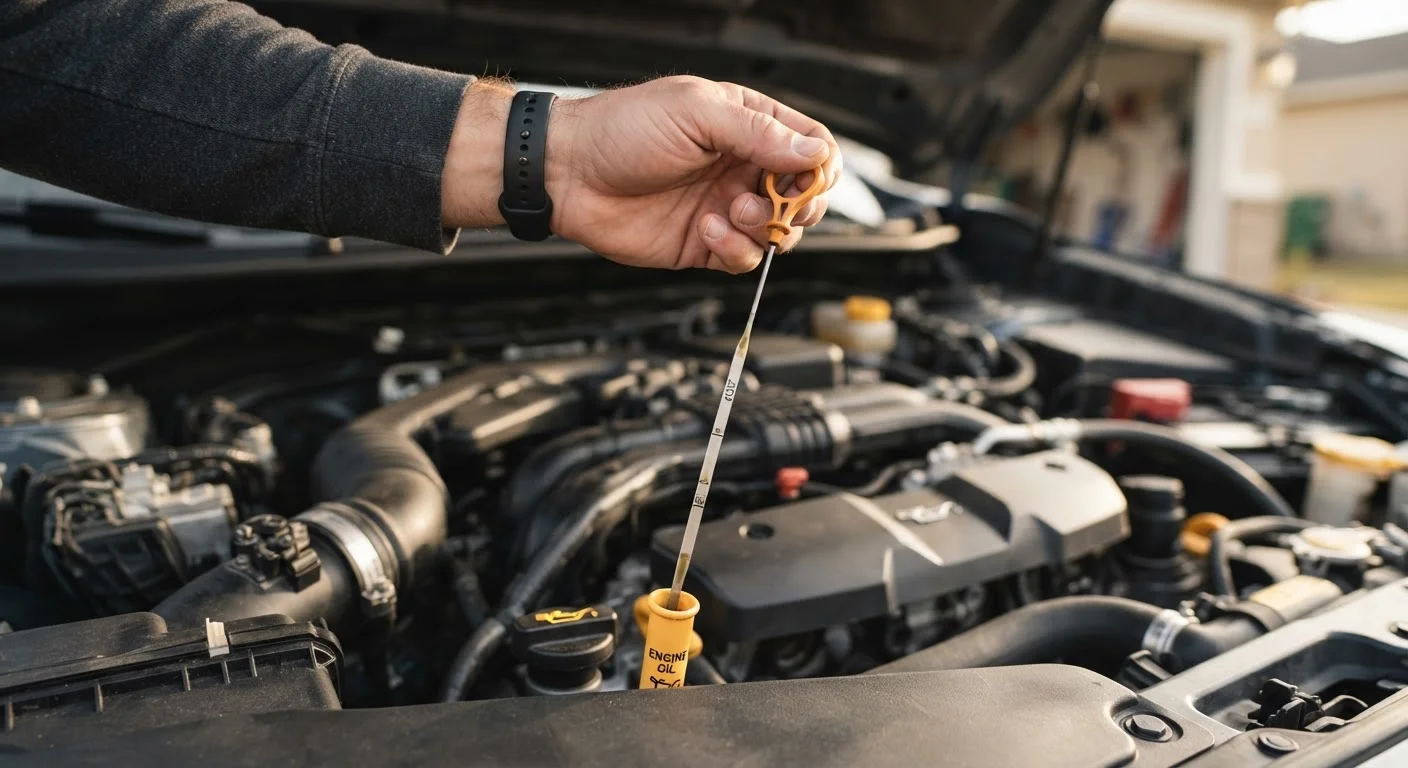
Photo: ShortwebArticles.com | Content For The Curious editorial
Key Takeaways
- The 3,000-mile oil change rule is outdated for most modern vehicles using synthetic oil.
- Your owner's manual gives the only authoritative interval recommendation for your specific engine.
- A dipstick shows both oil level and gives clues about oil condition — both matter.
- Driving habits like frequent short trips or towing can shorten your effective oil change interval.
- Dark oil alone doesn't mean it needs to be changed; texture and smell are better indicators.
Why the 3,000-Mile Rule Became Outdated
For decades, the 3,000-mile oil change was gospel in American car culture — promoted at quick-lube shops and printed on reminder stickers. The advice made sense when engines had looser tolerances and conventional motor oil was the only option. Today, it's largely unnecessary for most drivers.
Full-synthetic oils are engineered to maintain viscosity and film strength far longer than their conventional predecessors. Engine manufacturing has also improved dramatically, with tighter tolerances meaning less combustion blowby contaminating the oil. The result: most automakers now specify intervals of 7,500 to 10,000 miles, and some models with specific oil monitoring systems stretch even further.
The authoritative source for your vehicle is always the owner's manual — not the sticker on your windshield, not what the shop recommends by default. Common maintenance myths like this one can cost drivers real money over time by triggering unnecessary service visits.
Find Your Actual Recommended Interval
Reading the Dipstick: Level and Condition
Pulling your dipstick is one of the simplest things you can do to protect your engine — and most drivers never do it between service visits. Here's what you're actually looking at:
Oil Level
Every dipstick has two marks — MIN and MAX (sometimes shown as dots or crosshatched zones). After wiping the stick clean, reinserting it fully, and pulling it out again, the oil film should land between those two marks. Below MIN means you're running low and risk metal-on-metal contact in the engine. Above MAX creates its own problems, including oil foaming under pressure.
Oil Condition
Color tells part of the story but not all of it. Fresh oil is amber; used oil darkens as it suspends combustion particles — that's the oil doing its job. What actually signals a problem is texture and smell. Rub a drop between your fingers: smooth is fine, gritty means the oil is carrying abrasive particles. A sharp burnt odor is another red flag. Milky or foamy oil on the dipstick can indicate coolant contamination — a serious issue worth having a mechanic inspect promptly.
7,500–10,000 mi
Typical synthetic oil change interval
Many major automakers now specify this range for vehicles running full-synthetic oil under normal driving conditions.
~22%
Drivers who check oil monthly
Consumer surveys consistently find that a minority of drivers check engine oil between scheduled service visits, despite it being a two-minute task.
1 qt per 2,000 mi
Oil consumption considered normal by some manufacturers
Several automakers publish guidelines allowing up to one quart of consumption per 2,000 miles, underscoring why level checks between changes matter.
Driving Habits That Change Your Interval
Manufacturers publish two maintenance schedules in most owner's manuals: normal and severe. Most drivers assume they fall into the normal category. In practice, many don't.
Severe driving conditions — as defined by automakers — typically include:
- Frequent trips under five miles (oil never fully reaches operating temperature)
- Extended idling or heavy stop-and-go traffic
- Towing or hauling heavy loads regularly
- Driving in extreme heat or cold
- Dusty or off-road environments
Under these conditions, oil breaks down faster. Shortening your interval to match the severe-service recommendation in your manual is a straightforward way to compensate. If you're unsure which schedule applies to you, a qualified mechanic can help you evaluate your typical driving patterns.
Drivers managing higher-mileage vehicles should pay particular attention here — maintaining a high-mileage car often means adjusting oil type and frequency as the engine ages.
When Time Matters as Much as Mileage
Building a Practical Oil Maintenance Habit
Staying on top of oil doesn't require obsessive monitoring. A few consistent habits cover most of what your engine needs:
- Check the dipstick monthly. Pick a day — first of the month, when you fill up gas — and make it automatic. It takes under two minutes with the engine cold and the car on level ground.
- Follow your manual's interval, not a sticker. If your car has an oil life monitoring system, use it — these systems calculate interval based on actual driving data, not just mileage.
- Note any sudden drops in level. If you're adding oil between changes regularly, that signals a leak or consumption issue worth investigating rather than simply topping up indefinitely.
Oil maintenance is one piece of a larger under-hood picture. Other fluids deserve regular attention too — coolant, brake fluid, and transmission fluid all degrade over time in ways that aren't always visible until something goes wrong.
If you're planning to keep your vehicle well past 100,000 miles, building these habits early is one of the most effective things you can do. Long-term ownership rewards drivers who stay consistent with fundamentals rather than reacting to problems after they develop.
Frequently Asked Questions
The content on this site is for informational purposes only and is not a substitute for professional advice. Always consult a qualified professional for guidance specific to your situation.