
Needs vs. Wants: The Distinction That Makes or Breaks a Budget

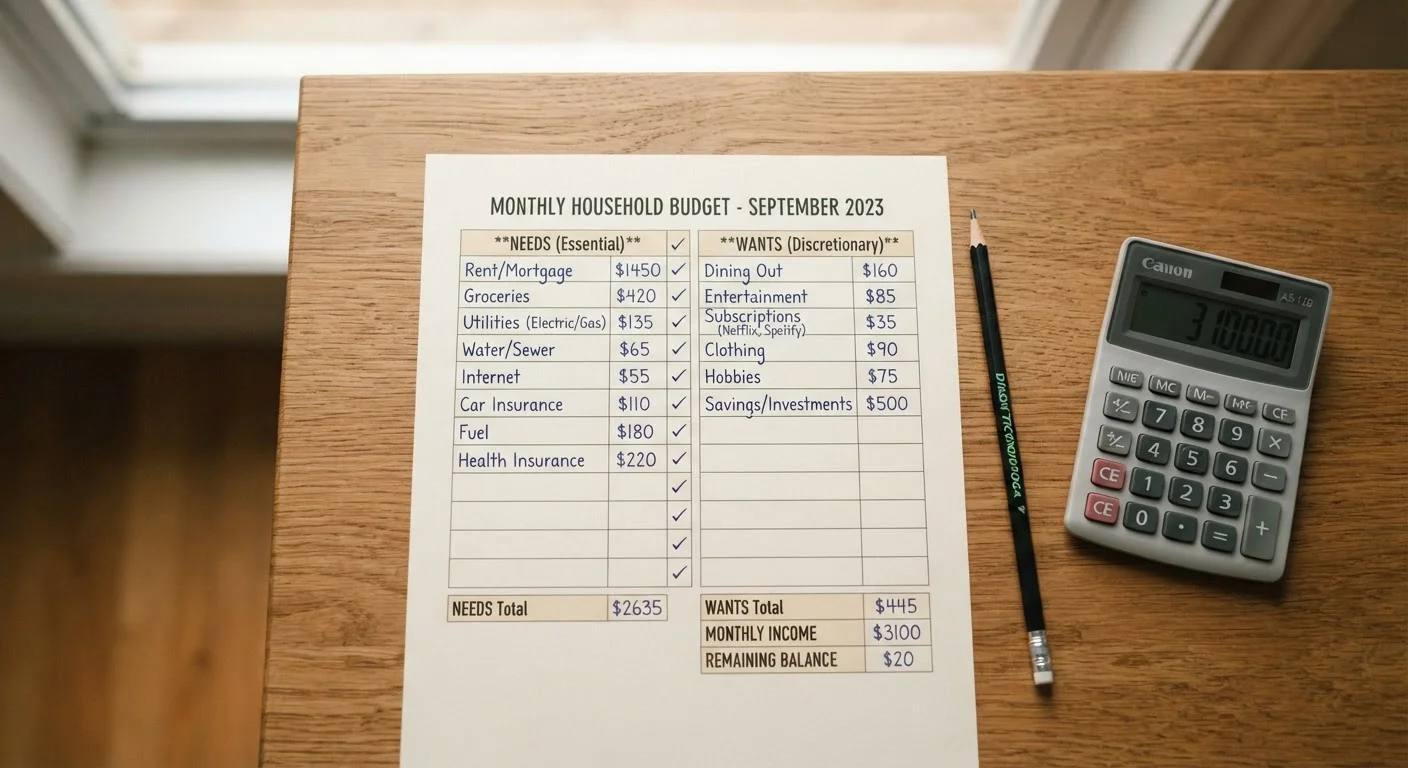
Photo: ShortwebArticles.com | Content For The Curious editorial
Key Takeaways
- Needs are expenses required for basic functioning; wants are choices driven by preference.
- The line between needs and wants is genuinely blurry and depends on your personal circumstances.
- Misclassifying wants as needs is one of the most common reasons budgets fail.
- Recognizing the distinction gives you more conscious control over where your money goes.
- Context matters — a car may be a need in a rural area but a want in a city with transit.
Why This Distinction Is Harder Than It Sounds
Most people assume the needs-versus-wants question is obvious. It isn't. The line blurs quickly once you move past absolute basics like shelter and food. Is your internet connection a need? For someone who works remotely, almost certainly. For a retired person with no digital obligations, maybe not. Is a gym membership a want? Generally yes — but for someone managing a chronic condition on a doctor's recommendation, the answer gets complicated.
The difficulty isn't a sign that the concept is flawed. It's a sign that personal finance is personal. The framework still works — you just have to apply it honestly to your own situation rather than looking for a universal checklist. That honest self-assessment is where the real budgeting work happens.
For a broader introduction to how this concept fits into a full budget, see our guide to personal budgeting from the ground up.
The Gray Zone Is Normal
Defining Needs: The Practical Threshold
A useful working definition of a need is: an expense whose absence would meaningfully threaten your health, safety, or ability to generate income. Under that standard, the following generally qualify:
- Housing — rent or mortgage payments, renter's or homeowner's insurance
- Utilities — electricity, heat, water
- Basic groceries — food needed for regular meals at home
- Transportation to work — car payment, gas, or transit fare if required for employment
- Essential healthcare — insurance premiums, prescription medications
- Minimum debt payments — required payments to avoid default or penalty
Notice what's absent from that list: streaming services, dining out, brand-name clothing, and most subscriptions. These may feel like necessities through habit, but they don't meet the threshold. Understanding the difference between fixed and variable expenses can help you spot which of your needs are stable month to month and which fluctuate.
33%
Americans with no monthly budget
A 2023 survey by the National Foundation for Credit Counseling found roughly one in three Americans does not follow any kind of monthly budget, often citing difficulty distinguishing essential from discretionary spending.
~$300
Average monthly subscription spend per household
Research from C+R Research suggests American households spend an average of around $300 per month on subscription services, many of which are classified mentally as needs despite being discretionary.
Wants: The Category That Deserves Respect, Not Shame
Calling something a "want" isn't a moral judgment. Wants include a wide range of meaningful things — vacations, hobbies, entertainment, dining experiences, and personal care beyond the basics. These aren't frivolous. They contribute to quality of life, relationships, and mental well-being. The goal of a budget isn't to eliminate them but to spend on them intentionally.
The problem arises when wants are mentally reclassified as needs — often unconsciously. A subscription that started as a treat becomes "something I always pay for." A habit of daily takeout becomes "I don't have time to cook." Over time, these reclassifications erode the budget's structure. As our piece on common budgeting misconceptions notes, many people avoid budgeting altogether because they conflate it with deprivation — when the real goal is clarity.
Try a 'Zero-Based Review' of Recurring Expenses
How to Apply the Framework in Your Own Budget
A practical starting point is to pull up one or two months of bank and credit card statements and tag each expense as a need or want. Don't overthink it on the first pass — just sort. You'll likely find a handful of items in a genuine gray zone. For those, ask the threshold question: Would skipping this harm my health, safety, or income?
Once sorted, add up each category. Most people find their wants column is larger than expected — not because they're irresponsible, but because the accumulation of small discretionary expenses is easy to miss in real time. That visibility is the point. From there, you can make deliberate choices about where to pull back if needed and where to keep spending because it genuinely matters to you.
This exercise pairs naturally with the 50/30/20 rule, which gives you a percentage target for each category once you know what belongs where. And if you want a full roadmap for building this into a sustainable system, our complete personal budgeting guide covers each step in detail.
This article is for general informational purposes only and does not constitute personalized financial advice. Consult a qualified financial professional for guidance specific to your situation.
Frequently Asked Questions
The content on this site is for informational purposes only and is not a substitute for professional advice. Always consult a qualified professional for guidance specific to your situation.