
Native Plants vs. Non-Native Ornamentals: What the Trade-Offs Look Like in Practice

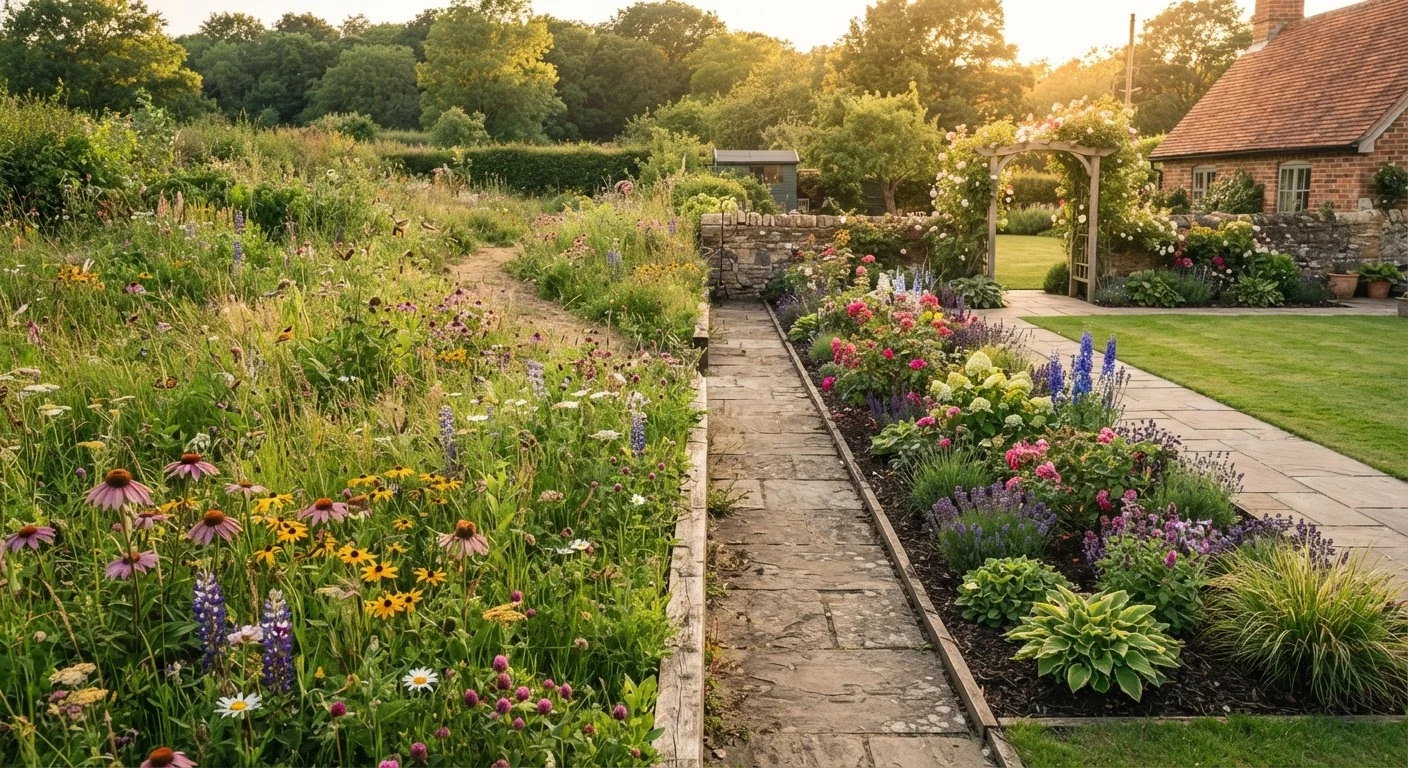
Photo: ShortwebArticles.com | Content For The Curious editorial
Key Takeaways
- Native plants are generally better adapted to local soils and rainfall, often requiring less supplemental watering once established.
- Non-native ornamentals offer wider design flexibility and may perform better in heavily disturbed or compacted urban soils.
- Natives tend to provide stronger ecological benefits — food and habitat — for local insects, birds, and pollinators.
- Some non-native plants can become invasive; checking regional invasive species lists before planting is essential.
- A mixed planting strategy combining natives and well-behaved non-natives often delivers the best balance of beauty and function.
What We Mean by Native vs. Non-Native
A native plant is one that occurred naturally in a specific region before European settlement — meaning it evolved alongside the local insects, birds, soil organisms, and climate over thousands of years. A non-native ornamental (also called exotic or introduced) is a plant brought from another country or region, typically selected for its appearance, bloom period, or hardiness in cultivation.
The distinction matters because it shapes how a plant behaves in your yard ecosystem — not just how it looks. That said, "native" isn't a binary switch: a plant native to the eastern U.S. may perform no better ecologically than a non-native when planted in the Pacific Northwest. Regional specificity is what counts.
For a broader look at how plant choices fit into year-round yard care, see our year-round lawn and garden calendar.
Head-to-Head: How They Compare Across Key Factors
Understanding the practical differences between natives and non-natives comes down to a handful of factors most homeowners actually care about: water, maintenance, wildlife value, and design flexibility.
| Criterion | Native Plants | Non-Native Ornamentals |
|---|---|---|
| Water needs (established) | Low — adapted to local rainfall | Variable — often moderate to high |
| Maintenance level | Lower once established | Often higher; may need fertilizing |
| Wildlife and pollinator support | High — co-evolved with local species | Limited — fewer insect host relationships |
| Design flexibility | Moderate — regional palette | High — global plant palette available |
| Invasive risk | Very low | Variable — check regional lists |
| Availability at nurseries | Growing but still limited | Widely available |
| Performance in disturbed urban soils | Mixed — depends on species | Often better — bred for tough conditions |
One nuance the table doesn't capture: establishment time. Natives often look unremarkable in their first year while root systems develop. Non-natives may deliver faster visual impact but require ongoing inputs to sustain it.
Ecological Value: Where Natives Clearly Lead
The ecological case for native plants is well-supported by research in conservation biology. Entomologist Doug Tallamy's work at the University of Delaware has documented that native oaks alone support hundreds of caterpillar species — a critical link in the food chain that feeds nesting birds. Non-native ornamentals, even those attractive to adult butterflies, often cannot fill this role because insects depend on specific host plants to complete their life cycles.
90%
Of land birds that feed caterpillars to young
Research by entomologist Doug Tallamy suggests roughly 90% of terrestrial bird species rely on insect larvae — particularly caterpillars — to feed their nestlings, making native host plants critical.
4x
More native bee species on native plants
Studies comparing suburban landscapes have found that native plantings can support substantially more native bee diversity than ornamental plantings of similar size.
~35%
Of U.S. plants considered non-native
The USDA estimates that a significant share of plant species now present in the U.S. are introduced, with a subset posing invasive risks to natural ecosystems.
This doesn't mean every non-native is ecologically useless. Some — like certain non-invasive ornamental grasses or flowering herbs — do attract pollinators. But in general, if supporting biodiversity is a goal, natives carry a structural advantage that ornamentals can't replicate.
Water use is closely tied to ecological fit. Our guide on drought-tolerant landscaping principles explores how plant origin intersects with irrigation strategy across U.S. climates.
The Invasive Species Problem With Non-Natives
Not all non-natives are problematic, but some become invasive — spreading beyond garden borders, outcompeting local vegetation, and degrading natural areas. Plants like English ivy, Japanese barberry, and burning bush are sold widely but are considered invasive in many U.S. states.
How to Check Invasive Status in Your State
Before planting any non-native, check your state's invasive species list (most state departments of agriculture or natural resources maintain one). A plant that behaves well in one region may escape aggressively in another due to climate differences.
Invasive potential is the strongest argument against defaulting to non-natives without research. The risk isn't just to your yard — it extends to neighboring natural areas and public lands.
Making the Choice Work in a Real Yard
For most American homeowners, the practical answer isn't an all-or-nothing choice. A yard that leans heavily on regionally appropriate natives — for structure, ground cover, and pollinator support — while incorporating carefully selected non-invasive ornamentals for specific aesthetic goals tends to perform well on all fronts.
Some practical starting points:
- Anchor plantings in natives: Use native trees, shrubs, and perennials as the backbone of your landscape. These do the ecological heavy lifting.
- Fill in with vetted non-natives: Annuals and non-invasive perennials from similar climate zones can extend bloom seasons and add color without ecological risk.
- Match plants to your actual site conditions: A native that evolved in a moist woodland won't thrive in a dry sunny border. Site fit matters more than origin alone.
- Source plants carefully: Nursery-propagated natives are preferable to wild-collected ones. Look for local native plant societies or reputable nurseries that specialize in regional species.
If you're weighing broader garden structure decisions alongside plant selection, our comparison of raised beds vs. in-ground planting can help you think through how your setup affects plant choices too.
The content on this site is for informational purposes only and is not a substitute for professional advice. Always consult a qualified professional for guidance specific to your situation.