
Drought-Tolerant Landscaping: Principles Behind Yards That Thrive on Less Water

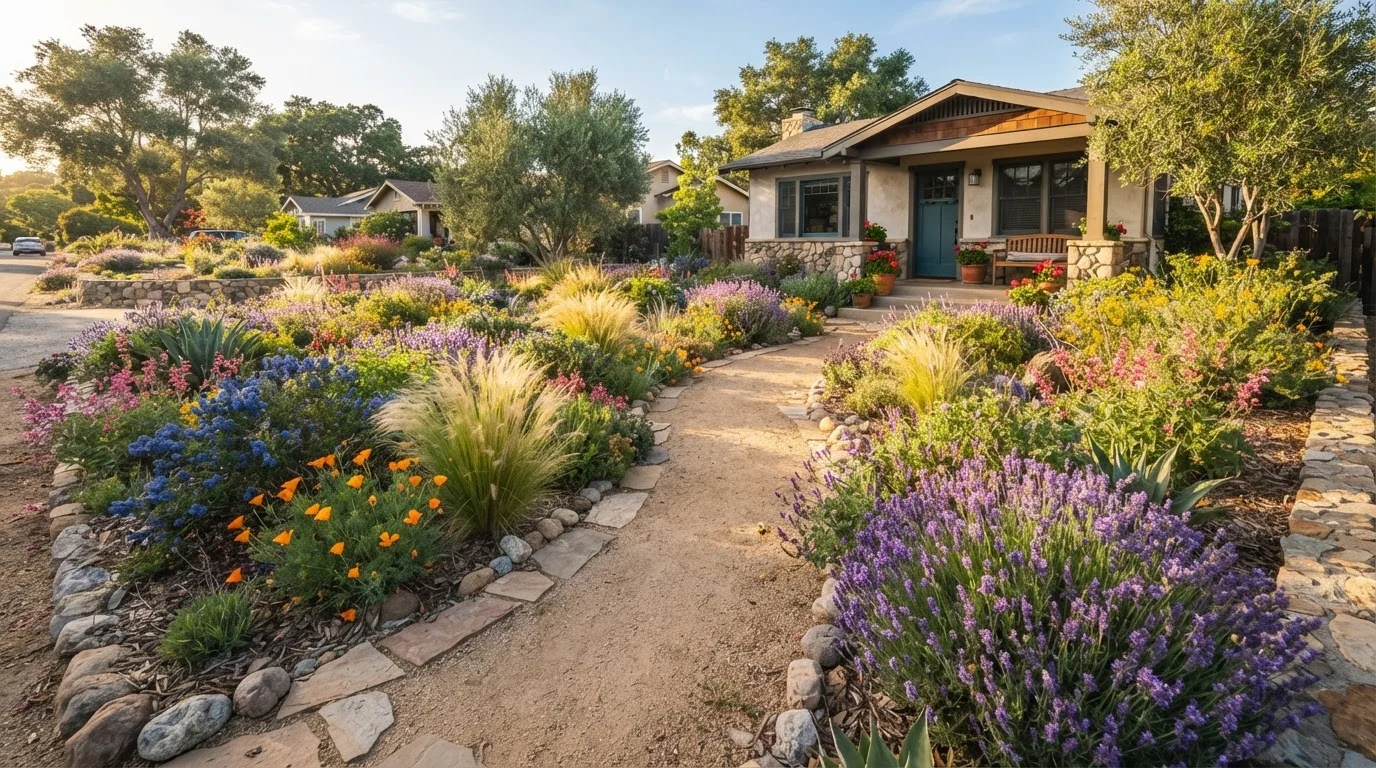
Photo: ShortwebArticles.com | Content For The Curious editorial
Key Takeaways
- Drought-tolerant landscaping is about design principles, not just plant choice — soil, layout, and mulch all matter.
- Grouping plants by water need (hydrozoning) significantly reduces wasted irrigation.
- Native plants are often drought-adapted but non-natives can also perform well in low-water designs.
- Mulch is one of the highest-impact, lowest-cost tools for retaining soil moisture.
- Reducing or replacing conventional turf grass is one of the most effective ways to cut outdoor water use.
Why Water-Wise Design Is More Than Plant Swapping
Many homeowners assume drought-tolerant landscaping simply means trading thirsty plants for hardy ones. In practice, the most resilient yards succeed because of how they're designed — not just what's planted in them. Soil health, sun exposure, slope, drainage, and grouping all shape how much water a landscape actually needs.
The core idea is to reduce the gap between what your climate naturally provides and what your yard demands. That gap is where irrigation cost, plant stress, and maintenance burden all live. Shrink the gap, and the yard essentially takes care of more of itself.
This matters across all U.S. climates, not just the arid Southwest. Mid-Atlantic summers, Great Plains dry spells, and California's predictable dry season all create periods where conventional irrigated landscapes struggle. Conventional turf lawns in particular tend to be the biggest draw on outdoor water budgets — making them the first place many homeowners look when redesigning for efficiency.
The Seven Core Principles
Drought-tolerant design is typically organized around a handful of interlocking principles. Understanding each one helps you make better decisions at every stage — from initial planning through ongoing maintenance.
~30%
Average share of household water used outdoors
The U.S. Environmental Protection Agency estimates that outdoor water use accounts for roughly 30% of total household water consumption nationally, with higher percentages in drier western states.
50%+
Outdoor water that may be wasted through inefficiency
According to EPA WaterSense program data, more than half of outdoor residential water use is lost to evaporation, wind, or runoff due to overwatering or inefficient systems.
2–4 inches
Recommended mulch depth for moisture retention
University extension programs widely recommend a 2–4 inch mulch layer around plantings as one of the most cost-effective ways to reduce soil moisture loss between watering.
1. Planning and Design
Start by mapping sun, shade, slope, and drainage across your yard. Areas that collect runoff can support plants with slightly higher water needs; exposed, sloped sections need the most drought-hardy choices. A good plan reduces the trial-and-error that wastes both plants and water.
2. Soil Improvement
Healthy soil holds water longer and delivers it more evenly to roots. Adding organic matter — compost being the most practical option — improves both sandy soils (which drain too fast) and clay soils (which can become waterlogged then crack dry). This step is often skipped, and skipping it undermines everything else.
3. Appropriate Plant Selection
Choose plants proven to perform in your specific region's rainfall and temperature patterns. Native plants are often a strong fit — see our comparison of native vs. non-native ornamentals for a fuller picture — but adapted non-natives can also thrive. Regional extension services and local native plant societies are reliable, unbiased resources for plant lists.
4. Hydrozoning
Group plants with similar water needs together. This simple step prevents the common problem of overwatering drought-tolerant plants to satisfy thirstier neighbors on the same irrigation zone. It also makes manual watering more efficient.
5. Efficient Irrigation
Where supplemental watering is needed, drip irrigation and soaker hoses deliver water directly to root zones with far less evaporation than overhead sprinklers. Common watering habits — like frequent shallow watering — actually reduce drought resilience by keeping roots near the surface. Deep, infrequent watering encourages roots to grow deeper, where soil stays moister longer.
6. Mulching
A 2–4 inch layer of organic mulch (wood chips, shredded bark) over planted areas slows evaporation, moderates soil temperature, and suppresses weeds. This single practice can reduce soil moisture loss substantially in hot weather.
7. Turf Reduction or Replacement
Traditional cool-season and warm-season turfgrasses vary widely in water demand, but all require more irrigation than most drought-adapted groundcovers and perennials. Even replacing part of a lawn with mulched beds, ornamental grasses, or low-water groundcovers reduces overall irrigation needs meaningfully.
Start With One Zone, Not the Whole Yard
Regional Context: One Size Doesn't Fit All
A drought-tolerant plant list for Phoenix looks nothing like one for Austin or Denver or Seattle — and that's by design. Water-wise landscaping works best when it's rooted in local climate reality rather than a generic template.
Gardeners in the Southwest and Southern California are designing around long dry seasons and alkaline soils. Those in the Southern Plains deal with intense summer heat combined with occasional heavy storms. Midwestern and Northeastern homeowners may face summer dry spells even in generally wetter climates. Pacific Northwest gardeners often see wet winters and genuinely dry summers — a pattern that rewards the same water-wise principles even in a region people associate with rain.
Your local Cooperative Extension office — operated through land-grant universities across every state — provides free, research-backed plant lists and design guidance specific to your county or region. It's one of the most underused resources in home gardening. Even compact yards can benefit from these regional approaches, adapting the same principles to smaller footprints.
When planning for seasonal transitions, don't overlook irrigation systems — properly winterizing them protects your investment. See the fall yard prep checklist for steps to close out the season properly.
Frequently Asked Questions
The content on this site is for informational purposes only and is not a substitute for professional advice. Always consult a qualified professional for guidance specific to your situation.