
Outdoor Lighting for Your Yard: What Actually Makes a Space Feel Inviting

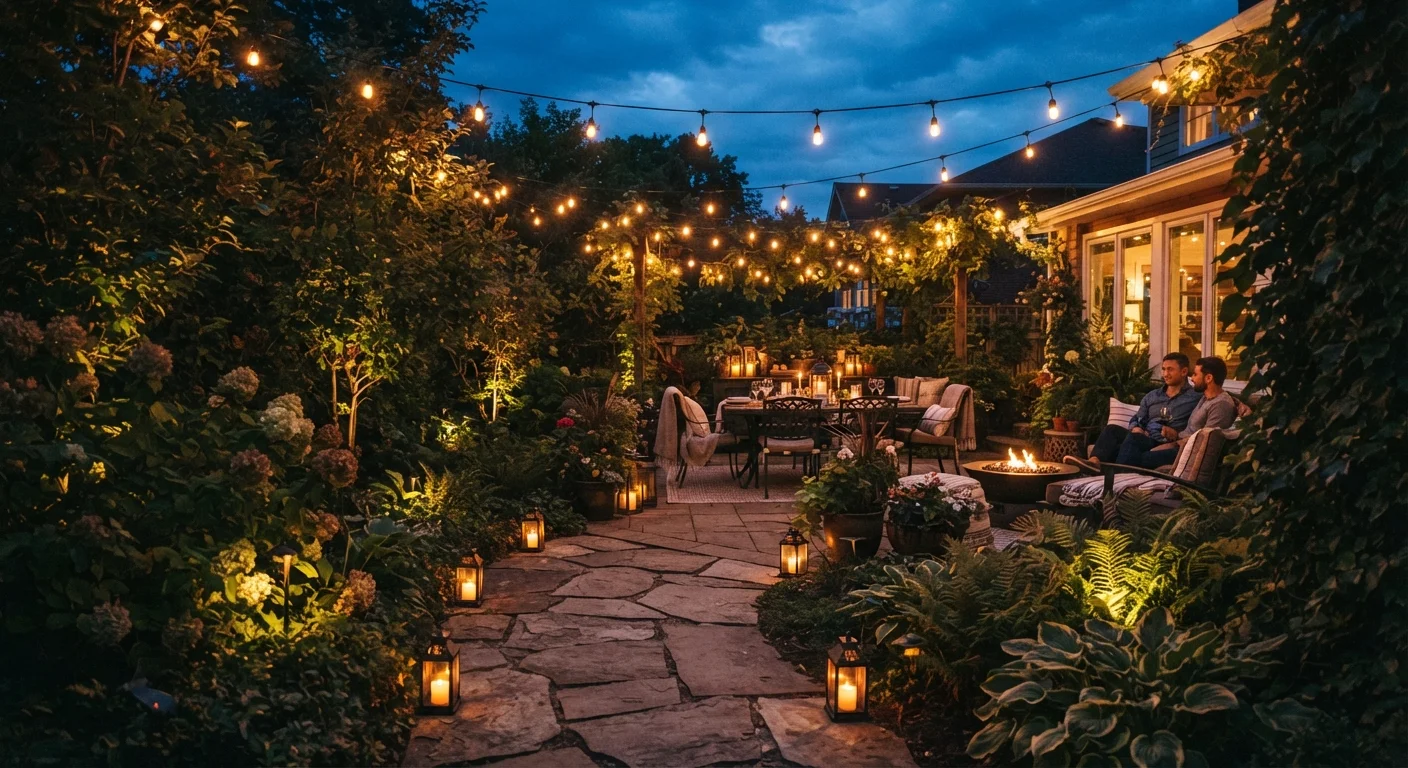
Photo: ShortwebArticles.com | Content For The Curious editorial
Key Takeaways
- Layering light across multiple heights and zones creates depth and inviting atmosphere outdoors.
- Pathway lighting improves safety while setting a welcoming tone from the street to the door.
- Warm-toned bulbs (2700K–3000K) consistently create a more comfortable, human-friendly outdoor feel.
- Uplighting trees and plantings adds drama without requiring complex wiring or large budgets.
- Motion sensors and timers reduce energy use without sacrificing security or ambiance.
Why Layering Light Is the Foundation of Great Outdoor Spaces
The most common outdoor lighting mistake is relying on a single floodlight or a row of identical path lights — and wondering why the yard still feels flat. Good outdoor lighting works the same way good indoor lighting does: it uses multiple sources at different heights, intensities, and angles to build a sense of depth and warmth.
Think of it in three layers. Overhead or ambient light establishes general visibility — string lights on a pergola or a lantern-style post light near the entrance. Task light targets specific functional areas, like a step riser or a grill station. Accent light draws the eye to plantings, architectural features, or garden art. When all three layers work together, the yard reads as designed rather than simply illuminated.
Even compact outdoor areas benefit from this approach. See how spatial thinking translates to smaller yards in our guide to small outdoor spaces that punch above their size.
“Outdoor lighting should do what all good design does — make people feel at ease without knowing exactly why. The moment you're consciously aware of the fixtures, the design has failed.”
— Janet Lennox Moyer, Landscape lighting designer and author of 'The Landscape Lighting Book'
Key Practices for Lighting That Looks and Works Well
These principles apply whether you're updating a sprawling backyard or a narrow side yard with a single seating nook.
Define zones before buying any fixtures.
Choose warm-white bulbs (2700K–3000K) for all social and decorative fixtures.
Use uplighting on at least one tree or large shrub per seating area.
Install motion sensors or timers on security and pathway fixtures.
Avoid over-lighting — embrace dark space between fixtures.
Plan for low-voltage or solar fixtures along pathways for easy DIY installation.
Quick Wins to Get Started This Weekend
You don't need to overhaul your entire yard at once. These targeted actions deliver noticeable results with minimal effort or expense.
Once you've dialed in your lighting, it's worth thinking about the broader yard picture. Our year-round lawn care calendar helps you keep the spaces your lights reveal looking their best throughout every season.
Choosing the Right Color Temperature and Placement
Color temperature — measured in Kelvins — has an outsized effect on how an outdoor space feels. Bulbs in the 2700K–3000K range (labeled "warm white" or "soft white") mimic the glow of incandescent light. They're consistently more flattering to skin tones, foliage, and wood surfaces than cooler, blue-toned options. Reserve daylight-temperature bulbs (5000K+) for purely functional security fixtures, not social spaces.
Light Pollution Is a Real Consideration
Placement matters just as much as the fixture itself. Path lights work best when they illuminate the ground plane rather than shining outward at eye level — a common error that creates glare instead of guidance. Uplights buried in a planting bed should angle at roughly 30–45 degrees toward the target to minimize spill onto neighboring properties or the night sky.
Thinking about your yard's overall design? The plant choices you make interact directly with your lighting plan — some foliage textures and colors reward uplighting far more than others. Our overview of drought-tolerant landscaping principles includes plant options with visual interest that also holds up well under evening light.
2700K–3000K
Ideal color temperature for social outdoor spaces
Lighting designers consistently recommend this warm-white range for patios, pathways, and garden accents to maximize comfort and visual appeal.
75%
Energy savings vs. incandescent bulbs
LED bulbs use roughly 75% less energy than traditional incandescent bulbs, according to the U.S. Department of Energy, making them the practical standard for landscape lighting.
The content on this site is for informational purposes only and is not a substitute for professional advice. Always consult a qualified professional for guidance specific to your situation.