
Open Shelving vs. Closed Cabinets: What Works Better for Home Organization

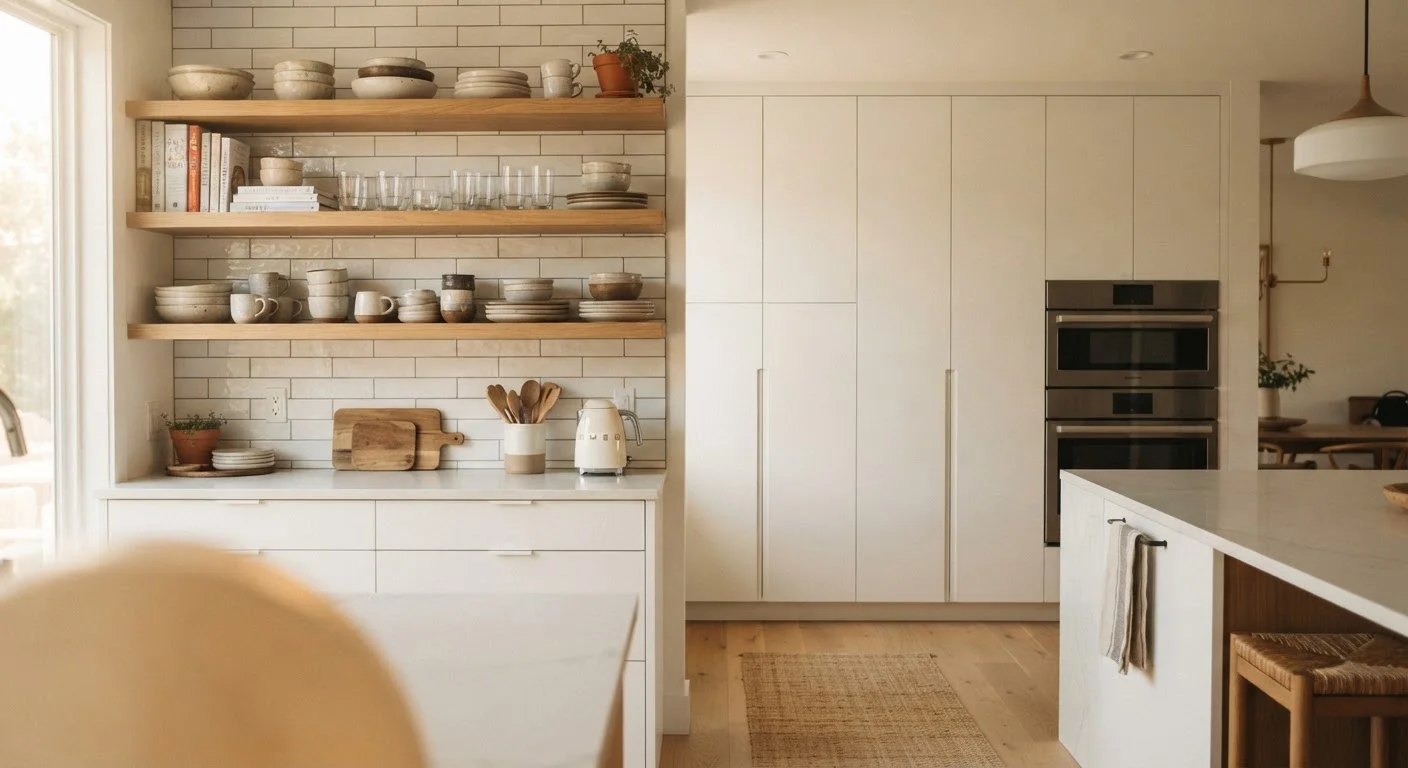
Photo: ShortwebArticles.com | Content For The Curious editorial
Key Takeaways
- Open shelving encourages tidiness through visibility but demands consistent upkeep to avoid looking cluttered.
- Closed cabinets hide mess instantly but can become disorganized black holes without interior systems.
- The best storage solution for most homes combines both styles based on what's being stored.
- Your household habits and tolerance for visible clutter matter more than aesthetics alone.
- High-traffic kitchens and bathrooms often benefit most from a deliberate mix of both approaches.
Everything is visible and easy to locate quickly
Items stored in plain sight are faster to grab and harder to forget. This reduces the time spent searching and makes it easier to notice when supplies are running low.
Encourages intentional, curated storage habits
Because disarray is immediately visible, open shelves naturally motivate people to put things back and avoid accumulating excess. The accountability is built into the design.
Makes rooms feel more open and spacious
Removing cabinet doors and showing wall depth creates a less boxed-in feeling, which can be especially useful in smaller kitchens or rooms with low ceilings.
Easier to configure and reconfigure over time
Adjusting shelf height or adding brackets is typically simpler than modifying cabinet interiors, making open systems more flexible as storage needs change.
Dust accumulates on items and surfaces faster
Without doors to protect them, open shelves and their contents collect dust, grease, and airborne particles more readily — requiring more frequent cleaning, especially near cooking areas.
Visual clutter is fully exposed at all times
Any disorganization is immediately apparent to anyone who enters the room. This can create a sense of chaos even when the overall home is tidy.
Limits what can be stored attractively
Practical but visually mismatched items — like bulk pantry goods, cleaning supplies, or odds and ends — look out of place on open shelves and can undermine the room's overall appearance.
Requires consistent upkeep to maintain appearance
Open shelving demands more regular maintenance than closed storage, since even minor disorganization is visible. This ongoing effort suits some households better than others.
The Core Trade-Off: Visibility vs. Concealment
The debate between open shelving and closed cabinets comes down to one central question: do you want your storage to be seen, or hidden? Each approach shapes how a room feels, how easy it is to find things, and — crucially — how much work it takes to keep looking good.
Open shelves make everything visible at a glance. That transparency can speed up retrieval and signal to everyone in the household where things belong. But it also means every misplaced item and dusty surface is on display. Closed cabinets, by contrast, create a clean visual surface in seconds — but out of sight can quickly mean out of mind, leading to overstuffed shelves and forgotten items in the back corners.
Understanding how your household actually uses storage — not how you hope it will — is the starting point for making the right call. For a deeper look at why even well-planned storage systems tend to break down over time, see why organized homes don't stay that way.
Pros and Cons of Open Shelving
Open shelving has seen a surge in popularity in kitchens, living rooms, and home offices — and for good reason. When done well, it makes a space feel larger, more personal, and easier to navigate.
Everything is visible and easy to locate quickly
Items stored in plain sight are faster to grab and harder to forget. This reduces the time spent searching and makes it easier to notice when supplies are running low.
Encourages intentional, curated storage habits
Because disarray is immediately visible, open shelves naturally motivate people to put things back and avoid accumulating excess. The accountability is built into the design.
Makes rooms feel more open and spacious
Removing cabinet doors and showing wall depth creates a less boxed-in feeling, which can be especially useful in smaller kitchens or rooms with low ceilings.
Easier to configure and reconfigure over time
Adjusting shelf height or adding brackets is typically simpler than modifying cabinet interiors, making open systems more flexible as storage needs change.
The downsides, however, are real and often underestimated before installation.
Dust accumulates on items and surfaces faster
Without doors to protect them, open shelves and their contents collect dust, grease, and airborne particles more readily — requiring more frequent cleaning, especially near cooking areas.
Visual clutter is fully exposed at all times
Any disorganization is immediately apparent to anyone who enters the room. This can create a sense of chaos even when the overall home is tidy.
Limits what can be stored attractively
Practical but visually mismatched items — like bulk pantry goods, cleaning supplies, or odds and ends — look out of place on open shelves and can undermine the room's overall appearance.
Requires consistent upkeep to maintain appearance
Open shelving demands more regular maintenance than closed storage, since even minor disorganization is visible. This ongoing effort suits some households better than others.
Open shelving tends to work best in rooms where the items stored are genuinely attractive — think glassware, cookbooks, or woven baskets — and where the household has consistent habits around putting things back in place. If your shelves would hold mismatched plastic containers or a rotating cast of random items, concealment is likely the better friend.
When Closed Cabinets Have the Edge
Closed cabinets remain the dominant choice in American kitchens, bathrooms, and utility spaces — and for practical reasons that go beyond aesthetics.
Closed Cabinets and Air Quality
Cabinets also accommodate a wider variety of item types. You're not limited to things that look good together; you can store cleaning supplies next to baking equipment without the visual tension. For households with young children, cabinets with latches provide a safety layer that open shelves simply can't. And for anyone navigating a shared home where members have different tidiness standards, closed storage reduces friction — check out organizing a shared home when everyone has different standards for strategies that help.
The main risk with closed cabinets is interior disorganization. Without drawer dividers, shelf risers, or labeled bins, cabinets can devolve into storage graveyards. The discipline shifts from keeping surfaces tidy to maintaining internal order — a trade-off worth understanding before you commit.
~70%
Homeowners preferring concealed storage in kitchens
Industry surveys by kitchen and bath associations consistently find that the majority of homeowners prioritize concealed storage in kitchen renovations, citing ease of maintenance as a primary reason.
2x
Cleaning frequency needed for open vs. closed shelves
Professional organizers generally recommend wiping down open shelves at least twice as often as closed cabinet interiors, particularly in cooking and bathroom environments.
How to Decide — or Combine Both
Most homes don't need to choose one approach across the board. A hybrid strategy lets you put open shelving where visibility adds value and closed cabinets where concealment reduces friction.
A practical framework for deciding:
- Store visually cohesive, frequently used items on open shelves — dishes you use daily, books organized by spine color, or plants and ceramics that double as décor.
- Use closed cabinets for anything that doesn't have a consistent look — cleaning products, dry goods in mismatched packaging, or items that accumulate over time without a clear category.
- Consider the room's traffic and use pattern. High-turnover spaces like kitchen prep areas often benefit from quick-access open storage, while pantry or bathroom toiletry storage may be better hidden.
Vertical space is often where the hybrid approach shines — open upper shelves for display and closed lower cabinets for practical storage. Our guide on making the most of vertical space explores this further. And if overflow is already a problem, seasonal rotation strategies can help free up room before you redesign anything.
The content on this site is for informational purposes only and is not a substitute for professional advice. Always consult a qualified professional for guidance specific to your situation.