
How Seasonal Rotation Keeps Closets and Cabinets From Overflowing

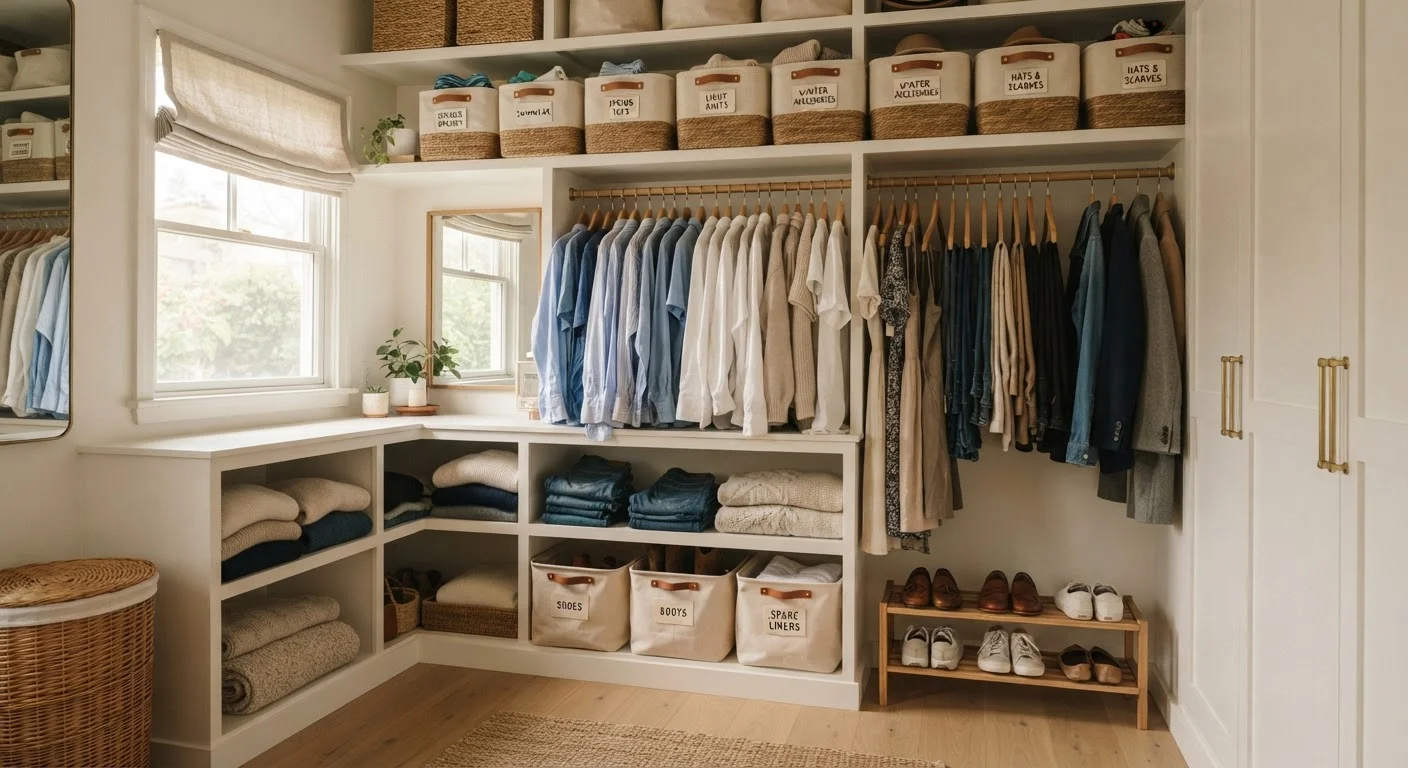
Photo: ShortwebArticles.com | Content For The Curious editorial
Key Takeaways
- Seasonal rotation reserves prime storage space for items you use daily, reducing visual clutter.
- A twice-yearly swap aligned with the calendar creates a predictable habit that's easy to maintain.
- Clear labeling and consistent container types are the foundation of a rotation system that sticks.
- Decluttering before storing — not after retrieving — prevents off-season bins from accumulating junk.
- Under-bed, attic, and garage zones work well for off-season storage when kept dry and accessible.
Why Closets Overflow in the First Place
Most closet crowding isn't a space problem — it's a time-layering problem. Winter coats hang next to summer dresses. Extra blankets compete with everyday linens. Holiday serving dishes block the plates you reach for every morning. When all seasons coexist in the same space simultaneously, prime real estate gets consumed by items that won't be touched for months.
The solution isn't necessarily more storage. It's smarter circulation of what you already own. As the editors at Why Organized Homes Don't Stay That Way explain, organization is a system — not a one-time project. Seasonal rotation is one of the clearest examples of that principle in action.
Assign each storage zone a clear seasonal purpose before you begin rotating.
Declutter before you store, not after you retrieve.
Use consistent, same-sized containers and label every one on the side, not the top.
Keep a short inventory list inside or taped to each storage container.
Store off-season items in conditions appropriate to the material.
Best Practices for a Rotation System That Actually Sticks
The following practices are drawn from common organizational principles and are designed to work in real homes — not aspirational ones. Start with the area causing the most friction and expand from there.
Where to Store Off-Season Items
Once you've pulled items from prime closet space, they need a logical home. The wrong location turns rotation into a chore. The right one makes it feel effortless.
- Under-bed storage: Ideal for off-season clothing, extra bedding, or shoes. Low-profile bins with lids keep dust out. If your bed frame sits close to the floor, raising it with bed risers can dramatically increase this zone.
- Attic or basement: Good for bulky items like holiday décor, extra luggage, or seasonal sports gear. Use climate-appropriate containers — cardboard absorbs moisture, so rigid plastic bins with latching lids are a safer choice.
- Garage: Works well for outdoor, garden, and sports equipment. See the Garage Organization guide for zoning strategies that keep seasonal gear findable.
- High cabinet shelves: Reserve the lowest shelves for daily-use items; push off-season items to the top, ideally in labeled bins.
Climate Matters for Off-Season Storage
For anyone working with a smaller footprint, small-space storage strategies offer creative approaches for rotating items even when square footage is tight.
Making the Swap Twice a Year
The most sustainable approach is a twice-yearly rotation — once in late spring and again in early fall. These transitions coincide with when you'd naturally be reaching for different clothing and gear anyway, so the timing feels intuitive rather than arbitrary.
Block two to three hours on the calendar for each swap. Treat it as a minor seasonal ritual rather than a dreaded chore: put on music, do a quick edit of what you're putting away, and take note of items that didn't get used all season. Those are strong candidates for donation before they go back into storage.
Use the Swap as a Built-In Audit
If your home has significant storage options but you're not sure how to organize the containers themselves, reviewing open shelving vs. closed cabinet trade-offs can help you decide which approach best suits each storage zone.
The content on this site is for informational purposes only and is not a substitute for professional advice. Always consult a qualified professional for guidance specific to your situation.