
Small-Space Storage: Strategies That Work in Apartments and Compact Homes

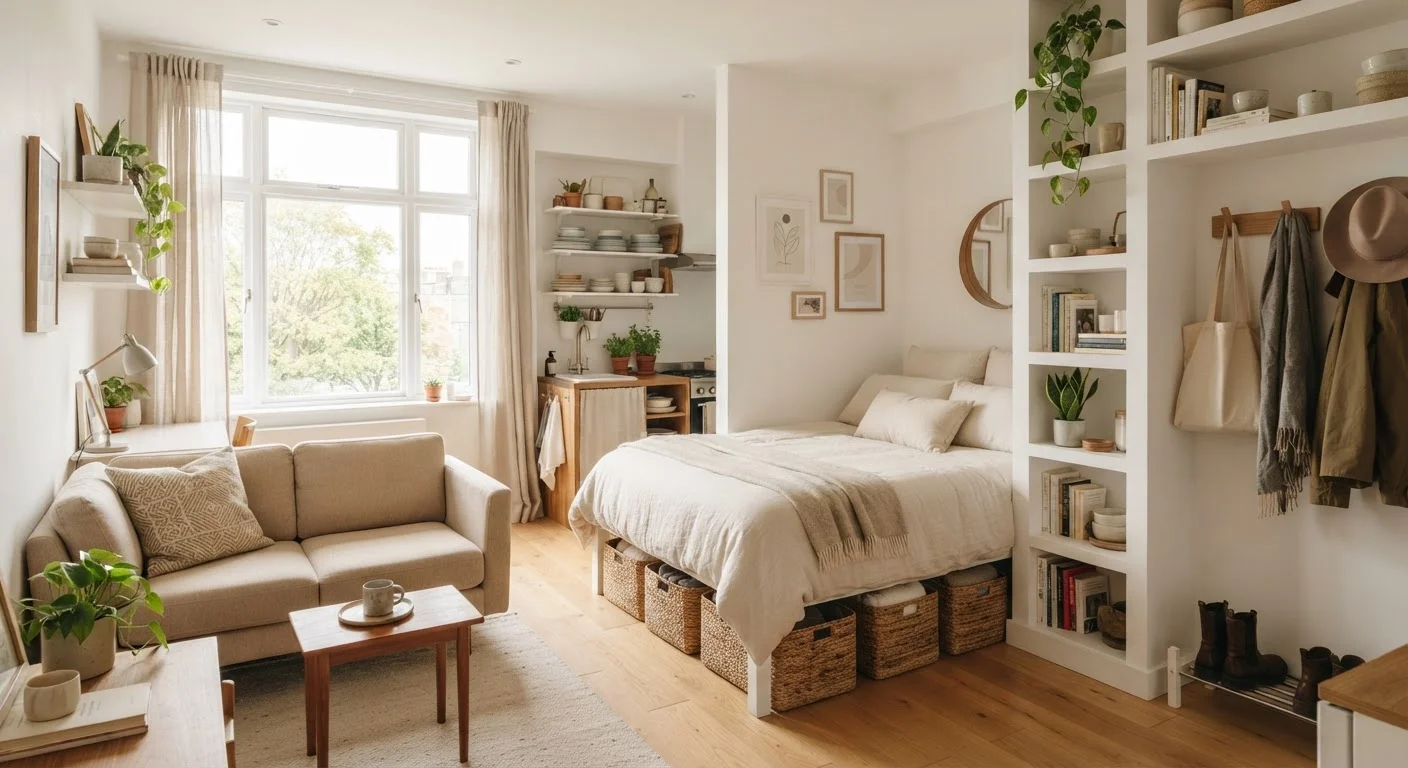
Photo: ShortwebArticles.com | Content For The Curious editorial
Key Takeaways
- Vertical wall space is often the most underused storage opportunity in small homes.
- Furniture that doubles as storage — like ottomans and bed frames — reduces the need for extra pieces.
- Decluttering before organizing prevents you from simply storing problems instead of solving them.
- Seasonal rotation of belongings can dramatically free up daily-use storage space.
- Consistent, small habits maintain order far better than occasional major reorganization sessions.
Why Small-Space Storage Requires a Different Mindset
Living in a studio, a one-bedroom apartment, or a compact home doesn't mean you're destined to live with clutter. It does mean that the storage strategies suited to a sprawling house often won't translate. When every square foot carries weight, you need approaches that are intentional, layered, and adaptable.
The first shift is recognizing that storage isn't just about where things go — it's about deciding what stays. Before rearranging shelves or buying bins, a clear-eyed declutter pays dividends that no organizational product can replicate. As our piece on common storage myths explains, accumulating more containers without reducing belongings often makes spaces harder to manage, not easier.
Once you've edited your possessions honestly, you're ready to put the following strategies to work.
Go Vertical Before You Go Wide
Most people fill floor space and stop there, leaving walls — the largest surfaces in any room — almost entirely unused. Shelving mounted above eye level, tall bookcases, and stacked cabinet units all leverage height rather than footprint. In a kitchen, open shelves near the ceiling work for infrequently used items. In a living room, floor-to-ceiling shelving turns a blank wall into generous, organized storage.
For a deeper look at this principle, see our guide to using vertical space effectively — it covers every room in the home.
Walls are the largest surfaces in any room — and most people leave them almost entirely unused.
Choose Furniture That Earns Its Square Footage
In a small home, every piece of furniture should justify its presence by doing at least two jobs. Bed frames with built-in drawers replace a dresser. Storage ottomans hold blankets, games, or off-season accessories while serving as seating or a coffee table. Dining benches with lift-up seats hide bulkier items. When you're shopping for new pieces, treat hidden storage capacity as a primary feature rather than a bonus.
Every piece of furniture in a small home should do at least two jobs — one of them storage.
Use the Back of Every Door
The back of a door is prime real estate that's easy to overlook. Over-the-door organizers work in pantries, bathroom doors, bedroom closets, and even the backs of cabinet doors under the sink. Hooks, pocket organizers, and mounted racks can hold everything from shoes and cleaning supplies to jewelry and spice packets — without consuming a single inch of floor or wall space that might otherwise be visible.
The back of a door holds surprising capacity — and stays completely out of sight when closed.
Contain and Label Consistently
Grouping like items into clearly labeled containers does two things: it creates visual calm by hiding visual noise, and it makes retrieval fast and predictable. Uniform bins or baskets on open shelves look tidier than an assortment of mismatched items. Drawer dividers keep small items from migrating into chaos. The key is labeling — even in your own home, labeled storage removes the cognitive load of remembering what lives where, especially in shared spaces.
Labeled storage removes the mental effort of remembering where everything lives — especially in shared homes.
Create Dedicated Zones for High-Traffic Items
Clutter tends to gather at transition points — entryways, kitchen counters, the area near the couch. The most effective fix isn't tidying more often; it's installing intentional storage at those exact spots. A row of hooks and a small shelf near the front door becomes a landing zone for keys, bags, and outerwear. A caddy near the couch corrals remotes and chargers. When the right home exists close to where things naturally land, items actually get put away.
Clutter clusters where there's no designated storage — so put the storage exactly where items land.
Rotate Seasonally to Free Up Prime Space
Not everything needs to be accessible all year. Winter coats, holiday décor, and camping gear shouldn't compete for the same shelf space as everyday items. Packing seasonal belongings into clearly labeled bins and moving them to high shelves, under beds, or a storage unit frees up the most accessible, convenient storage for what you actually need day to day. This rotation habit has an outsized impact in small spaces where prime storage is scarce.
Seasonal rotation is one of the highest-impact habits for keeping small-space storage under control.
Building Habits That Keep Small Spaces Ordered
Even the cleverest storage system fails without a little maintenance. In compact homes, disorder accumulates faster because there's less buffer space — a few misplaced items can make a room feel chaotic. Short daily resets (five to ten minutes of returning things to their designated spots) tend to be far more effective than periodic marathon organizing sessions.
The One-In, One-Out Rule
Seasonal rotation is another habit worth building. Storing off-season clothing, gear, or décor in labeled bins under the bed or on high shelves frees up prime daily-use space. Our guide on seasonal rotation for closets and cabinets walks through exactly how to build that rhythm sustainably.
If your compact home connects to an outdoor area, don't overlook it. A covered balcony or small patio can house seasonal items, cleaning tools, or even compact shelving — and our article on making small outdoor spaces work harder offers practical ideas for doing that well. With the right strategies in place indoors and out, even the tightest floor plan can feel genuinely spacious.
The content on this site is for informational purposes only and is not a substitute for professional advice. Always consult a qualified professional for guidance specific to your situation.