
Smart Home Devices: A Realistic Look at the Upsides and Trade-Offs

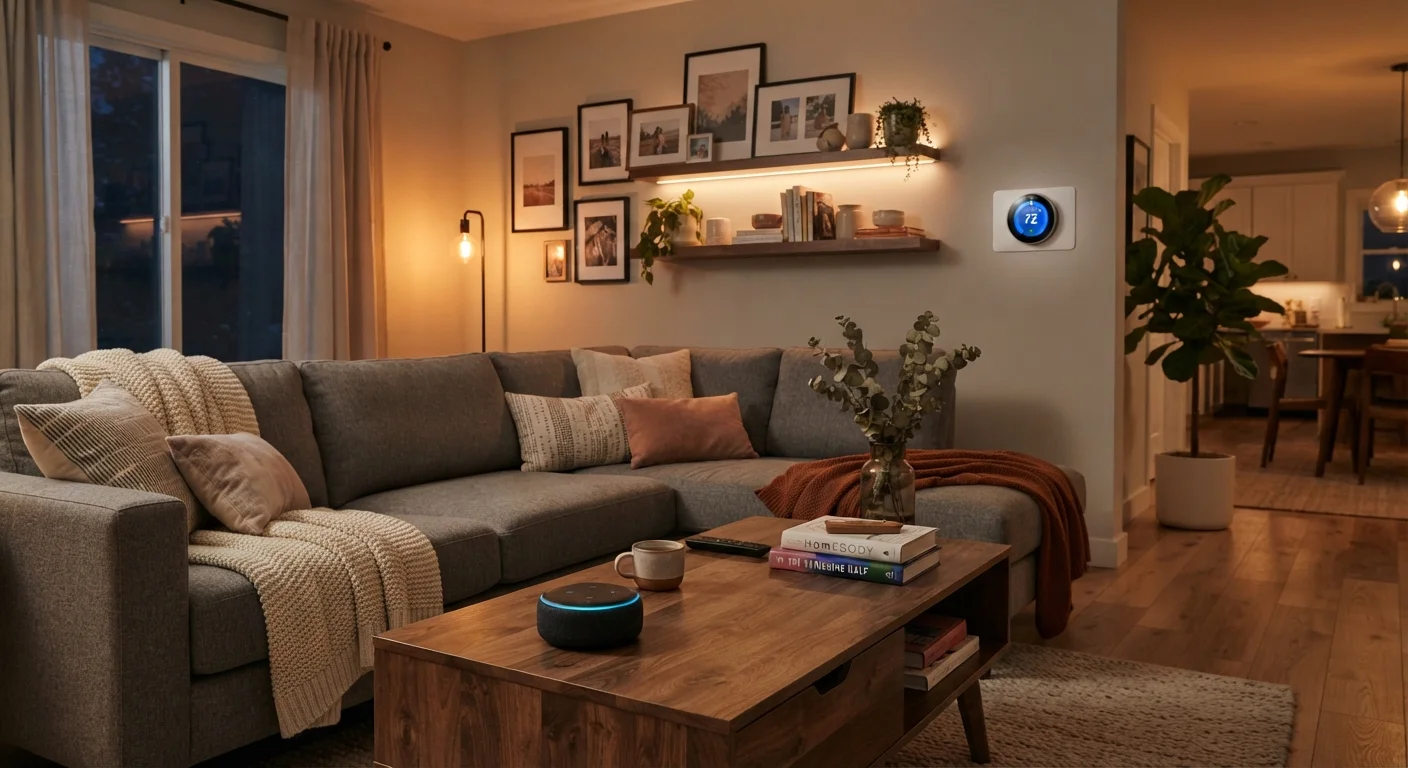
Photo: ShortwebArticles.com | Content For The Curious editorial
Key Takeaways
- Smart home devices can meaningfully reduce daily friction through automation and remote control.
- Privacy is a real concern — most connected devices collect data about how and when you use them.
- Reliability depends heavily on your home internet connection and the platforms devices run on.
- Upfront and ongoing costs can add up quickly when outfitting multiple rooms.
- Understanding the trade-offs helps you choose which devices are worth adding to your home.
Automates repetitive daily tasks without ongoing effort
Scheduled routines handle lighting, heating, and security checks automatically, reducing the mental load of remembering routine adjustments.
Supports accessibility and independent living
Voice control and automation can be transformative for people with mobility challenges, making everyday tasks manageable without physical effort.
Provides remote visibility and control
Checking whether you left the garage door open or adjusting the thermostat while away from home are practical, everyday use cases that deliver real peace of mind.
Can improve energy awareness
Smart thermostats and plug-level energy monitors give households a clearer picture of consumption patterns, which can inform more deliberate usage habits.
Devices can work together in coordinated routines
When devices share a compatible platform, linking them into multi-step automations — such as a morning routine that adjusts lights, thermostat, and a coffee maker simultaneously — is genuinely useful.
Persistent privacy and data collection concerns
Most smart devices collect usage data and some use always-on microphones. Understanding a device's data practices before purchasing is an important step many consumers skip.
Fully dependent on home internet reliability
If your Wi-Fi goes down, many smart devices become unresponsive or lose core functionality — including locks and thermostats that households rely on daily.
Setup and troubleshooting can be technically demanding
Network compatibility issues, app updates that break routines, and multi-device coordination problems are common and can require time and patience to resolve.
Platform lock-in limits future flexibility
Devices built around one ecosystem (such as a specific voice assistant platform) may not integrate well with others, making it costly or complicated to switch later.
Ongoing subscription costs add up
Cloud storage for security cameras, premium app tiers, and monitoring services can turn a one-time device purchase into a recurring monthly expense.
Product discontinuation can strand devices
If a manufacturer discontinues a product line or shuts down supporting cloud services, devices can lose key features or stop working entirely — a risk unique to internet-dependent hardware.
What Smart Home Devices Actually Do
Smart home devices are internet-connected gadgets that can be monitored, controlled, or automated — often through a smartphone app or a voice assistant like those found in smart speakers. The category spans a wide range: thermostats, door locks, light bulbs, security cameras, video doorbells, plugs, and appliances.
What ties them together is connectivity. Rather than operating as standalone items, they communicate over your home Wi-Fi network (and sometimes Bluetooth or Zigbee) and can be grouped into routines. For example, a single voice command or a scheduled trigger can dim the lights, lower the thermostat, and lock the front door simultaneously.
Because so much depends on a stable network, your home internet setup matters more than many device reviews let on. Our guide to mesh Wi-Fi systems covers how your network infrastructure affects coverage across larger or multi-story homes.
A Note on Platform Ecosystems
The Genuine Upsides
When smart home devices work as intended, the benefits are tangible — not just novelty.
Automates repetitive daily tasks without ongoing effort
Scheduled routines handle lighting, heating, and security checks automatically, reducing the mental load of remembering routine adjustments.
Supports accessibility and independent living
Voice control and automation can be transformative for people with mobility challenges, making everyday tasks manageable without physical effort.
Provides remote visibility and control
Checking whether you left the garage door open or adjusting the thermostat while away from home are practical, everyday use cases that deliver real peace of mind.
Can improve energy awareness
Smart thermostats and plug-level energy monitors give households a clearer picture of consumption patterns, which can inform more deliberate usage habits.
Devices can work together in coordinated routines
When devices share a compatible platform, linking them into multi-step automations — such as a morning routine that adjusts lights, thermostat, and a coffee maker simultaneously — is genuinely useful.
Automation is the standout advantage. Setting a thermostat to reduce heating while you're at work and resume before you get home requires no daily action once it's configured. Similarly, smart lighting on schedules or motion sensors can reduce energy waste without any ongoing effort.
Accessibility is another underappreciated benefit. For people with mobility limitations or conditions that make physical tasks challenging, voice-controlled lights, locks, and appliances can meaningfully improve independence and ease of daily living.
~35%
U.S. households with at least one smart home device
According to research published by Statista, roughly one in three American households owned at least one smart home device as of the early 2020s, with the category continuing to grow.
Top concern
Privacy cited as primary smart device hesitation
Multiple consumer surveys, including those by Pew Research Center, have found that data privacy and security are the most commonly cited reasons people hesitate to adopt smart home technology.
The Real Trade-Offs
Smart home devices carry genuine downsides that marketing rarely emphasizes.
Persistent privacy and data collection concerns
Most smart devices collect usage data and some use always-on microphones. Understanding a device's data practices before purchasing is an important step many consumers skip.
Fully dependent on home internet reliability
If your Wi-Fi goes down, many smart devices become unresponsive or lose core functionality — including locks and thermostats that households rely on daily.
Setup and troubleshooting can be technically demanding
Network compatibility issues, app updates that break routines, and multi-device coordination problems are common and can require time and patience to resolve.
Platform lock-in limits future flexibility
Devices built around one ecosystem (such as a specific voice assistant platform) may not integrate well with others, making it costly or complicated to switch later.
Ongoing subscription costs add up
Cloud storage for security cameras, premium app tiers, and monitoring services can turn a one-time device purchase into a recurring monthly expense.
Product discontinuation can strand devices
If a manufacturer discontinues a product line or shuts down supporting cloud services, devices can lose key features or stop working entirely — a risk unique to internet-dependent hardware.
Privacy is the most significant concern. Voice-activated devices use microphones that listen for a wake word, which means audio is being processed — typically on remote servers. Many devices also collect usage data: when you turn lights on, what temperature you prefer, how often you open the fridge. Understanding what data is collected and how it's stored is an important step before setup.
For a closer look at what permissions connected apps request — and which ones deserve scrutiny — see our piece on app permissions that are worth a second look. Broader network security habits also apply; our home network security guide explains the practical steps that matter most.
Setting Up Thoughtfully: What to Consider Before You Buy
A few practical questions can save you frustration and unnecessary expense.
- Start with a specific problem. Devices bought for a defined purpose — like reducing forgotten-thermostat anxiety or improving visibility at the front door — tend to stay in use. Those bought for general "smartness" often go unused.
- Check platform compatibility. Devices from different manufacturers don't always work together smoothly. Before purchasing, confirm whether a device is compatible with the voice assistant or smart home hub you already use.
- Review the privacy settings before connecting anything. Most devices have data-sharing settings that default to broad permissions. Spending ten minutes adjusting these at setup is worthwhile.
- Factor in the total cost. Monthly subscription fees for cloud storage (common with security cameras) can exceed the device cost over two or three years.
Smart home technology intersects naturally with broader decisions about your living space. If you're weighing a move or thinking about long-term home investments, our article on renting vs. buying a home covers how ownership affects what you can install and modify.
The content on this site is for informational purposes only and is not a substitute for professional advice. Always consult a qualified professional for guidance specific to your situation.