
Why Your Debit Card Abroad Could Cost You More Than You Think

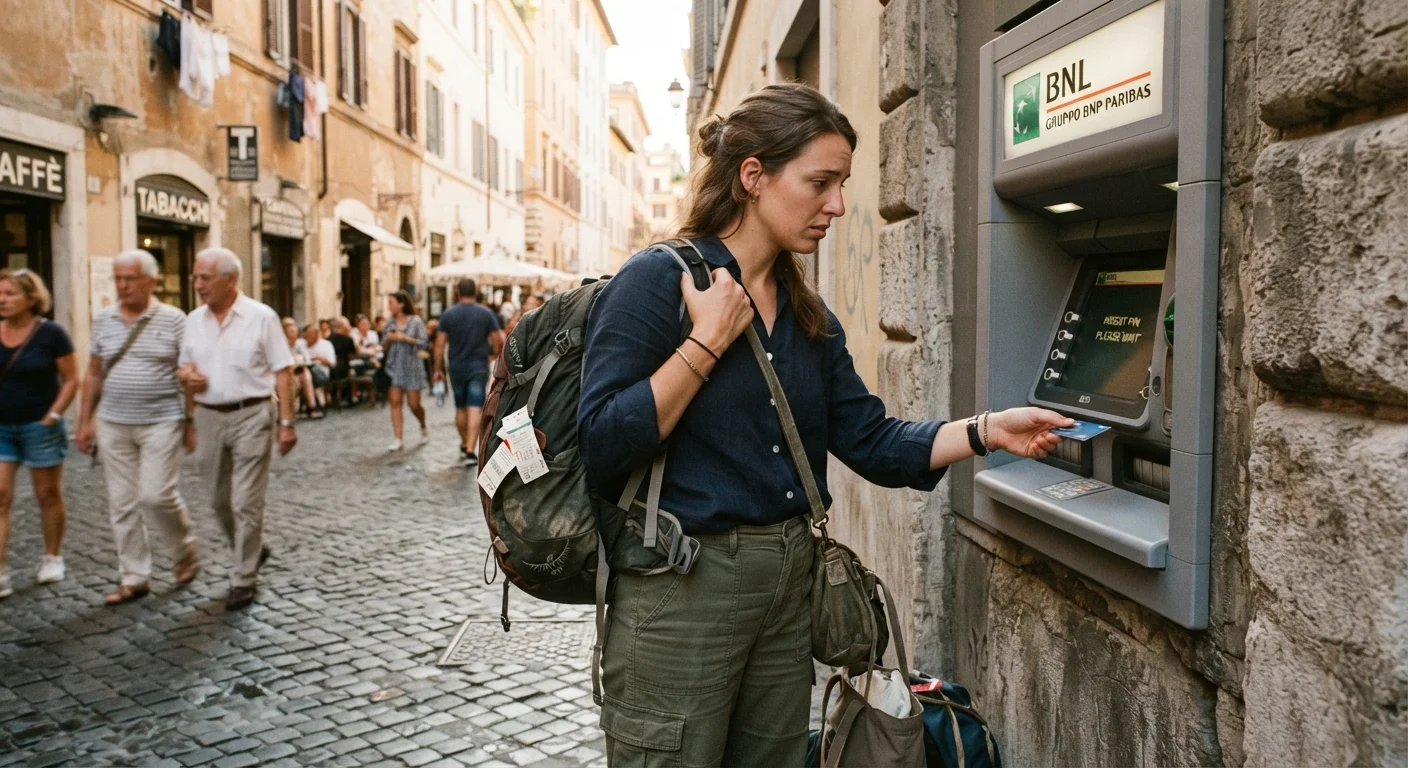
Photo: ShortwebArticles.com | Content For The Curious editorial
Key Takeaways
- Foreign transaction fees typically add 1–3% to every debit card purchase made abroad.
- Dynamic currency conversion lets merchants charge you in dollars — often at a worse exchange rate.
- Out-of-network ATM fees can stack up from both your home bank and the foreign ATM operator.
- Notifying your bank before travel doesn't protect you from fees — it just prevents a frozen card.
- Understanding each fee type helps you make smarter choices before and during your trip.
The Quiet Budget Drain Most Travelers Never See Coming
You budget for flights, hotels, meals, and experiences. You feel prepared. Then you get home and scan your bank statement — and the numbers don't quite add up. Welcome to the world of international debit card fees, where small percentages and ATM surcharges compound into a surprisingly large leak in your travel budget.
The good news: these costs are completely understandable once you know what to look for. And once you understand them, you can take steps to minimize them. This is general financial information to help you plan smarter — your specific card terms will always be the final word, so review those before you travel.
For a broader look at how costs quietly accumulate on a trip, see factors that quietly drive up the true cost of a trip.
Using your debit card for every purchase without checking for foreign transaction fees.
Accepting dynamic currency conversion (DCC) when a terminal offers to charge you in U.S. dollars.
Withdrawing cash from the first ATM you see, without considering operator fees.
Assuming that notifying your bank before travel eliminates all international fees.
Ignoring your bank statement until after you return home.
What These Fees Actually Cost You — By the Numbers
It's easy to dismiss a 3% foreign transaction fee as trivial. But on a two-week trip where you spend $3,000 on your debit card, that's $90 gone before you've bought a single souvenir. Add two or three ATM withdrawals with $5 operator fees each, plus your bank's own out-of-network charge, and you're looking at real money.
1–3%
Typical foreign transaction fee per purchase
Most U.S. bank debit cards charge between 1% and 3% on every international transaction, according to general industry disclosures.
$5+
Average out-of-network ATM surcharge abroad
International ATM operators commonly charge a flat fee per withdrawal, on top of whatever fee your home bank applies for out-of-network use.
3–7%
Estimated DCC exchange rate markup
Dynamic currency conversion rates set by merchants or ATM operators are generally estimated to be 3–7% worse than the interbank rate.
Dynamic currency conversion is particularly tricky because it feels like a helpful service. A merchant terminal offers to show you the charge in U.S. dollars — comforting, right? But that convenience often comes with an exchange rate that's marked up 3–7% above the interbank rate, according to general industry estimates. Always choose to pay in the local currency and let your bank handle the conversion.
Building these costs into your trip budget from the start is the smart move. Our guide to what most travelers forget to include in a trip budget walks through exactly how to do that.
Always Decline Dynamic Currency Conversion
Plan Before You Pack — Not After You Land
The most effective time to address international card fees is before your flight takes off. Review your current debit card's fee schedule — look specifically for foreign transaction fees, international ATM fees, and currency conversion policies. This information is in your cardholder agreement or available through your bank's customer service line.
If your card charges foreign transaction fees, you may want to explore whether your bank offers a travel-friendly alternative, or whether a credit union or online bank with reimbursed ATM fees makes sense for your situation. This is a personal financial decision — a licensed financial advisor or your bank's representative can help you weigh the options based on your actual accounts and travel habits.
Also consider how much cash you'll realistically need. Not every destination is card-friendly, and some markets, guesthouses, and transit systems still run on cash. Our companion guide on carrying cash internationally covers how to exchange wisely and what to skip at airport kiosks. And don't forget that staying connected while you travel — so you can monitor transactions in real time — is its own planning challenge: international data options compared.
This article is for general informational purposes only and does not constitute financial or legal advice. Card terms, fees, and exchange rates vary by institution and may change. Always verify your card's fee schedule directly with your bank before traveling.
The content on this site is for informational purposes only and is not a substitute for professional advice. Always consult a qualified professional for guidance specific to your situation.