
Why Road Trippers Keep Skipping the Best Stops Along the Way

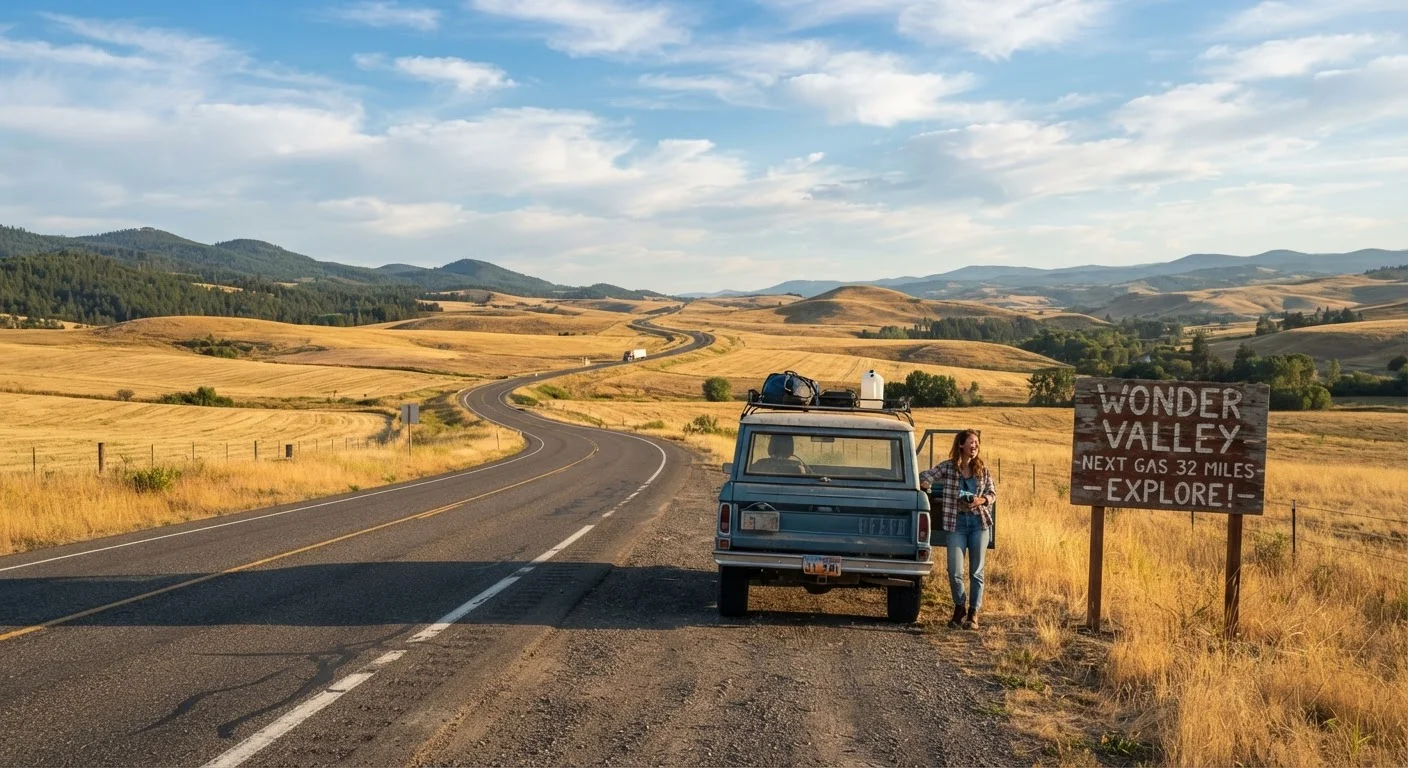
Photo: ShortwebArticles.com | Content For The Curious editorial
Key Takeaways
- Over-scheduling is the single biggest reason road trippers miss worthwhile stops.
- Highway dependency routes drivers around the most interesting small towns and landscapes.
- Poor timing — arriving at the wrong hour or wrong season — can make great stops feel underwhelming.
- Building deliberate slack into your itinerary is the most effective planning change you can make.
- Local knowledge and offline maps unlock stops that GPS routing and algorithms routinely ignore.
The Planning Trap That Starts Before You Leave Home
Most road trips go sideways at the kitchen table, not on the road. Drivers map out an ambitious sequence of destinations, calculate drive times in ideal conditions, and lock in reservations at every stop. The itinerary looks airtight — and that's exactly the problem.
When every hour is accounted for, there's no room for the weathered diner that a local recommends, the overlook with the ridiculous view, or the small-town farmers market that wasn't in any guide. Rigid scheduling turns a road trip into a logistics exercise.
The fix isn't chaos — it's deliberate breathing room. Itinerary planning that holds up in real life means building buffer time into each driving day and identifying two or three "if we have time" stops in advance rather than committing to every one. Think of your schedule as a framework, not a contract.
Over-scheduling every driving day with back-to-back confirmed stops and reservations.
Defaulting to the fastest interstate route for every leg of the trip.
Arriving at a destination at the wrong time of day or wrong season for its best qualities.
Relying exclusively on navigation apps and travel algorithms for stop suggestions.
Treating a stop that "didn't look impressive" from the road as not worth pulling over for.
Why Interstates Are the Enemy of Discovery
The interstate highway system is an engineering marvel and a discovery killer. It routes you efficiently from city to city while bypassing nearly everything interesting in between. Small towns, scenic byways, roadside attractions, and regional food culture all sit just off those wide, featureless corridors — invisible to anyone chasing miles per hour.
~46,000
Miles in the US Interstate Highway System
The Federal Highway Administration reports the Interstate System spans roughly 46,000 miles — a network optimized for speed, not scenery or local discovery.
4M+
Miles of roads in the US total
The US road network totals over four million miles, meaning the vast majority of drivable roads — including countless scenic and historic routes — lie entirely off the interstate grid.
Highway dependency often comes down to anxiety about time and fuel. Drivers worry that a scenic route will cost them hours or leave them stranded between gas stations. In reality, most US state highways and US routes connect frequently to services, and the added drive time is often modest. The famous routes like Route 66 and the Blue Ridge Parkway became legends precisely because they weren't built for speed.
A practical approach: identify one stretch per travel day where you consciously leave the interstate. Use a paper map or an offline layer on your navigation app to scout for state scenic byways — many states officially designate them, and they're easy to find before you leave home.
For a deeper look at overlooked stretches worth the detour, lesser-known American road trip destinations covers regional gems most GPS apps would never suggest.
Offline Maps Are Worth Downloading Before You Leave
Timing, Local Knowledge, and the Stops You Keep Almost Making
Even drivers with flexible itineraries and a scenic route selected will miss great stops if timing works against them. Arriving at a canyon overlook at high noon washes out the light and packs the parking lot. Hitting a small-town main street on a Monday means half the shops are closed. Visiting a coastal route in peak fog season turns a famous view into a gray wall.
Timing mistakes happen because most planning focuses on getting somewhere, not on what makes a specific place worth experiencing. A little research — ideally sourced from recent visitor reviews, state tourism sites, or local community boards — can shift your arrival by a few hours and transform the experience completely.
Local knowledge is irreplaceable. Gas station attendants, diner waitstaff, and campground hosts consistently know about spots that don't appear in travel apps. A simple "is there anything worth stopping for in the next 50 miles?" has launched thousands of genuinely memorable detours.
The Best Stops Rarely Have Billboards
Road tripping is ultimately about freedom — the freedom to stop, turn around, linger, and go a little slower than the algorithm suggests. Pairing that spirit with honest planning helps you actually use the freedom instead of watching the best parts blur past at 75 mph. For a broader look at how assumptions shape your experience before it even starts, common road trip myths worth questioning is a useful companion read.
The content on this site is for informational purposes only and is not a substitute for professional advice. Always consult a qualified professional for guidance specific to your situation.