
Iconic US Road Trip Routes and What Sets Each One Apart

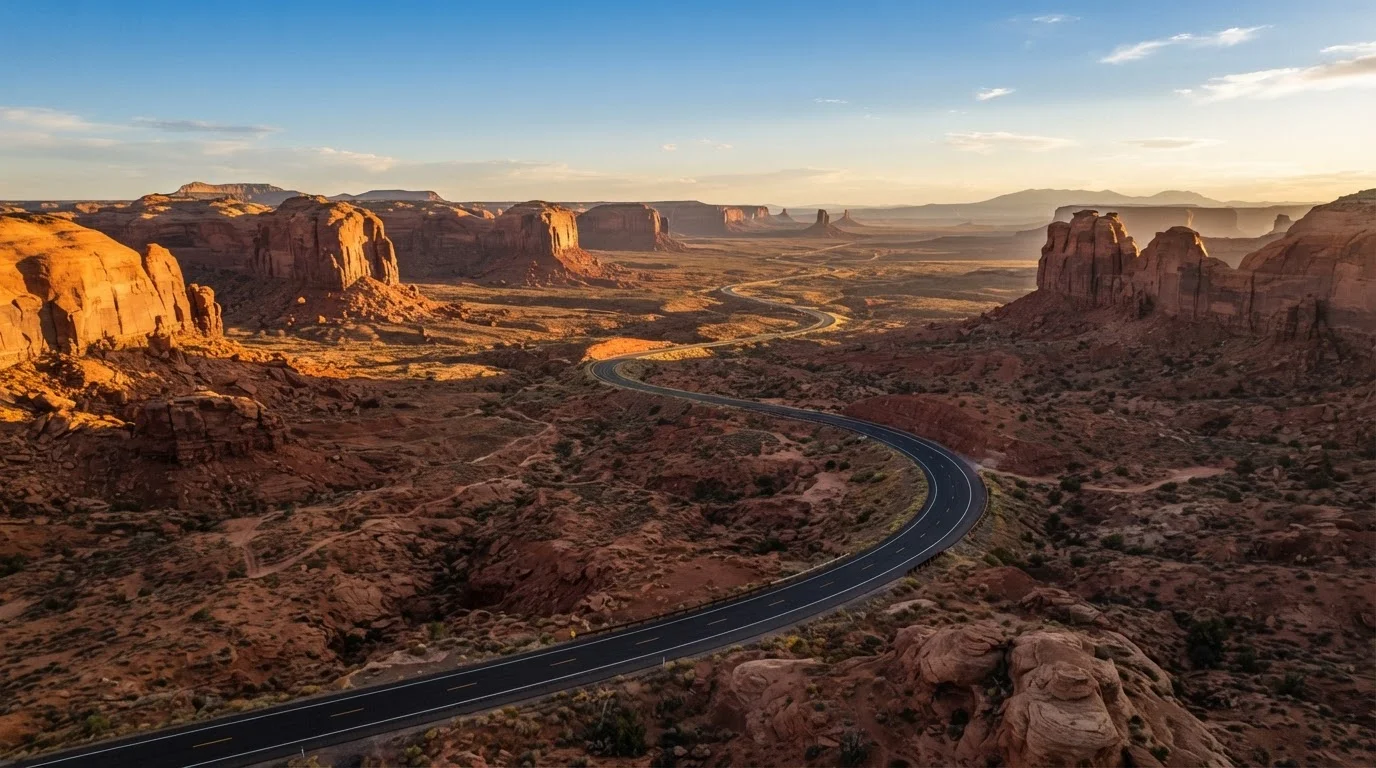
Photo: ShortwebArticles.com | Content For The Curious editorial
Key Takeaways
- Each iconic US road trip route has a distinct personality — matching the route to your travel style matters.
- Distance, terrain, and seasonal timing vary significantly between corridors, affecting planning and pacing.
- Some routes suit first-timers; others reward travelers comfortable with remote stretches or mountain driving.
- Public lands, historic towns, and coastal scenery are all accessible without needing expensive tour packages.
- Knowing what each route actually delivers helps you avoid disappointment and maximize your time on the road.
Why the Route You Choose Changes Everything
Not all road trips are created equal. Choosing between a coastal cruise and a cross-desert haul isn't just about miles — it's about what kind of experience you're after. Some corridors are steeped in American mythology; others deliver raw, unfiltered wilderness. A few are family-friendly and well-serviced; some demand more self-sufficiency and planning.
If you're new to long-distance driving, our first-time road tripper guide covers everything from packing to route timing before you commit to a route. And if you're torn between hugging the backroads or sticking to interstates, see how each road type compares for a practical breakdown.
Below, we've mapped out seven of America's most celebrated road trip routes — what makes each one distinct, who it suits, and what to actually expect along the way.
Route 66 — The Original American Road
Stretch: Chicago, IL to Santa Monica, CA (~2,400 miles)
No route carries more cultural weight. Route 66 — officially decommissioned as a US highway in 1985 but lovingly maintained as a historic corridor — winds through eight states, passing neon-lit diners, mid-century motels, roadside oddities, and the sweeping geography of the American Southwest. It's less about speed and more about the stops: Amarillo, Albuquerque, Flagstaff, and the Painted Desert all earn genuine time.
Best for: History buffs, nostalgia seekers, and travelers who want the quintessential American road experience. Plan for 2–3 weeks to do it properly.
Route 66 rewards slow travelers who treat every quirky roadside stop as a destination.
Pacific Coast Highway — Ocean Views at Every Turn
Stretch: San Diego, CA to Leggett, CA (~650 miles on CA-1)
California's Highway 1 is widely considered one of the most visually dramatic drives in the world. Cliffside curves above the Pacific, sea-stacks rising from the surf, redwood groves, elephant seal colonies, and towns like Carmel and Big Sur define this route. It's relatively short compared to others on this list, which makes it ideal for a focused week-long trip.
Best for: Couples, photographers, and anyone who wants maximum scenery per mile. Be aware that sections of PCH can close due to landslides — check Caltrans conditions before you go.
No other route in America concentrates as much coastal drama into as few miles as Highway 1.
Blue Ridge Parkway — America's Favorite Drive
Stretch: Shenandoah National Park, VA to Great Smoky Mountains, NC (~469 miles)
Connecting two beloved national parks through the Southern Appalachians, the Blue Ridge Parkway is designed for slow cruising — no trucks, no billboards, no commercial sprawl. The roadway rolls through forested ridgelines, wildflower meadows, and mountain overlooks with sweeping valley views. Fall foliage here is extraordinary. Small towns like Blowing Rock and Asheville give it cultural depth beyond the scenery.
Best for: Families, nature lovers, and those driving in the fall for peak foliage. Speed limits are low (generally 45 mph), and that's the whole point.
The Blue Ridge Parkway was built to be savored, not rushed — its 45 mph limit is a philosophy.
Going-to-the-Sun Road — Alpine Drama in Montana
Stretch: West Glacier to St. Mary, MT (~50 miles through Glacier National Park)
Short but staggering, this road climbs to the Continental Divide through Glacier National Park, offering views of glacially carved peaks, alpine meadows, and crystal lakes that feel genuinely otherworldly. It's seasonal — typically open from late June through mid-October depending on snowpack — and vehicle size restrictions apply for the most dramatic central section.
Best for: Hikers and outdoor enthusiasts who want to anchor a broader Montana or Pacific Northwest trip. Pair it with time in the park rather than treating it as a drive-through.
Going-to-the-Sun Road is one of the few drives where pulling over every mile is the correct strategy.
The Great River Road — Following the Mississippi
Stretch: Lake Itasca, MN to the Gulf of Mexico (~3,000 miles, spanning 10 states)
Less famous than Route 66 but equally rich in American character, the Great River Road traces the Mississippi River from its source in Minnesota to the Louisiana Gulf Coast. It's a journey through American history — bluff towns, Civil War sites, Delta blues country, Creole cuisine, and the industrial heartland. You can drive it end-to-end or pick a single region to explore.
Best for: History lovers, foodies, and travelers who prefer cultural immersion over pure scenery. The Lower Mississippi through Tennessee, Mississippi, and Louisiana is particularly rewarding.
The Great River Road traces America's defining geographic artery through ten states of history and flavor.
The Alaska Highway — For the Truly Adventurous
Stretch: Dawson Creek, BC (Canada) to Delta Junction, AK (~1,387 miles)
Originally built as a military supply route during World War II, the Alaska Highway is one of the most remote road trips accessible by standard vehicle. Expect long stretches between services, wildlife sightings that include bears and moose, and landscapes of untouched boreal forest and mountain ranges. Cell service is limited. Preparation — including vehicle readiness and supplies — is non-negotiable.
Best for: Experienced road trippers comfortable with genuine remoteness. Solo travelers considering this route should read up on solo road trip safety and logistics before departing. Also confirm current border crossing and documentation requirements with official government sources.
The Alaska Highway demands more preparation than any other route on this list — and rewards it generously.
US Route 1 on the East Coast — City to Shore to Mountains
Stretch: Fort Kent, ME to Key West, FL (~2,369 miles)
Running the full length of the Eastern Seaboard, US Route 1 doesn't offer unbroken wilderness — it offers America's working coastline. Fishing villages in Maine, Boston's historic core, New York City, the Outer Banks, Georgia's Low Country, and the Florida Keys all fall along or near this corridor. It's diverse by design and easy to customize by region.
Best for: Travelers who want a mix of cities, culture, and coast rather than pure nature. Pick a single stretch — the Maine coast, the Mid-Atlantic, or the Florida Keys — and go deep rather than rushing the full length.
US Route 1 is less a single road trip than a thousand-mile menu — pick the stretch that fits your appetite.
Finding the Route That Fits Your Trip
The routes above barely scratch the surface of what's out there. If the famous corridors feel too crowded or too familiar, lesser-known American road trip routes can offer equally stunning scenery with far fewer crowds. And before heading into public land territory, it's worth understanding the differences between national parks, state parks, and national forests — access rules and costs vary more than most travelers expect.
Plan Your Timing Around the Route
For those still weighing the big-picture structure of their journey, coast-to-coast vs. regional loop formats lays out the real trade-offs in time, cost, and experience. Whatever route you choose, the road is yours — all you have to do is start driving.
This article is for general informational purposes only. Road conditions, park access, fees, and seasonal availability can change. Always verify current conditions and entry requirements with official state and federal sources before you travel.
The content on this site is for informational purposes only and is not a substitute for professional advice. Always consult a qualified professional for guidance specific to your situation.